Linda’s Monthly Monday Morning Moaning’s for Monday January 5, 2026
During the colonial period in America, individual colonies provided aids to navigation. In the 17th century they typically used beacons as aids, often lighted. For example, colonists built fires on Beavertail Point to guide vessels at night in Newport, Rhode Island, soon after it was founded in 1639. These warning beacons did not, guide ships through the islands and shoals of Boston Harbor. To mark the entrance to the harbor and thereby benefit trade, a group of merchants petitioned the legislature for a lighthouse in 1713. Little Brewster was chosen as the site, and in 1716 the construction of Boston Lighthouse was completed—the oldest lighthouse site in North America. Other colonies also needed guides to their ports. Subsequently, 11 additional lighthouses were built before 1789, including Sandy Hook, New Jersey, 1764 (still standing as the oldest lighthouse in the United States.

In one of its first acts after its formation in 1789, the United States government assumed control of all aids to navigation in the country. This included the 12 existing lighthouses at the time, as well as those under construction. The US government placed them under the Treasury Department. From 1789 to 1820, the number of lighthouses increased to 55, though apparently without any formal system. An 1838 survey by naval officers found that the condition of the lighthouses ranged from good to terrible—many were poorly placed, of faulty construction, and had poor quality lights. Nonetheless, Congress took no action. Congress again failed to act in 1845 on recommendations from navy officers.
in 1851, after years of protest from shippers, navigators, chambers of commerce, Congress appointed a special investigative board. After thorough study, this board recommended the establishment of a lighthouse board composed of navy officers, army engineers, and civilian scientists. Congress quickly complied and in 1852 created the US Lighthouse Board.

In 1852, the newly established US Lighthouse Board took over operations of 331 lighthouses, 42 lightships, and other navigational aids, including numerous buoys. The board made many improvements, among them in the administration of lighthouses. The board divided the country into 12 lighthouse districts, the twelfth being the West Coast, where the board built their first lighthouses. Each district had its own inspector, usually a navy officer, and later also an army engineer. The board issued detailed written instructions to the keepers. With the help of the Civil Service Reform Acts of 1871 and 1883, they gradually changed the keepers from patronage appointments to professional civil servants.
The US Lighthouse Board also made many technological improvements, including the installation of Fresnel (pronounced Fruh-NEL) lenses. Frenchman August-Jean Fresnel developed the lens in the 1810s and they were installed in French lighthouses in the early 1820s. The lenses, composed of concentric circles of prisms, directed the light to a central bullseye which concentrated it. This resulted in a far brighter light than that from any other contemporary lens. By the Civil War, all US lighthouses had Fresnel lenses. Other technological improvements concerned lighthouse construction, lightships, buoys, and lamps. lighthouses were constructed of interlocking stones in wave-swept locations. Screwpile and sunken caisson foundations were also introduced in this period. Screwpile lighthouses replaced many lightships in Chesapeake Bay—by 1889 the total number of lightships dropped to 24. But with the development of iron steam-powered ships, the number again increased until there were 56 lightships in 1909.
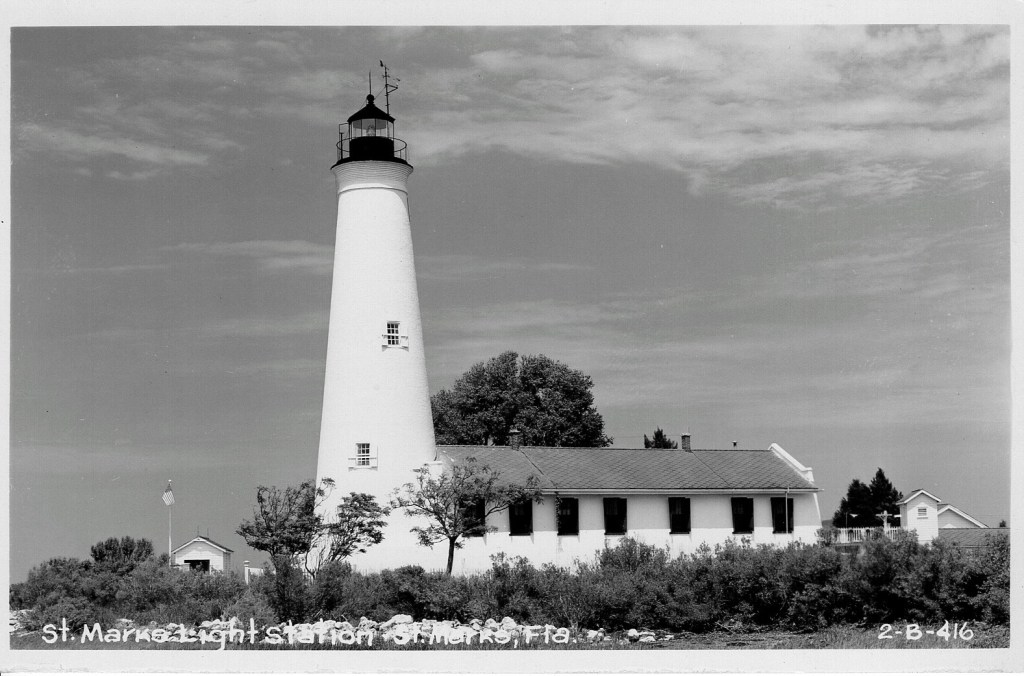
In 1939 the US Lighthouse Service was transferred to the US Coast Guard. Under the Coast Guard, automation proceeded, as the Lighthouse Automation and Modernization Program (LAMP) began in the mid-1960s. In the 1960s, lightships were replaced by structures similar to oil drilling platforms. By the 1970s, large navigational buoys (LNBs) replaced lightships as well. The last lightship (Nantucket I) was decommissioned in 1985. By 1990 all lighthouses in the country had been automated except Boston Light. After serving faithfully for 215 years, Boston Light was the last lighthouse in the country to be automated in 1998. Though electrified, Boston Light remained staffed due to an authorization by Congress in 1989.
Thank you to the United States National Park Service for keeping the lighthouse legacy, images owned by author. And on that ‘wee note’ till Monday February 2nd, 2026.
Thank you for visiting and reading today. Please if you haven’t already, enter your email address in the subscription form below to receive my blog by email on the first Monday of each month.
 Linda Osborne Cynowa