Linda’s Monthly Monday Morning Moaning’s for October 5, 2026.
When writing books for Arcadia Publishing, it is usually a one year process from start to finish. You have six months to research and write and they take six months to put all your work together in a book form. I found that from my first go round in 2018, when I started my writing, if I worked through the fall into winter, then they would have my book ready by early to mid summer of the following year. I did that for seven years and had seven books to account for my time. After the seventh book, I felt I had maybe run the path and it would come to an end. So my last book was published in the summer of 2025.
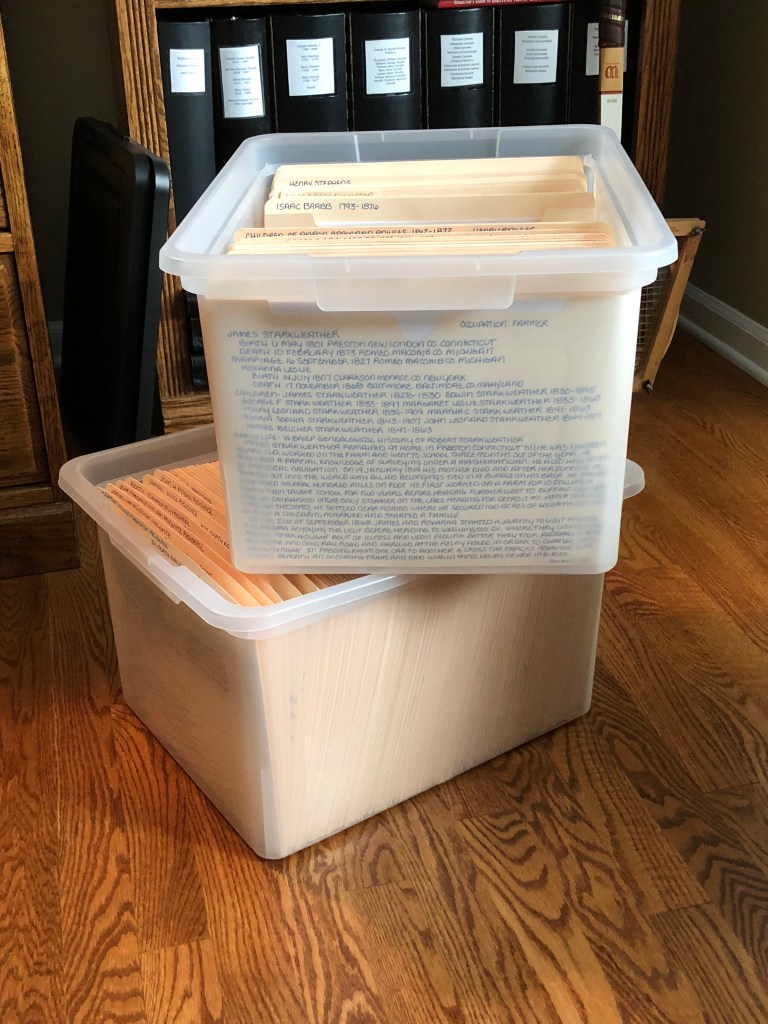
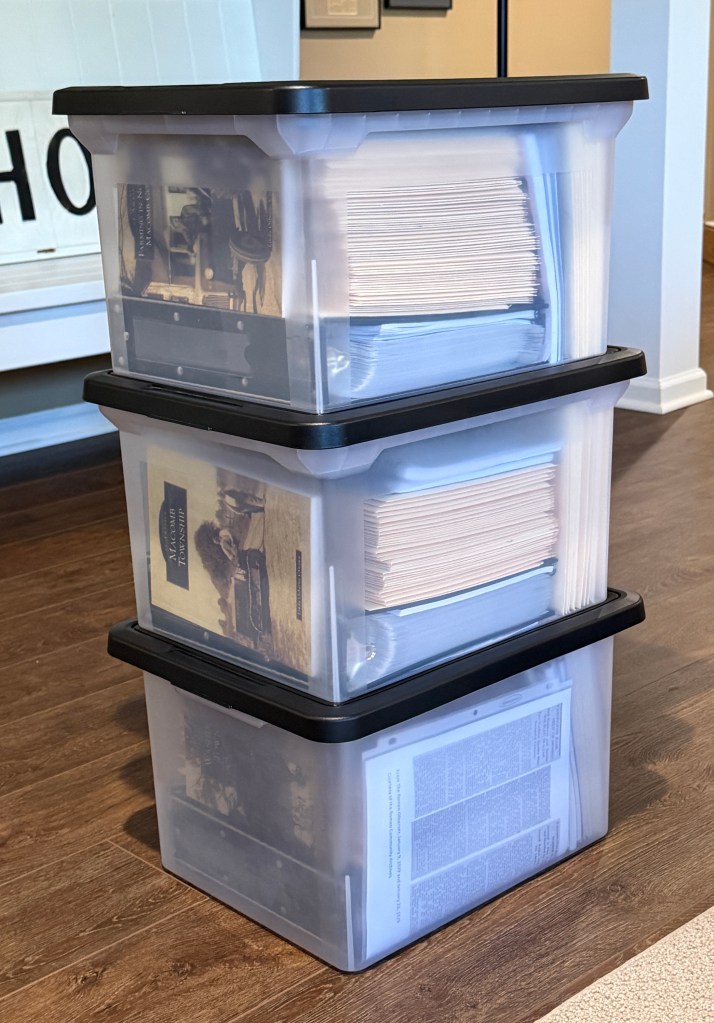
As I seem to acquire quit a lot of material when researching these books, the question then became, wha do I do with all the files? The Romeo District Library at the Kezar Branch solved that issue for me. I was able to donate the boxes of material to them, with the hopes that anyone else researching might find the work available for their use. Then I came across two more containers, that had been filled with research material from 2017 when I started doing some volunteer work for the Kezar Library on the historic homes in Romeo. Not sure why but, after I made a set of files for the library, I also doubled the work and made a set for my use. What use, at the time I had no clue.
So book number 8 started to form in my mind in a way, and I contracted once again with Arcadia for a book to publish in the summer of 2027. The support for the project has been great to say the least, in Romeo the historic homes are a very major interest for the community. For me, I have had the experience with meeting some very helpful, kind and interested people.
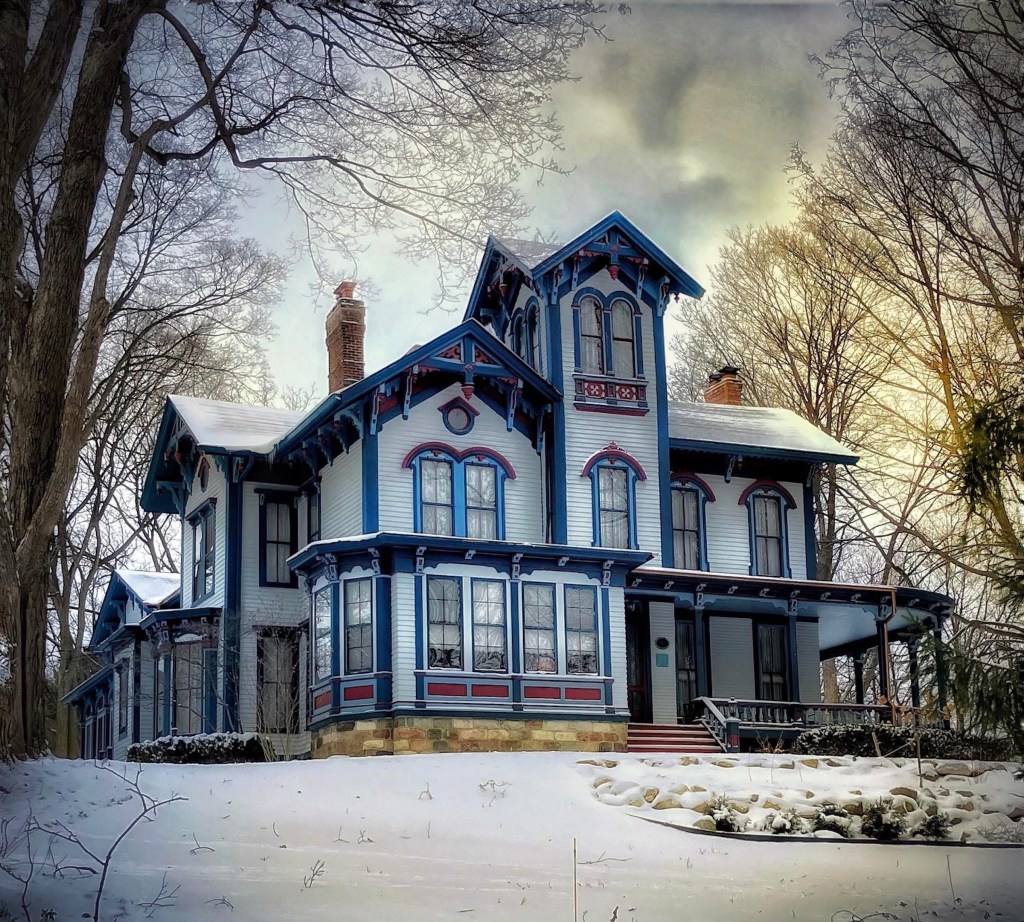
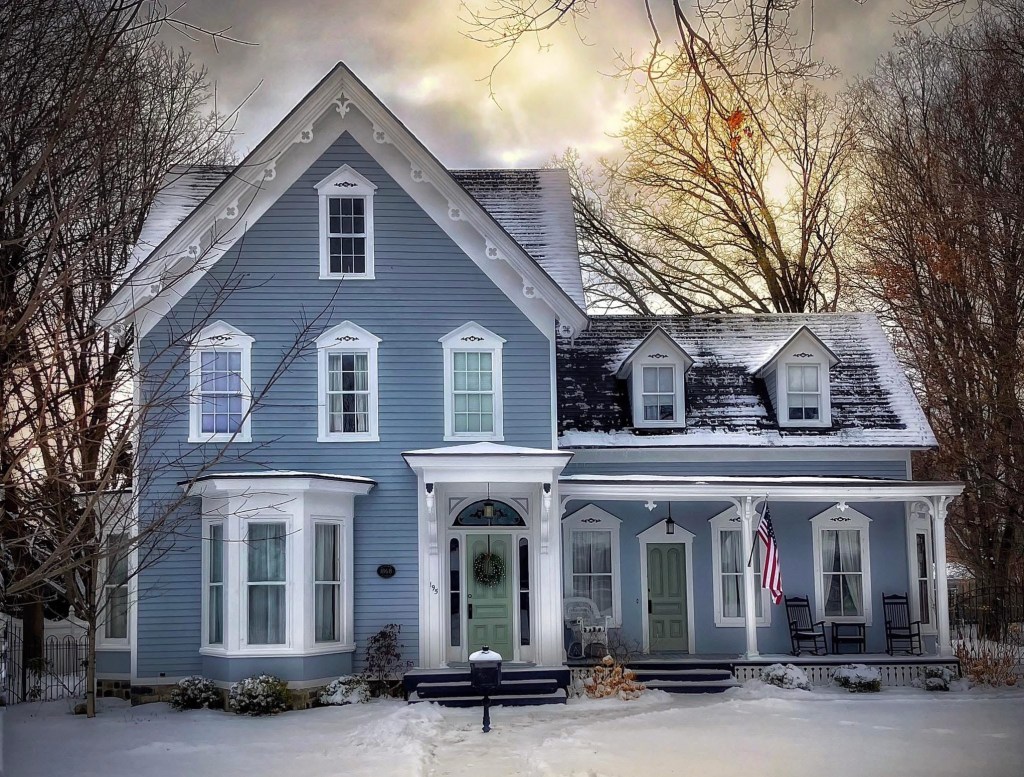
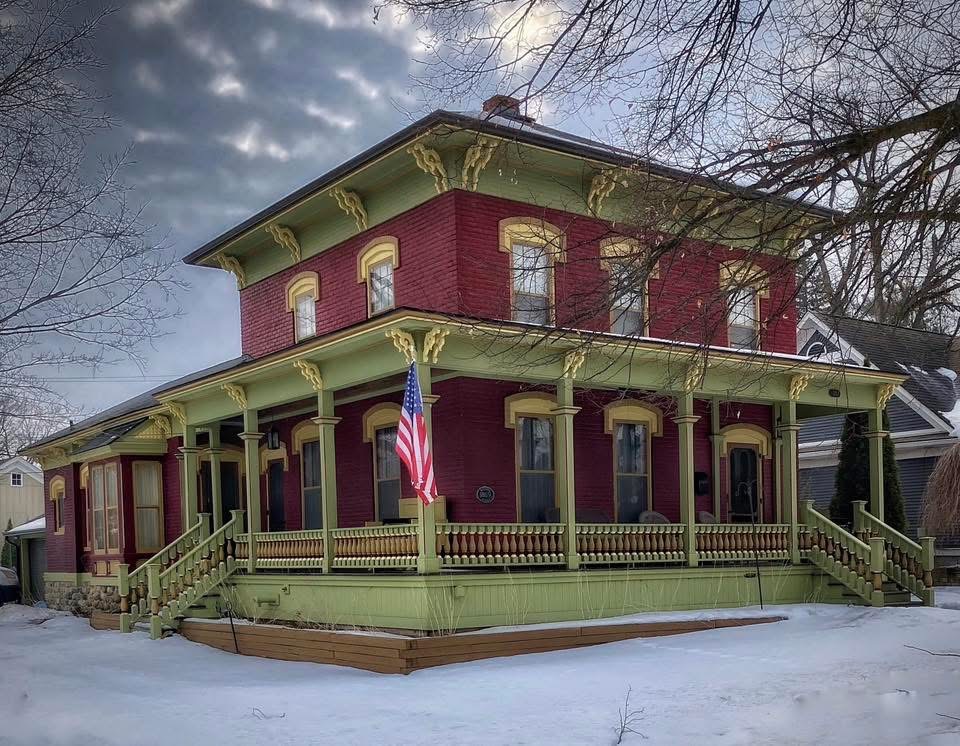
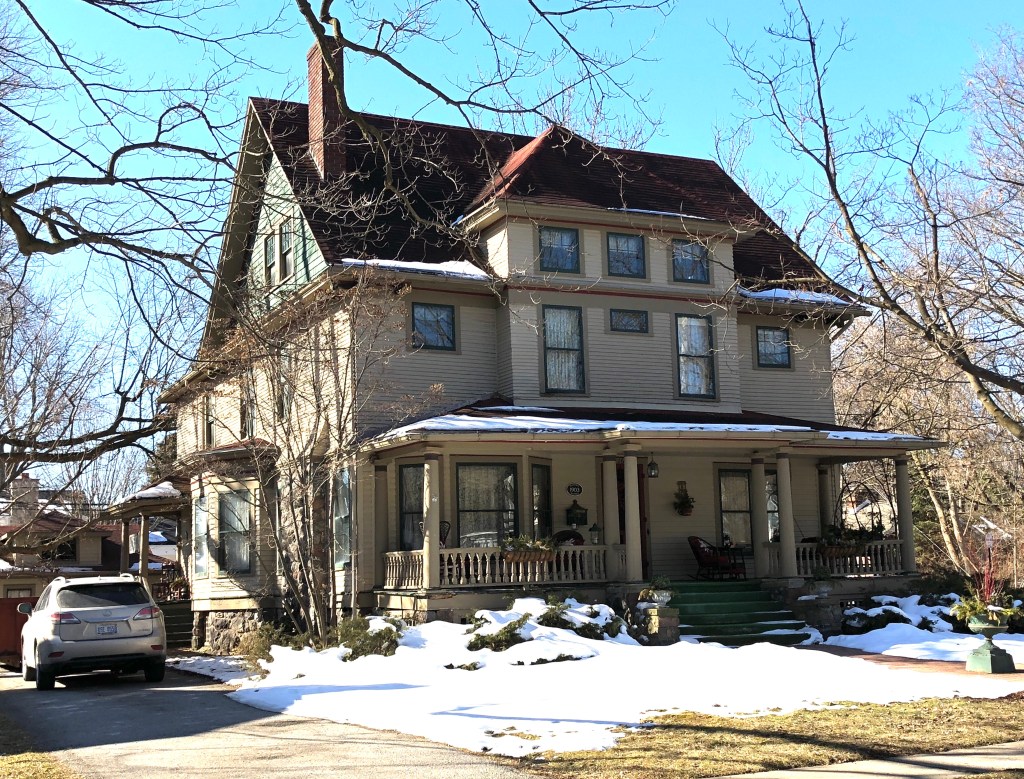
I met a gentleman, who is a life long resident of Romeo, and happens to be a great photographer! I would see his work on FaceBook and could always recognize his work immediately. He does a lot of architectural photograph. Next move was to figure out how to meet him, and with the help of the Romeo Historical Society, I was able to. I wanted permission to use some of his work in showing the architectural beauty of many of these homes. He was as pleased to be asked as I was, to be able to have the permission.
The images shown here are the work of Jesse Robinson, an artist of many talents, photography is one and a tattoo artist is another, and with a shop in the Dr Douglas home on Main Street he has the eyes of Romeo and the community he loves.
The only problem is seeing these lovely images in color, is not the way I am able to use them. All pictures used in these books must be what is called “gray scaled” basically black and white! Quite often when you use black and white you have lost some of what attracts you to the image, with Jesse’s images even in black and white they still stand out, and will make a great addition to this book in the works.
If interested in seeing more of Jesse’ work from around Michigan and are a FaceBook user, ‘Historical Michigan Architecture’ and look for the work he has downloaded to the site. He not only has an image, but usually a paragraph or so about the home or church he is photographing. He has talked of doing a coffee table book, and I would be the first one to purchase it!!
Next month I would like to tell you about some others that I have had the pleasure to met and get to know, while my research continues. Thank you Jesse, for allowing me to use your great images in showing Romeo in the best light possible. On that ‘wee note’ till next month, Monday November 2, 2026.
Thank you for visiting and reading today. Please if you haven’t already, enter your email address in the subscription form below to receive my blog by email on the first Monday of each month.
Linda’s Monthly Monday Morning Moaning’s for September 7, 2026
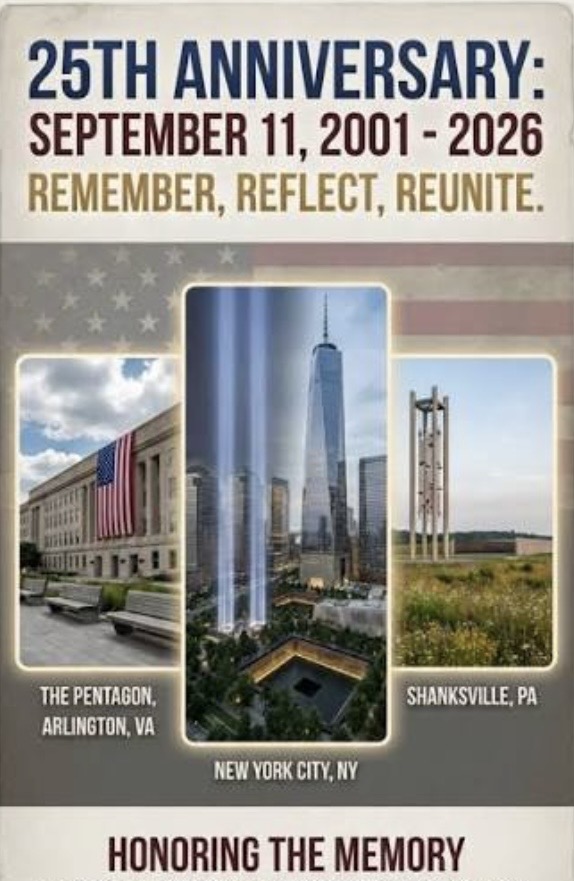
This is a repeat of a blog that I wrote a year ago, but felt its importance worth showing it again, as this Friday is the 25th Anniversary of the 9/11 terrorist attacks on our country.
For millions of Americans, 9/11 isn’t a chapter in history, it’s a memory of the exact moment the world seemed to stop. 25 years later, a new generation knows it only through stories, photographs and videos. Our job is to make sure they never forget why this mattered.
This is a shorten version of a wonderful book I read a number of years ago. ‘The Day the World Came to Town’ 9/11 in Gander, Newfoundland, written in 2002 by journalist Jim DeFrede. This story is a bit longer than the usual blogs and this happened 24 years ago, but I hope you will find it worth your time.
This portion is written by the air hostess with one airline:
On the morning of Tuesday, September 11, 2001 we were about 5 hours out of Frankfurt, flying over the North Atlantic. All of a sudden the curtains parted and I was told to go to the cockpit, immediately, to see the captain. As soon as I got there I noticed that the crew had that “All Business” look on their faces. The captain handed me a printed message. It was from Delta’s main office in Atlanta and simply read, “All airways over the Continental United States are closed to commercial air traffic. Land ASAP at the nearest airport. Advise your destination.”
No one said a word about what this could mean. We knew it was a serious situation and we needed to find terra firma quickly. The captain determined that the nearest airport was 400 miles behind us in Gander, Newfoundland. He requested approval for a route change from the Canadian traffic controller and approval was granted immediately — no questions asked. We found out later, of course, why there was no hesitation in approving our request. While the flight crew prepared the airplane for landing, another message arrived from Atlanta telling us about some terrorist activity in the New York area. A few minutes later word came in about the hijackings. The U.S. Federal Aviation Administration made the decision to shut down the airspace, forcing 4000 planes to divert to the nearest airports, with inbound flights from Europe to land in Canada.
We decided to lie to the passengers while we were still in the air. We told them the plane had a simple instrument problem and that we needed to land at the nearest airport in Gander, Newfoundland, to have it checked out. We promised to give more information after landing in Gander. There was much grumbling among the passengers, but that’s nothing new! Forty minutes later, we landed at Gander International Airport in Canada, under what would be known as Operation Yellow Ribbon. Local time at Gander was 12:30 PM …. that’s 11:00 AM EST.
There were already about 20 other airplanes on the ground from all over the world that had taken this detour on their way to the US. After we parked on the ramp, the captain made the following announcement: “Ladies and gentlemen, you must be wondering if all these airplanes around us have the same instrument problem as we have. The reality is that we are here for another reason. Then he went on to explain the little bit we knew about the situation in the US. There were loud gasps and stares of disbelief. The captain informed passengers that Ground control in Gander told us to stay put.
The Canadian Government was in charge of our situation and no one was allowed to get off the aircraft. No one on the ground was allowed to come near any of the air crafts. Only airport police would come around periodically, look us over and go on to the next airplane. In the next hour or so more planes landed and Gander ended up with 38 airplanes from all over the world, 27 of which were US commercial jets. Meanwhile, bits of news started to come in over the aircraft radio and for the first time we learned that airplanes were flown into the World Trade Center in New York and into the Pentagon in DC.
People were trying to use their cell phones, but were unable to connect due to a different cell system in Canada . Some did get through, but were only able to get to the Canadian operator who would tell them that the lines to the U.S. were either blocked or jammed. Sometime in the evening the news filtered to us that the World Trade Center buildings had collapsed and that a fourth hijacking had resulted in a crash. By now the passengers were emotionally and physically exhausted, not to mention frightened, but everyone stayed amazingly calm.
We had only to look out the window at the 38 other stranded aircraft to realize that we were not the only ones in this predicament. We had been told earlier that they would be allowing people off the planes one plane at a time. At 6 PM, Gander airport told us that our turn to deplane would be 11 am the next morning. Passengers were not happy, but they simply resigned themselves to this news without much noise and started to prepare themselves to spend the night on the airplane. Gander had promised us medical attention, if needed, water, and lavatory servicing.
And they were true to their word.
Fortunately we had no medical situations to worry about. We did have a young lady who was 33 weeks into her pregnancy. We took REALLY good care of her. The night passed without incident despite the uncomfortable sleeping arrangements. About 10:30 on the morning of the 12th a convoy of school buses showed up. We got off the plane and were taken to the terminal where we went through Immigration and Customs and then had to register with the Red Cross. After that we (the crew) were separated from the passengers and were taken in vans to a small hotel. We had no idea where our passengers were going. We learned from the Red Cross that the town of Gander has a population of 10,400 people and they had about 6,600 to 7,000 passengers to take care of from all the airplanes that were forced into Gander! We were told to just relax at the hotel and we would be contacted when the US airports opened again, but not to expect that call for a while.
We found out the total scope of the terror back home only after getting to our hotel and turning on the TV, 24 hours after it all started. Meanwhile, we had lots of time on our hands and found that the people of Gander were extremely friendly. They started calling us the “plane people.” We enjoyed their hospitality, explored the town of Gander and ended up having a pretty good time. A few days later, we got that call and were taken back to the Gander airport. Back on the plane, we were reunited with the passengers and found out what they had been doing for the past few days.
What we found out was incredible…..
Gander and all the surrounding communities (within about a 75 Kilometer radius) had closed all high schools, meeting halls, lodges, and any other large gathering places. They converted all these facilities to mass lodging areas for all the stranded travelers. Some had cots set up, some had mats with sleeping bags and pillows set up. ALL the high school students were required to volunteer their time to take care of the “guests.” Our 218 passengers ended up in a town called Lewisporte, about 45 kilometers from Gander where they were put up in a high school. If any women wanted to be in a women-only facility, that was arranged. Families were kept together. All the elderly passengers were taken to private homes. Remember that young pregnant lady? She was put up in a private home right across the street from a 24-hour Urgent Care facility. There was a dentist on call and both male and female nurses remained with the crowd for the duration.
Phone calls and e-mails to the U.S. and around the world were available to everyone once a day. During the day, passengers were offered “Excursion” trips. Some people went on boat cruises of the lakes and harbors. Some went for hikes in the local forests. Local bakeries stayed open to make fresh bread for the guests. Food was prepared by all the residents and brought to the schools. People were driven to restaurants of their choice and offered wonderful meals. Everyone was given tokens for local laundry mats to wash their clothes, since luggage had to stay on the aircraft.
In other words, every single need was met for those stranded travelers.
Passengers were crying while telling us these stories. Finally, when they were told that U.S. airports had reopened, they were delivered to the airport right on time and without a single passenger missing or late. The local Red Cross had all the information about the whereabouts of each and every passenger and knew which plane they needed to be on and when all the planes were leaving. They coordinated everything beautifully.
It was absolutely incredible.
When passengers came on board, it was like they had been on a cruise. Everyone knew each other by name. They were swapping stories of their stay, impressing each other with who had the better time. Our flight back to Atlanta looked like a chartered party flight. The crew just stayed out of their way. It was mind-boggling. Passengers had totally bonded and were calling each other by their first names, exchanging phone numbers, addresses, and email addresses.
And then a very unusual thing happened.
One of our passengers approached me and asked if he could make an announcement over the PA system. We never, ever allow that. But this time was different. I said “of course” and handed him the mike. He picked up the PA and reminded everyone about what they had just gone through in the last few days. He reminded them of the hospitality they had received at the hands of total strangers. He continued by saying that he would like to do something in return for the good folks of Lewisporte. “He said he was going to set up a Trust Fund under the name of DELTA 15 (our flight number). The purpose of the trust fund is to provide college scholarships for the high school students of Lewisporte. He asked for donations of any amount from his fellow travelers. When the paper with donations got back to us with the amounts, names, phone numbers and addresses, the total was for more than $14,000! “The gentleman, a MD from Virginia , promised to match the donations and to start the administrative work on the scholarship. He also said that he would forward this proposal to Delta Corporate and ask them to donate as well. As I write this account, the trust fund is at more than $1.5 million and has assisted 134 students in college education.
I don’t know if this will hit a small emotional cord in you, as it has in me, even addressing this book again, if you are able to find this book at your local library or Amazon, etc, it is well worth the read, to hear the complete story of how the Gander people made these strangers feel as at home, as humanly possible during a very uncertain time.
I wanted to share this story because we need good stories right now. It gives me a little bit of hope to know that some people in a faraway place were kind to some strangers who literally dropped in on them. It reminds me how much good there really is. In spite of all the rotten things we see going on in today’s world, this story confirms that there are still a lot of good people in the world and when things get bad, they will come forward.
The steaming station Tubi, has a hallmark type movie called ‘Diverted’ showing at the moment, that brings this story to life. This is one of those stories that needs to be shared. Please do so…
On that ‘wee note’ till next month, Monday, October 5, 2026.
Thank you for visiting and reading today. Please if you haven’t already, enter your email address in the subscription form below to receive my blog by email on the first Monday of each month.
Linda’s Monthly Monday Morning Musings for Monday August 3, 2026.
This weekend, I joined in a walk through the Romeo Cemetery, that was produced by the Romeo Historical Association, designed to make people more aware of the cemetery and its many historic graves. On the 8th day of August in 1842, about 1 1/2 areas of ground was purchased from Jonas Crisman and set apart for a burial place on the west line of the present village limits, on the north side of St Clair Street (32 Mile Road). The first burial in these grounds was that of the wife of Edwin W. Giddings, whose maiden name was Martha S Makepeace. Once established, the remains of soldiers and veterans from the Revolutionary and Civil War were interred along with those who fought in every war through the 20th century.
An earlier area for burials was located at the Romeo Driving Park on North Bailey Street and the remains were reinterred in the new location. As there are no records to be found on the management of this first resting place, the facts are partly from traditions pasted on over the years. The Romeo Cemetery Association was first incorporated on the 31st of July in 1858 for a term of 30 years.
The first addition to the burial grounds was added on the 21st of December in 1860, and this area was just north of the original grounds. With space once again becoming a necessity, 2 more acres were added just to the north of the first addition in 1887, this being known as the Second Addition. Another four acres were added in 1903. The old fences around the grounds and all added purchases over the years, were removed and along the front on St Clair Street and replace with an iron fence in 1905 and wire fencing on the east and west sides.
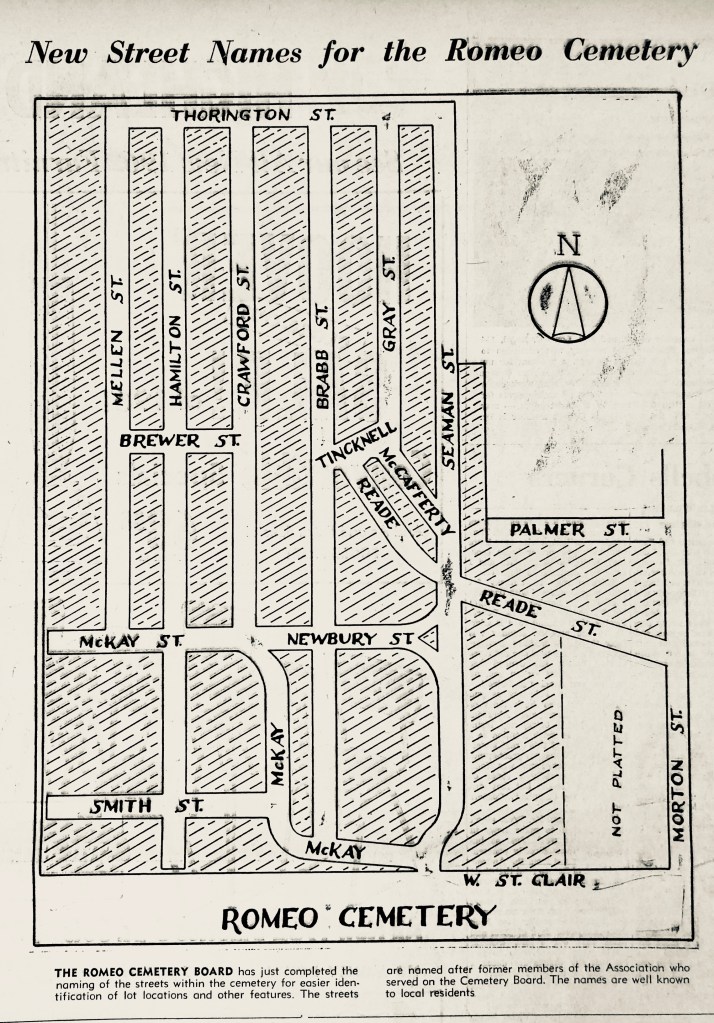
The Association history lists the names of the following officers of the society from it’s incorporation in 1858 to the year 1909 as: Presidents – John W Dyer, Edwin W Giddings, Timothy A Smith, Dr Watson Loud, John A Brewer, George G Hartung and Charles C Thorington. Vice-Presidents – John C Benjamin, James Gray, Edward S Snover, John Brewer, Moritmore P Owens, Isaac N Brabb and Edward C Newbury. New street names for the paths into the cemetery were all renamed after former members of the Association who served on the Cemetery Board. The cemetery was deeded over to the Village of Romeo by the Cemetery Association in 1861. The Association group would continue to re-incorporate the organization until 1918.
While researching these names and their historical homes, there is an odd sense of familiarity when walking through this peaceful and lovely cemetery and seeing this is where those same founding members who shaped the growth of this community, made this their finally resting place.
I would like to thank the Romeo Historical Association for all the help on the research being done to bring these founding members of the village to life on the written pages of this next book. On that ‘wee note’ till Monday September 7, 2026.
Thank you for visiting and reading today. Please if you haven’t already, enter your email address in the subscription form below to receive my blog by email on the first Monday of each month.
Linda’s Monthly Monday Morning Musings for July 6, 2026.
When I finished my last Arcadia book in the spring of 2025, the ‘Lighthouses of the Southern Atlantic Coast’, I felt I might have run my limit. Normally my time frame would be to start during the summer to work on the next book, then contract by fall with Arcadia Publishing. They give you six months to research and write your book, before you send it to them for editing and ultimately publishing it. I have done in the past, my research and writing during the fall and winter months. Then I am able to deliver the finish book to Arcadia by the early spring and it will be published by late summer, early fall. It has been the first time in 8 years, without having a book published, and I feel that I might have another book in me…….
About ten years ago, I volunteered at the Archive of the Romeo District Library to do some genealogical work on the people and historic homes in the Village of Romeo, to make up some files of information, to be used if a new home owner wanted to know the history of the home they live in. While making a set of files for the archives, I furthered the research and created a set of files for myself. Now I feel I could make good use of them, by doing another book for Arcadia’s ‘Images of America Series’, on the ‘Historic Homes of Romeo’. Most of these homes were built throughout the mid 1800’s and as early as 1830’s.
Above, the George E Dewey house on Church Street, has a story to tell………
The above image here, is the George Washington Brabb House on South Main Street in Romeo. And it has a story to tell……. and I am hoping I can tell the many stories of these homes and the people who created them.
I have been able to connect with the Romeo Historical Society, for help in acquiring images of the many houses, and as a resource, and they have kindly offered their help. So I might have answered my own question on whether or not to write another book, so might have found my topic. The images used in this blog, are the author’s.
On that ‘wee note’, till next month Monday August 3, 2026.
Thank you for visiting and reading today. Please if you haven’t already, enter your email address in the subscription form below to receive my blog by email on the first Monday of each month.
Linda’s Monthly Monday Morning Musings for June 1, 2026.
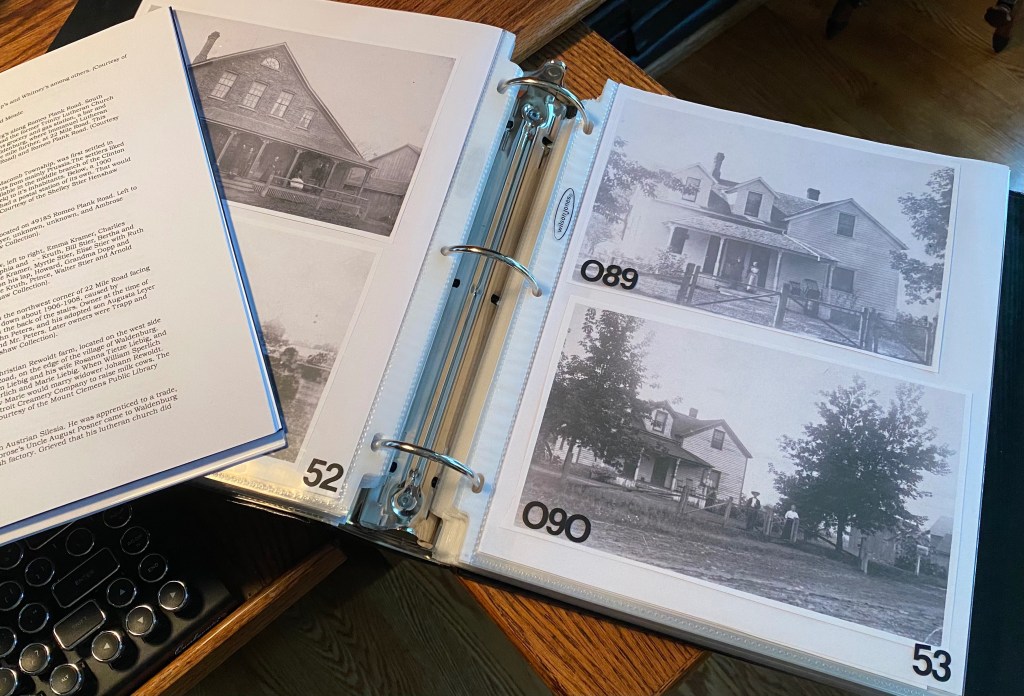
In April’s blog I wrote about, ‘what comes next’. I might have found what actions needed to be taken, with the mound of paper work, binders of images and files in general, that I managed to create with each and every book that I had published. Just taking a step back for a moment, I found that when working with the more than 200 images you need to have per book, that knowing how many images, and where they would be placed could be very over whelming to work with and keep straight. I decided to make a ‘mock book’ in the form of binders, where page protecters were used for each page needed, and in those pages images could be places and moved around when necessary to give me a complete look as to what I would need and what I might still be missing. I was able to number my pages and then when my images were placed, numbered the images, something very important that Arcadia insists upon.
Next came the container of file folders that I managed to collect full of information, images, contact information for individuals that were involved with the making of the books. These file boxes would hold advertising images, and anything that connected to the book I had been working on. So now what do I do with all this material, for the books that had already been published, did it still have value, but to anyone else but me?
Having finished these books, and not sure if I will write another, my thoughts turned to, what do I do with all this material, that I had acquired? In talking with the librarian, Stacie, at the Community Archives of the Kezar Library in Romeo, I was saying that I wondered if the Macomb County Library in Mt Clemens would want the material from my first three local history books, with me giving the same material from my lighthouse books to the Lighthouse Association in Mackinac. She asked me, why wasn’t I giving the material to them? All of the seven books! I guess I hadn’t thought it had any value, except to myself, because it showed all the work and commitment I had put into each and every book. To say I was overwhelmed and honored would be an understatement. The collection would be listed under my own name, that in itself, being a very humbling experience.
So what was next? Putting these files and binders in a manageable order. So three containers down, only four more to go! Now what do I do with all the shelving that was used to store this material?
On that ‘wee note’ till next month, Monday July 6, 2026.
Thank you for visiting and reading today. Please, if you haven’t already, enter your email address in the subscription form below to receive my blog by email on the first Monday of each month.