The Clifton Grist Mill

Linda’s Monday Morning Moaning’s

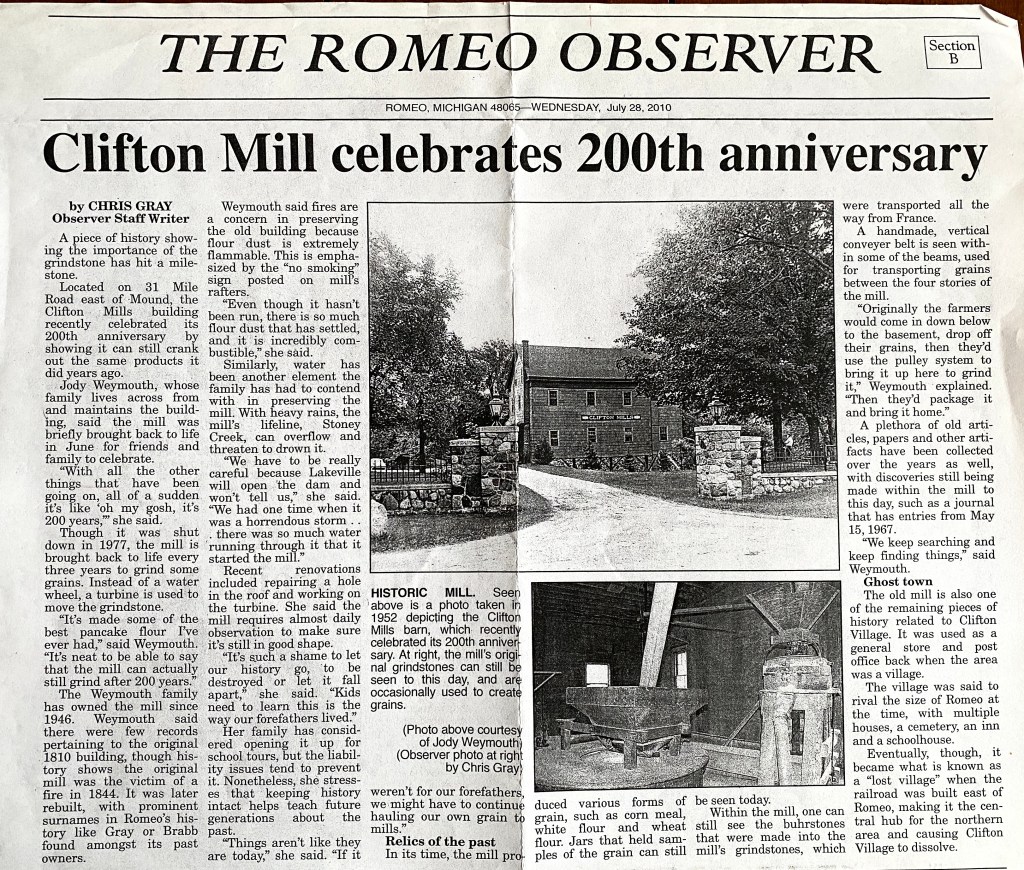
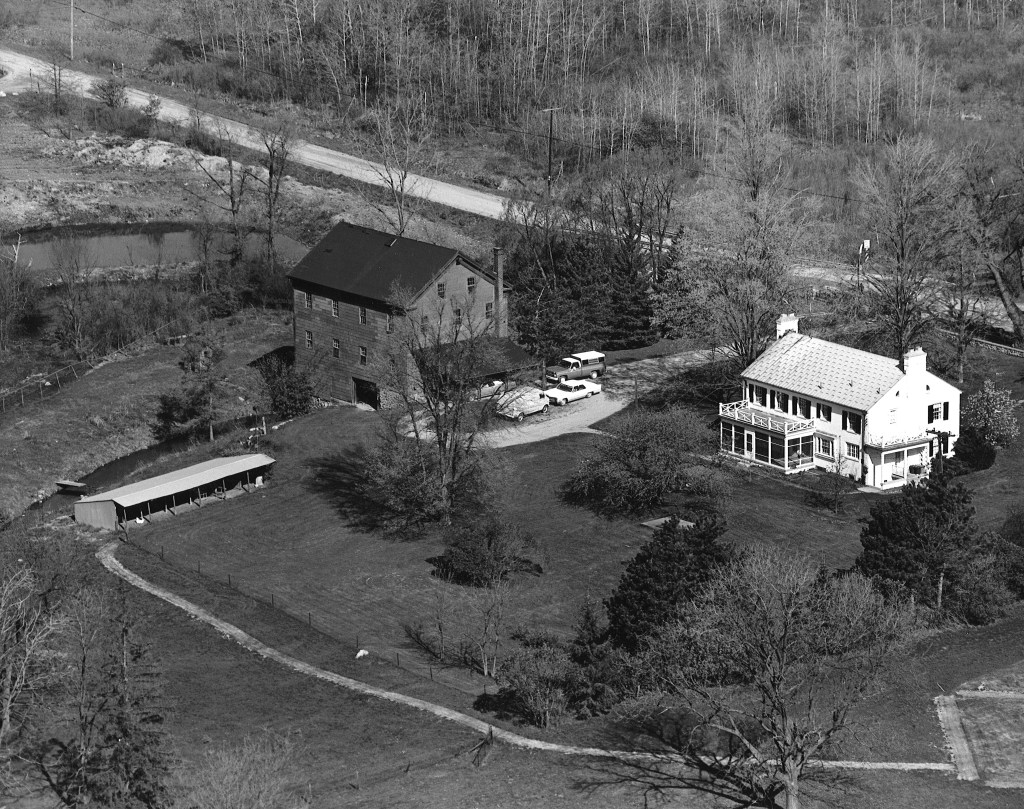
This was a story I found while researching the Washington book, and found it so very interesting. Tucked away in a ‘corner of Washington Township’ at 31 Mile and Dequindre Rd is the Clifton Grist Mill, a hidden away treasure for this community. The first mill at that location, according to the 1859 Macomb survey map, was on the north side of the road where Stoney Creek crosses 31 Mile. At some point in the 19th century it was removed and this new structure was built across the road. A dam on Stoney Creek just north of 31 Mile stores water for the mill. In present time, a metal turbine replaced the wooden wheel for power.

Ariel view of the Clifton Mill proptery

When I started the research for the story I wanted to put in the book, I sent an introductory letter to Mr and Mrs Weymouth, the present owners of this mill. I received an invitation by Jody Weymouth giving me permission to visit and hear their story. How gracious I found Jody to be and very happy to show me what really has taken on a life of its own, the caretaking if this great old mill. When I arrived I was shown endless amounts of binders and albums of all the treasured past that had been so loving kept. I would soon learn the Weymouth portion of the Clifton Grist Mill story.

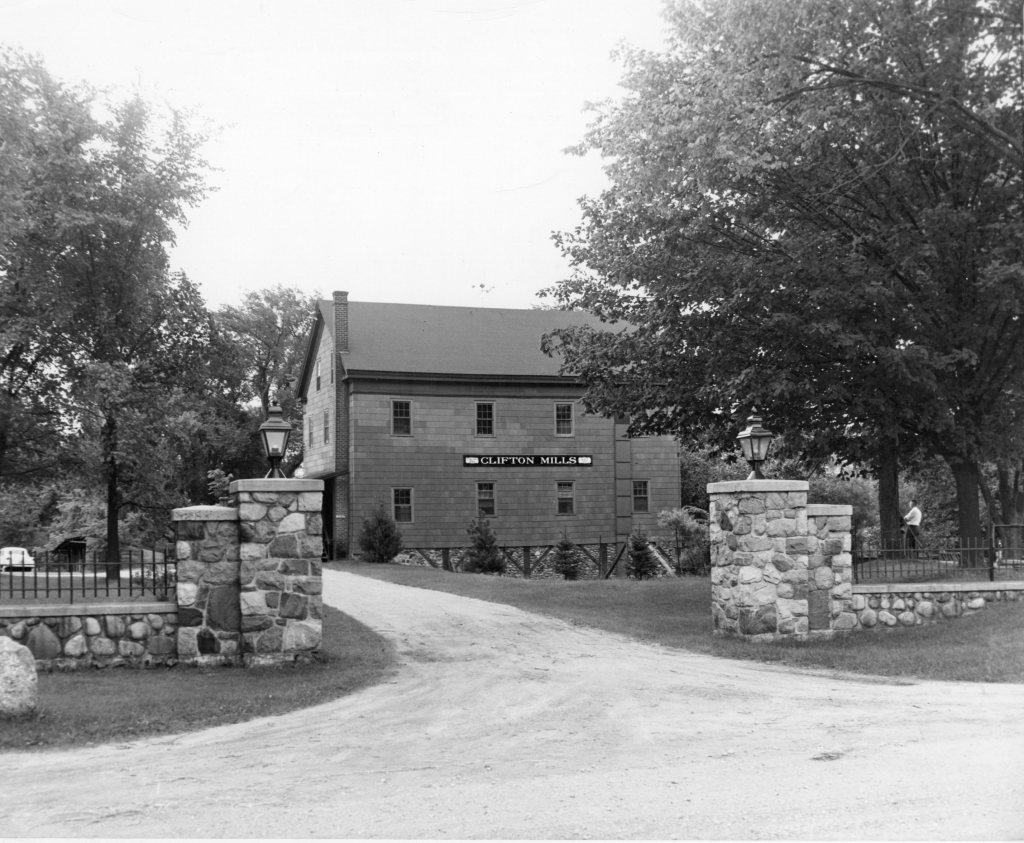
A successful professional man, Lawrence Weymouth would drive around exploring with his wife Marion and son Lawrence, known as Butch. several miles from Romeo, they would see the Clifton Mill, located along Stoney Creek, with a rushing stream of water flowing under it. The old building stood proudly by the side of the road. With a few inquiries and some judicious bargaining, it would find the Weymouth family the new owners of a century old mill in 1945. The mill would operate commercially until 1977, having sold their grains and flours to retailers such as A&P and Hudson’s as a high grade product. The mill in the years since they stopped production, has been lovingly cared for by Butch and Jody Weymouth. Every three years in order to retain legal rights to the water from Stoney Creek, it is opened and the mill put into operation in order to crack three bags of corn by the milling equipment, with a notary public on hand to witness the signing of the documentation, as the deed states you have to make something by water power.

Despite not operating as a commercial business in over 40 years, the mill today is still in excellent shape and could produce flour or cornmeal as though it just closed yesterday.

This would turn out to be something I could attest to, as our visit was coming to an end, Jody asked if I would like a tour of the mill? What a wonderful experience to see the inside and how the mill operated by one of the owners who had made this mill such an important part of their and now the third and fourth generations of family. This mill is truly a treasured piece of Washington Township history and this family has ever reason to be proud of what the original Lawrence and Marion Weymouth decided to do, after those weekends driving around looking at the sites back in 1945.

Clifton Mill, circa 1952

One of many articles on the Clifton Mill over the years

Recipes given out at the Mill in the late 1940’s by Marion Weymouth, for the best way to use their flours.

On that ‘wee’ note, till next week.


Aerial image and article courtesy of the Romeo Community Archives, at the Romeo District Library. Information, recipes, etc courtesy of Lawrence and Jody Weymouth collection.

Thank you for visiting and reading today. Be sure to share with your friends using the share buttons below. If you haven’t already please enter your email address in the form below to receive my stories by email.
The Thorington School

Linda’s Monday Morning Moaning’s

I have been very fortunate for those of us that love to see the old buildings and majestic homes that were built so many years ago and have been maintained and well cared for. 

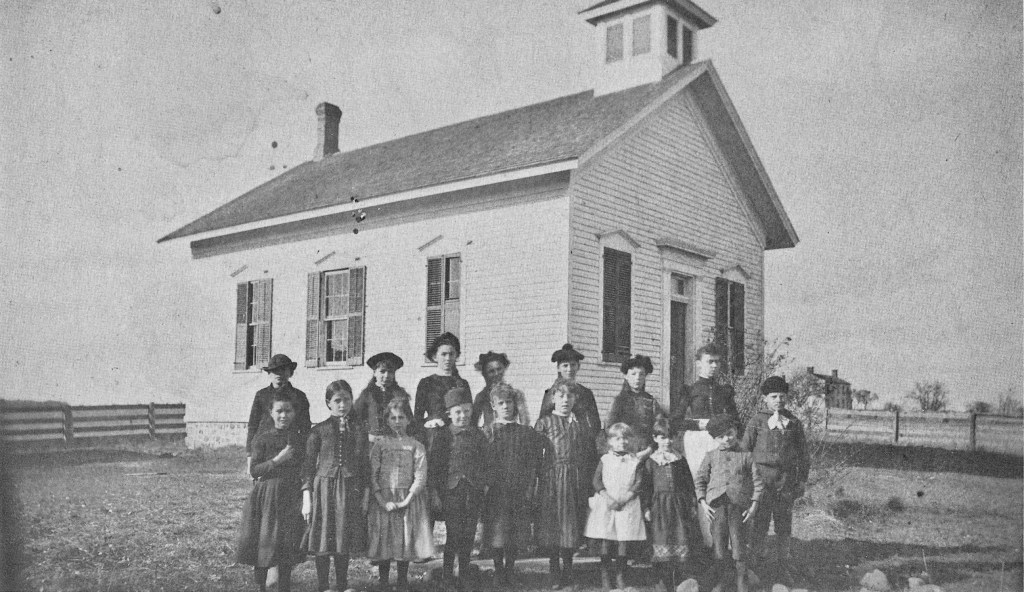
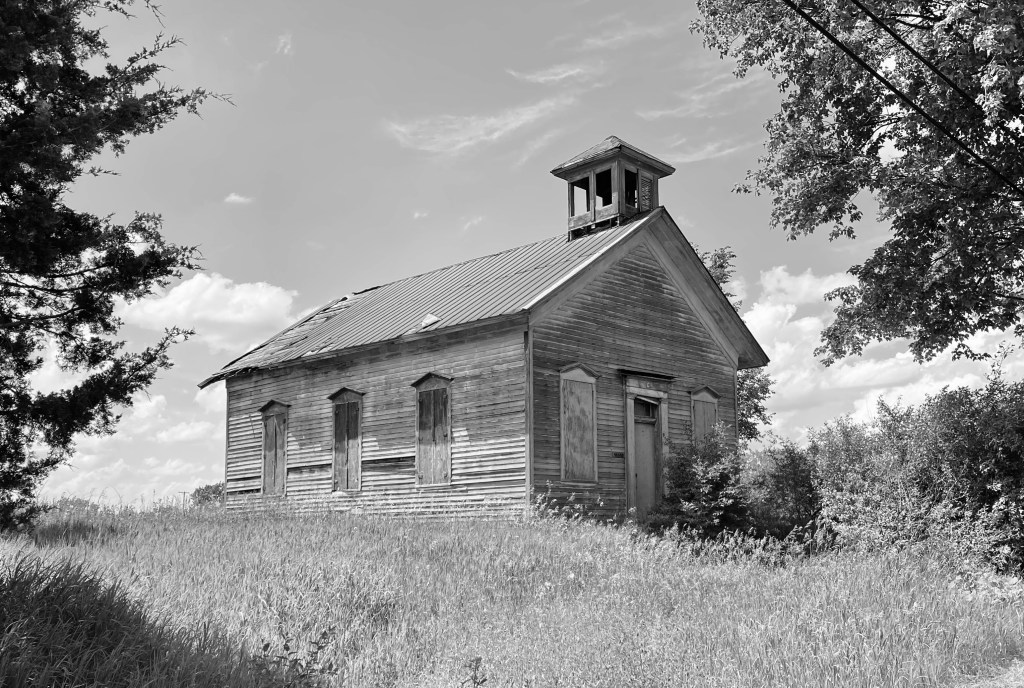
What I have a very hard time with is the neglect that does occur in certain instances, where I am not sure it should take place. I live in Washington and travel past an old school building that I have watched further deteriorate over the last years. This one room school house is called the Thorington School. The school is located on the west side of Mound Road just south of 31 Mile Road. The school has been in existence since the 1840 where many of the areas pioneering families sent their children to be educated.

Circa 1890 photograph, with Mary Barnes the teacher and some of her students

James M. Thorington was born on 26 January of 1837 in Washington Township the son of James and Sally Brown Thorington. His father would work the farm for 30 years being involved with agriculture and buying land. When he retired he owned 700 acres in Washington. When James M married Mary Starkweather in 1857 and they raised 5 children on their 320 acre farm on Mound Road between 30 and 31 Mile Roads. James Thorington Sr. owned the 1/8 acre on which the school stands, with it being a part of his 158 acre farm. When the elder James Thorington died, his son James M. took over his farm and would continue to lease the school property.

The 1931 Thorington School class photograph with the ‘Washington Township’ Arcadia book listing names of students

The school would close due to a need for school consolidation on June 2 1955. 

I have thought many times, why something can not be done about saving this valuable part of Washington history? I have always thought the Township should pay the present owners a nominal fee and if necessary move the school to an area in town. Look for people who would be willing to refurbish the building, and use it for educational purposes for both young and old.

My ideas are probably very simplistic and naive and I will be the first to say I am not familiar with what it would all take to make this happen, but I do know that the owners have done nothing to save this treasure and one day we will pass the little plot of land on Mound Road and 31 Mile and it will have fallen and this small bit of Washington history will be lost for good. 

On that ‘wee’ note, till next week.

Thorington School today

The two vintage images courtesy of the Greater Washington Township Historical Society, Thorington School today from the authors collection.

Thank you for visiting and reading today. Be sure to share with your friends using the share buttons below. If you haven’t already please enter your email address in the form below to receive my stories by email.
Burt’s Writing Machine

Linda’s Monday Morning Moaning’s

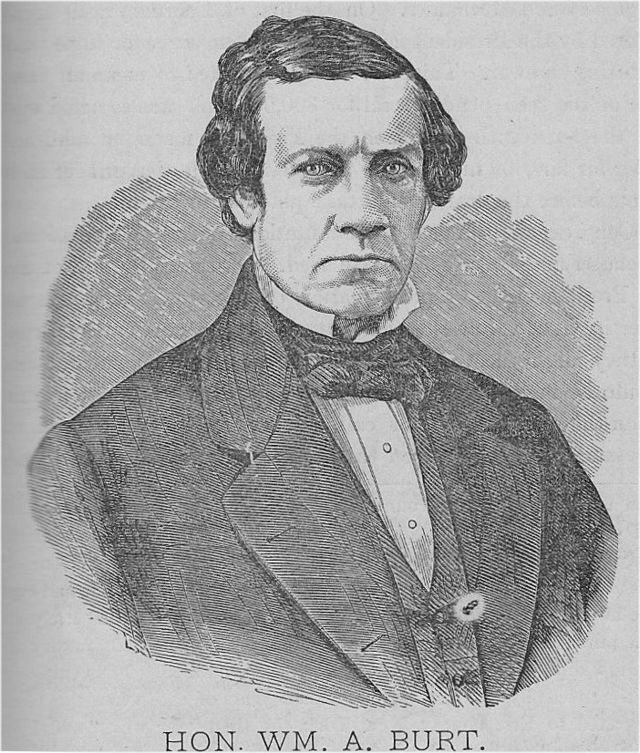
While researching my ‘Washington Township’ book, I came across a very interesting story, in the inventor of the first ‘typographer’. William Austin Burke, was born in Petersham, Massachusetts, on June 13, 1892. William would acquire much of his knowledge from borrowed books read by the light of a burning pine knot. William and wife Phebe and their four sons would come to the Detroit area then follow the Indian trails to an area north of Stoney Creek village in Macomb County. The settlement was known as Mt Vernon, located in Washington Township 26 mile north of Detroit. He had purchase 160 acres for $320. in 1822. A log cabin would be their first home. On December 19, 1832 William was appointed Mt Vernon’s first postmaster. There would be few letters written as few could afford the 25 cents postage. He went on to become a millwright, surveyor and inventor to support his family.

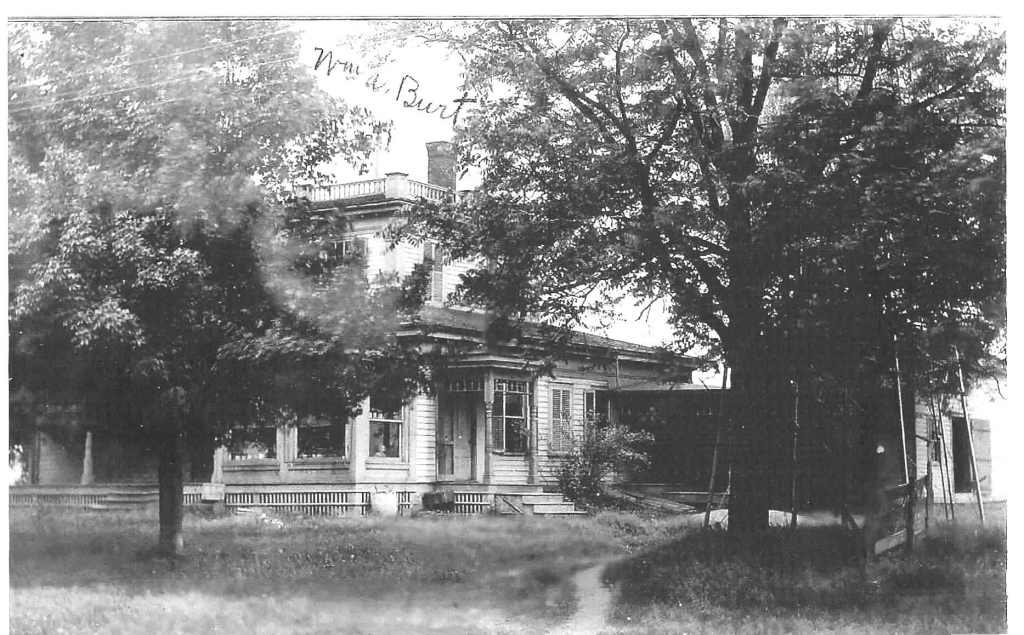
In 1840 he built this home on 28 Mile Rd in Washington just east of Mt. Vernon Rd. This was only one of the four houses William Burt built in the Mt. Vernon community, and this would be the one he lived in while living in this area. The homes that William built for his son’s and their families where called “Burts’ chalets”.

William and Phebe Burts home on 28 Mile

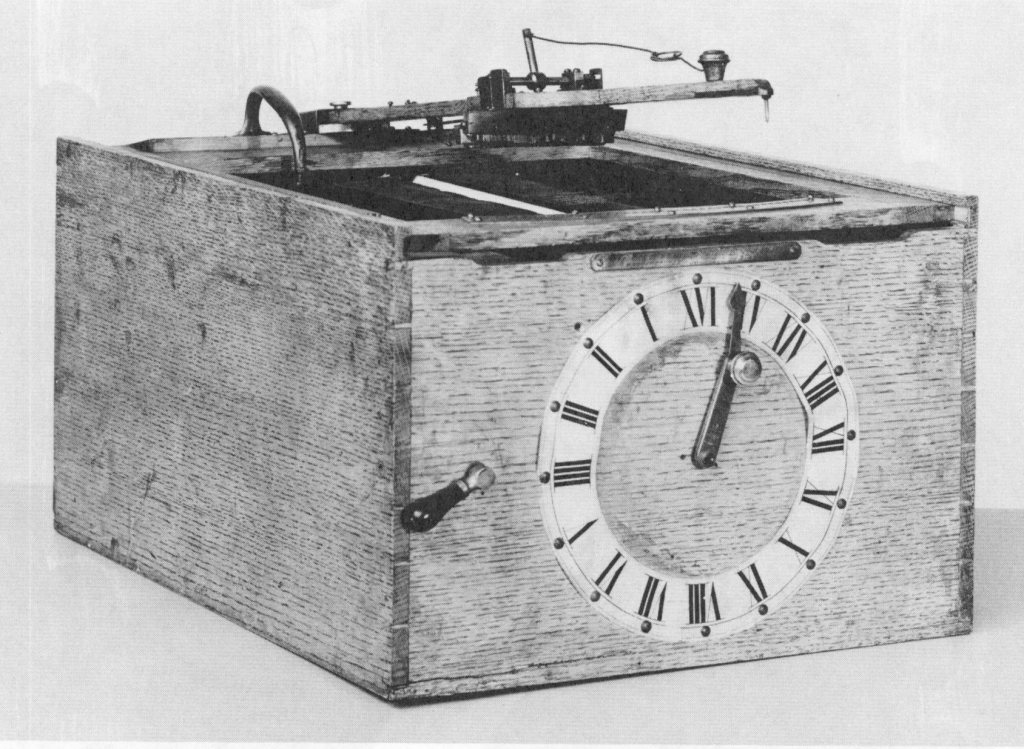
In 1809, William devised a system of shorthand to aid in a more rapid note-taking, but letter writing could never be simplified. Unlike many who would invent for wealth, William invented the first (topographer) typewriter out of a genuine need to resolve a problem. Many of the parts and tools were forged in his own workshop. There William would complete a crude but simple machine. This mechanism was housed in a small wooden box measuring 12 inches wide by 12 inches high, and 18 inches long. On July 23, 1929, President Andrew Jackson signed the Letters Patent for William’s Typographer. For the next 14 years, William had “the full and exclusive right for making, constructing, using and vending to others” America’s first writing machine.

The first typewriting machine

Below one of the first type written letters to his ‘Dear Companion’ dated March 13, 1830.

William became a governmental surveyor, and then began constructing a new compass that incorporated the principles of astronomy, called a Solar Compass. There would soon be a period of time surveying the Michigan Upper Peninsula, were his Solar Compass would play an important role in establishing the township lines. Later would come his Equatorial Sextant.

In 1857, after 32 years in Macomb County, William and wife Phebe would leave Mt. Vernon and move to Detroit, were a couple of their sons had already relocated. While instructing a group of sea captains on the use of his Equatorial Sextant, he would be stricken with a heart attack. William Austin Burt died in 1858, and was originally buried in the Mount Vernon Cemetery, but in 1888 he was reinterred in Detroit’s Elmwood Cemetery with other Burt family members.

On that ‘wee’ note, till next week.


Images courtesy of the Greater Washington Area Historical Society, and ‘They Left Their Mark’ by John S Burt.

Thank you for visiting and reading today. Be sure to share with your friends using the share buttons below. If you haven’t already please enter your email address in the form below to receive my stories by email.
72220 29 Mile Rd, Washington

Linda’s Monday Morning Moaning’s

The Joseph Moyers Residence

On October 3, 1825 Henry Moyers (Moires) purchased this 80 acres of land on 29 Mile Road east of Mound Road. The start of this piece was started in an already posted blog piece from a few weeks ago. Joseph Moyers would purchase this property, then eventually purchase the property next to this parcel where another home was built on Mound Road.

Moyers house showing part of the Washington Center Cemetery

The white clapboard Victorian farm house was constructed between 1860 and 1863. The home features three gables with a wrap around porch that faced east and south and a bay window facing east. The property would ultimately enlarge to 120 acres. It is next to this home that the Washington Center Cemetery would come into being.

Gilbert Moyers would become the second owners of the home and property. He attended the Romeo branch of the University of Michigan and become an attorney and was a colonel in the Third Michigan Cavalry. By 1863 the house and farm had been deeded to Gilbert’s brother, Joseph and on his death his wife Hannah becomes the owner. In 1881 the house was sold to John Aldrich and 1897 Allen McKay purchased the house and property for $5,400. In 1924 Noah Cooley purchased the home. The Cooleys were part of a settlement called Cooleys Corners. Many more families would occupy the home till Richard and Joy Muir leased it in the 1980’s.

House on it’s way to the new property on Campground Road

By 2003 the house would need to be moved to avoid demolition, due to Washington’s push for progress. But due to great interest, very hard and fast work, the home was moved from 29 Mile Road and find a hew home on property on Campground Road, right around the corner from its previous site. The house would now have the wrap around porch in the front and side, opposed to side and back of the house orientation.

On that ‘wee’ note, till next week.

How the house sits today

Vintage images courtesy of the Melvin E and Joan D Bleich Collection at the Romeo Community Archives, Romeo District Library. Present day image the authors collection.

Thank you for visiting and reading today. Be sure to share with your friends using the share buttons below. If you haven’t already please enter your email address in the form below to receive my stories by email.
Meeting New Friends by Writing

Linda’s Monday Morning Moaning’s

I have already mentioned Stacie and Julie from the Kezar Library and Community Archive, their help has been more than I could have asked for. Julie also has done all the scanning that was needed to get these books to the publisher, and alway done in a way they would except these old images for their exacting requirements. For the work on ‘Washington Township’ meeting the people at the Greater Washington Township Historical Society with Cherie Allen and Pat Hallman, among others, made the research help, always go much smoother. They have been kind enough to sell the Washington book at the Washington Township Historical Museum.

In Macomb Township I met with the former Supervisor Janet Dunn and the Macomb Township Historical Commission with its former president Peggy Arccado and their group, who at every turn had help to give. There have been so many people who saw the value in what I was trying to put together and their help was immense. When I first started working on the Macomb book, there was great concern, could I come upon with enough images to use and fill the requirement of Arcadia.  

I had heard that there was a lady that had lived and was raised in the Waldenburg area of Macomb and could help with information about that area, but nobody was sure how to reach her. I made some calls to no avail, and out of the blue one day, I received a call from Shelley Stier Henshaw, I had found her! Rather she had found me! I explained what I was doing, and asked if she could help with any photographs of the area. Boy did she help! I really don’t think I could have gotten that portion or chapter done with out the assistance she so willing gave. Her documentation and information were spot on. 

Shelley’s family, goes back a few generations and they owned the STIER HARDWARE on the corner of 22 Mile and Romeo Plank Road. Anybody and everybody who needed pretty much any thing from work to home materials used the store on that important corner. She was familiar with so many people from her childhood that lived in the area she was also able to explain photographic images I had from other sources. A chapter in the ‘Washington Township’ book, talks extensively about the memories from Shelley’s growing up in Waldenburg.

These are just a very small introduction in to my opening world of where you can go and who you who you might meet along the way, when you start writing.

On that ‘wee’ note, till next week.

The Kruth’s, Stier’s, Dopp’s, Kramer’s and Bellman’s, neighbors from 22 Mile and Romeo Plank Road

Image above courtesy of Shelley Stier Henshaw Collection.

Thank you for visiting and reading today. Be sure to share with your friends using the share buttons below. If you haven’t already please enter your email address in the form below to receive my stories by email.