72220 29 Mile Rd, Washington

Linda’s Monday Morning Moaning’s

The Joseph Moyers Residence

On October 3, 1825 Henry Moyers (Moires) purchased this 80 acres of land on 29 Mile Road east of Mound Road. The start of this piece was started in an already posted blog piece from a few weeks ago. Joseph Moyers would purchase this property, then eventually purchase the property next to this parcel where another home was built on Mound Road.

Moyers house showing part of the Washington Center Cemetery

The white clapboard Victorian farm house was constructed between 1860 and 1863. The home features three gables with a wrap around porch that faced east and south and a bay window facing east. The property would ultimately enlarge to 120 acres. It is next to this home that the Washington Center Cemetery would come into being.

Gilbert Moyers would become the second owners of the home and property. He attended the Romeo branch of the University of Michigan and become an attorney and was a colonel in the Third Michigan Cavalry. By 1863 the house and farm had been deeded to Gilbert’s brother, Joseph and on his death his wife Hannah becomes the owner. In 1881 the house was sold to John Aldrich and 1897 Allen McKay purchased the house and property for $5,400. In 1924 Noah Cooley purchased the home. The Cooleys were part of a settlement called Cooleys Corners. Many more families would occupy the home till Richard and Joy Muir leased it in the 1980’s.

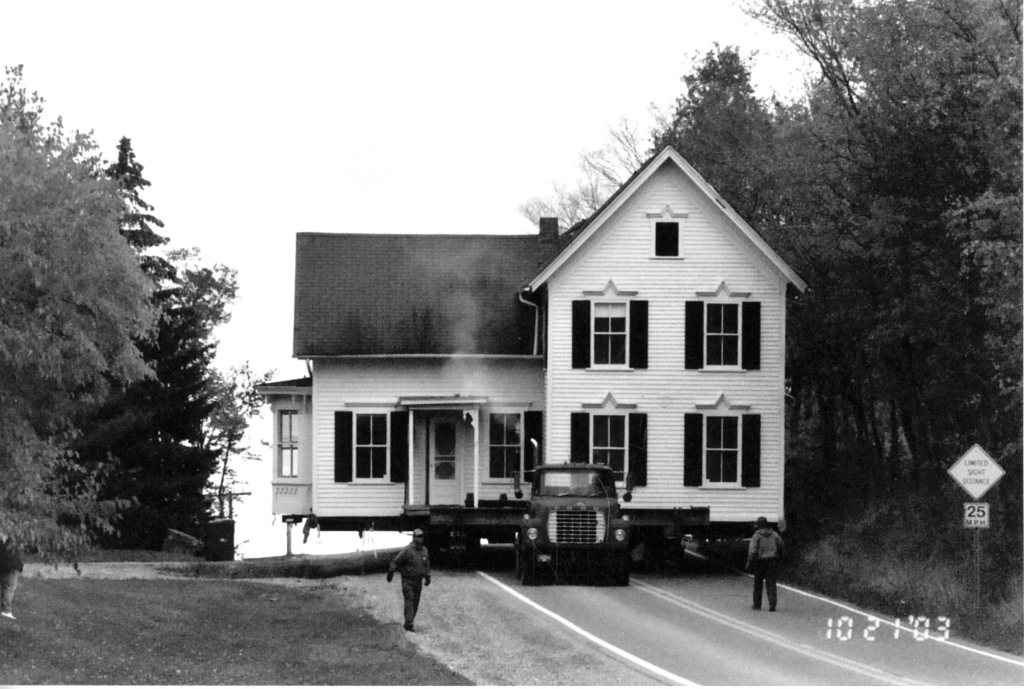
House on it’s way to the new property on Campground Road

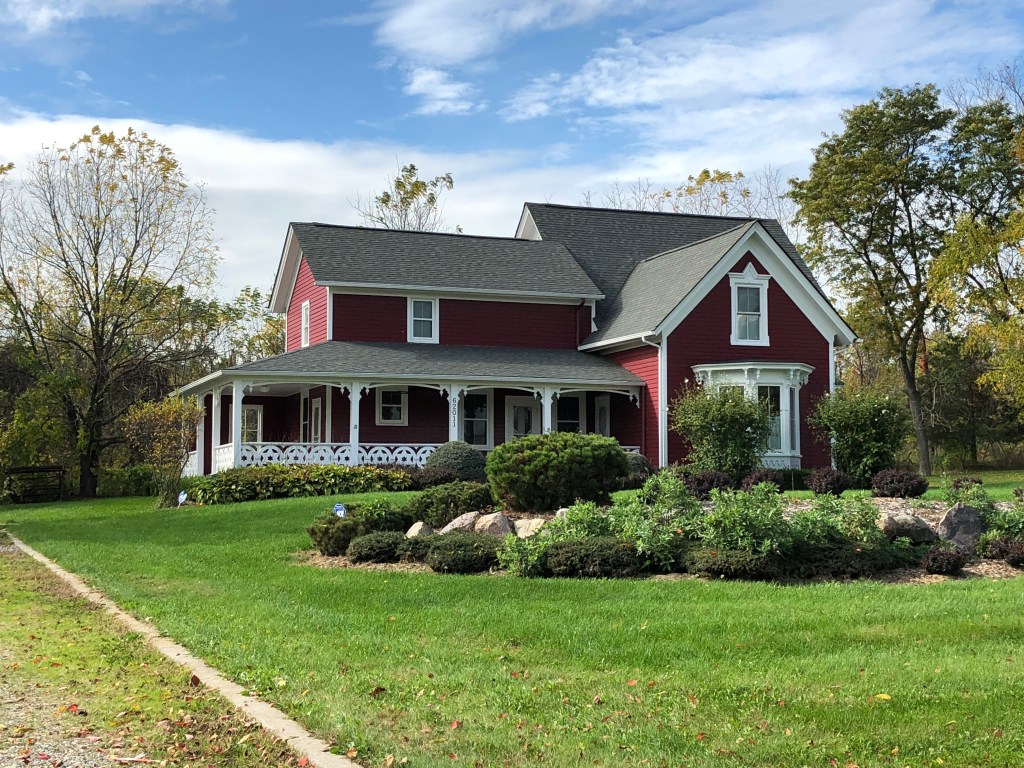
By 2003 the house would need to be moved to avoid demolition, due to Washington’s push for progress. But due to great interest, very hard and fast work, the home was moved from 29 Mile Road and find a hew home on property on Campground Road, right around the corner from its previous site. The house would now have the wrap around porch in the front and side, opposed to side and back of the house orientation.

On that ‘wee’ note, till next week.

How the house sits today

Vintage images courtesy of the Melvin E and Joan D Bleich Collection at the Romeo Community Archives, Romeo District Library. Present day image the authors collection.

Thank you for visiting and reading today. Be sure to share with your friends using the share buttons below. If you haven’t already please enter your email address in the form below to receive my stories by email.

Meeting New Friends by Writing

Linda’s Monday Morning Moaning’s

I have already mentioned Stacie and Julie from the Kezar Library and Community Archive, their help has been more than I could have asked for. Julie also has done all the scanning that was needed to get these books to the publisher, and alway done in a way they would except these old images for their exacting requirements. For the work on ‘Washington Township’ meeting the people at the Greater Washington Township Historical Society with Cherie Allen and Pat Hallman, among others, made the research help, always go much smoother. They have been kind enough to sell the Washington book at the Washington Township Historical Museum.

In Macomb Township I met with the former Supervisor Janet Dunn and the Macomb Township Historical Commission with its former president Peggy Arccado and their group, who at every turn had help to give. There have been so many people who saw the value in what I was trying to put together and their help was immense. When I first started working on the Macomb book, there was great concern, could I come upon with enough images to use and fill the requirement of Arcadia.  

I had heard that there was a lady that had lived and was raised in the Waldenburg area of Macomb and could help with information about that area, but nobody was sure how to reach her. I made some calls to no avail, and out of the blue one day, I received a call from Shelley Stier Henshaw, I had found her! Rather she had found me! I explained what I was doing, and asked if she could help with any photographs of the area. Boy did she help! I really don’t think I could have gotten that portion or chapter done with out the assistance she so willing gave. Her documentation and information were spot on. 

Shelley’s family, goes back a few generations and they owned the STIER HARDWARE on the corner of 22 Mile and Romeo Plank Road. Anybody and everybody who needed pretty much any thing from work to home materials used the store on that important corner. She was familiar with so many people from her childhood that lived in the area she was also able to explain photographic images I had from other sources. A chapter in the ‘Washington Township’ book, talks extensively about the memories from Shelley’s growing up in Waldenburg.

These are just a very small introduction in to my opening world of where you can go and who you who you might meet along the way, when you start writing.

On that ‘wee’ note, till next week.

The Kruth’s, Stier’s, Dopp’s, Kramer’s and Bellman’s, neighbors from 22 Mile and Romeo Plank Road

Image above courtesy of Shelley Stier Henshaw Collection.

Thank you for visiting and reading today. Be sure to share with your friends using the share buttons below. If you haven’t already please enter your email address in the form below to receive my stories by email.
273 Chandler Street, Romeo

Linda’s Monday Morning Moaning’s 

The Gray – Tinsman Residence

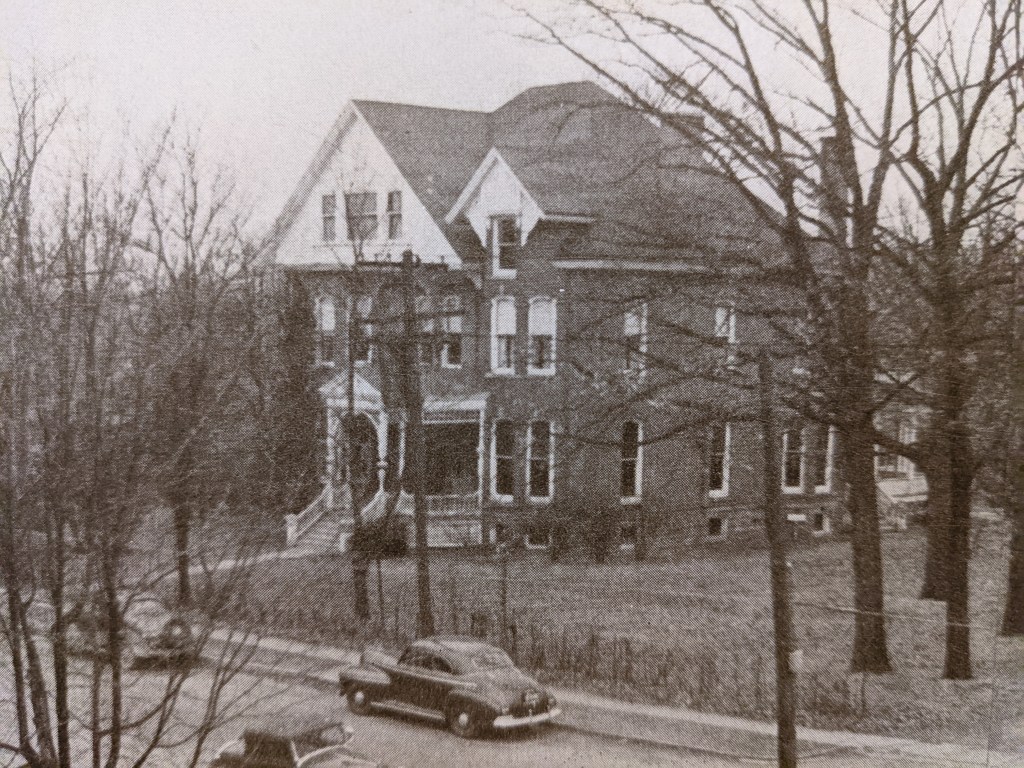
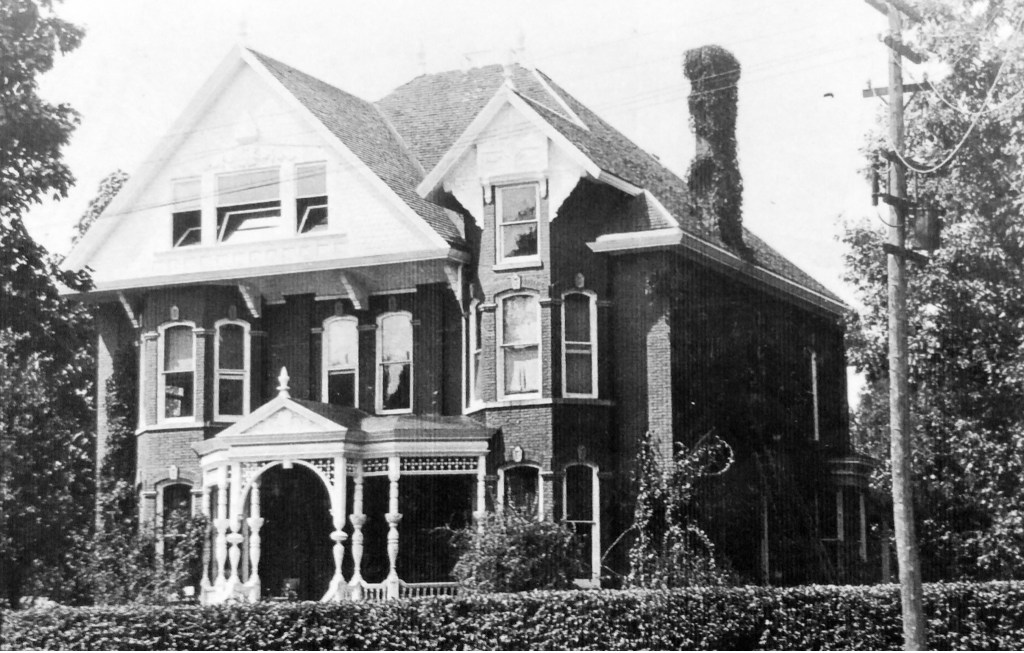
One of the historic homes I researched for the Archives when I was starting this journey was the Hugh Gray/ William Tinsman residence at 273 Chandler Street in the Village of Romeo. Hugh Gray (1842-1884) having grown up in the Romeo area from a prominent family of entrepreneurs, had a Second Empire residence, with a mansard roof constructed in 1872 by R.M. Bickford of Romeo for the cost of $10,000. The home was thought to be one of the finest in Romeo. It was finished in an all brick exterior with hard woods on the interior.

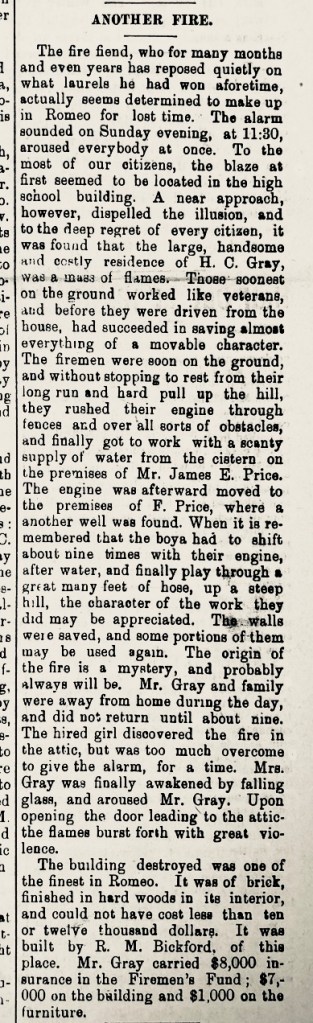
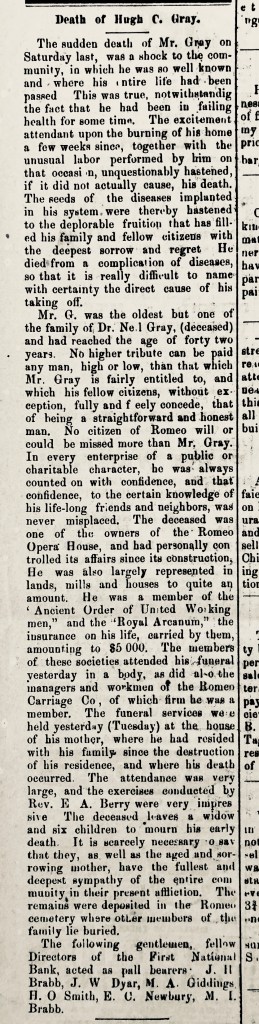
In June of 1884, a fire broke out in the upstairs area of the residence, according to the Romeo Observer. The fireman were soon on the scene ‘having pulled their fire engine up the hill’ on Chandler Street and through many obstacles only to find the water pressure not sufficient as they would have liked. In all only the walls of the residence were saved. Several weeks later, Hugh Gray died at 42 years of age, from “the excitement attendant upon the burning of his home”. The origin of the fire would remain a mystery. (See article below).

273 Chandler Street, Romeo

William Tinsman (1836-1916) a successful Washington Township farmer, purchased the residence for $1,250 in November 1885 and hired John Scot an architect from Detroit to re-design the home into the Queen Anne style that you see in these images. The Weiler family were the owners from 1917 to 1924. By the 1930’s it was named St Agnes School. and in 1940 the Pentland School, later known as Haven Farm until 1975. The house went into major disrepair and in a very derelict condition that has continued for many years. There is hope the owners are able to bring is back to the elegant home it once was, but even that in not a sure thing.

Image taken from the old Romeo High School

Sketch of 273 Chandler Street, date unknown

ROMEO OBSERVER 2 July 1884

Articles courtesy of the Community Archives at the Romeo Kezar Library.

Photo images courtesy of The Record Newspaper, Washington MI.

ROMEO OBSERVER 19 July 1884


Thank you for visiting and reading today. Be sure to share with your friends using the share buttons below. If you haven’t already please enter your email address in the form below to receive my stories by email.

How the Process Began

Linda’s Monday Morning Moaning’s

I have had two books published by Arcadia in 2019 and 2020, and the process has begun on a third Arcadia book to be published in fall 2021. It will highlight farming life in and around Macomb County north of Hall Road, through out the nine different townships.

When working on my first book I didn’t have a plan other than to stay very organized as that is the only way I can function. I knew I would be gathering a large number of photographic images as for these ‘Images of America’ books, are going to take as many as 240 images.

I decided at first to copy on a piece of paper the photograph and that would also give me room for writing any notes of information about the image. And you will need everything you can find on that image. But soon realized that putting each pile of papers, as each chapter had to have a separate pile, the space was becoming an issue. Also doing it that way I couldn’t rightly tell just what I had or might have needed.

In a previous post, I mentioned that I have worked on my family history for going on 25 years. Although I have used Ancestry, since Ancestry came into being, and a family history program, I have also printed out everything. That makes a lot of paper work, along with the documents, certificates, census reports, etc. I was accumulating. Although it does take up quit a lot of space, I started working with binders for each family grouping, and managed to make sense out of all the work and material I had amassed.

It made me realize I could use the same thought process of putting together these books. Everything fell into place very easy after that. I would use photo protecters and used one for very page the book would have. Side note: count properly! I was able to ‘lay out’ the book, in book form and then found I could move my images around, and it also showed me what I might need to add to the story.

My writing was done separately and when finished I would have it coiled bound to make reading or looking for something much easier. It does not always match with the Arcadia proofs, because of changes that would need to me made that are just part of the normal publishing process.

Next week, similar to last week, I want to tell you about another vintage home I have been able to research, this one is in Romeo on Chandler Street and it’s very interesting history.

On that ‘wee’ note, till next week.

Research Binder and coiled caption booklet

Thank you for visiting and reading today. Be sure to share with your friends using the share buttons below. If you haven’t already please enter your email address in the form below to receive my stories by email.
62420 Mound Rd, Washington

The Moyers Residence

David Thruston Jr. purchased 320 acres of land running from 29 Mile to 28 Mile on Mound Rd. in 1824. In 1825 Henry Moires (Moyers) purchased 80 acres around the corner on 29 Mile from the Thurston property. He would deed to the township of Washington a half acre of his land for a township burial ground that would become Washington Center Cemetery.

Early map of the Thurston and Moires property , Mound Rd west and 29 Mile Rd north, Campground east

Daniel and Eliza Thurston, who now owned the property, also, two of the founding settlers of Washington Township, sold their property to the Moyers brothers, Henry and Adam for $4000. on the 23rd of June 1850.

The house built on the land purchased is considered to be the second oldest house in the township. Located on the east side of Mound Road south of 29 Mile. The front half of the home is believed to have been built in 1851 and 1857. The back half was constructed in the 1860’s or 1870’s. The house still contains the original flooring on the stairs and second floor.

Image courtesy of the ‘The Record Newspaper’

In 1891, the Henry Moyers Estate sold the home to Joseph and Fredericka Slating for $4500. In 1920 Mr. and Mrs. Slating passed the home on to Otto Ludtke and his soon-to-be wife Jeanette. The house went through many sales after that and a major restoration would take place in 1993, before being foreclosed on in June 2013.

In 2016 new owners would see the potential in the home before them. With the house having been in foreclosure for some time prior to their purchasing it, there was much remodeling and restoration to be done. After a number of holiday parties, the house caught fire on the evening of the 27th December 2017. The official cause was an electrical fire originating in the attic. Although a good majority of the home was destroyed , the original exterior walls were still standing because of the plaster inside. The plaster consisted of concrete mixed with horsehair as a binding. This would stop the fire from reaching the outside. Over the next couple of years the second restoration would take place on this beautiful home.

Renovation of the Moyers house in 2019

Thank you for visiting and reading today. Be sure to share with your friends using the share buttons below. If you haven’t already please enter your email address in the form below to receive my stories by email.