The National Historic Lighthouse Preservation Act

Linda’s Monthly Monday Morning Moaning’s for Monday, February 3, 2025.

Twenty-five years later:

The NHLPA or better known as the National Historic Lighthouse Preservation Act was passed in October of 2000. For the nation’s lighthouse heritage, this became an important step in the needed preservation of many of these historic treasurers. This law became an amendment to the National Historic Preservation Act of 1966, which gave the government a way to dispose of the lighthouse property it owned, while still persevering the architectural and historic aspects of the lighthouse property. As it turns out this act is why we have a National Register of Historic Places and a list of Historic Landmarks.

This new act made it possible for non-profit organizations to participate with equal footing along with local and federal agencies in the process to acquire these properties. This was needed because there were non-profits that had put a lot of time, and money into the preservation of certain lighthouses and they should be able to benefit from that, when the properties were deemed excess by the United States Coast Guard. This would only benefit lighthouses that were listed as historic. Maintenance of the property, was done by the non-profits, while allowing the Coast Guard access to and responsibility for the light, then the use of the property for educational, cultural and recreational purposes, and providing access to the general public, as well as compliance with historic preservation guidelines could still be done.

White Shoals without it’s barber shop stripes, Michigan

Above, two of the many lighthouses that have been helped in the 25 years that the program has been in effect. Since 2022, the NHLPA program has resulted in the transfer of 43 lighthouse to non-profits, the auction of 70 lighthouses to private citizens, and also the transfer of 25 lighthouses to local governments. This generating the ability for many of these lighthouses to be opened to the public, and the education value of teaching the importance these lighthouse had to the maritime life they helped. These saved lighthouse have gone on to have roles as museums, Bed & Breakfast’s, research stations, and retreats.

The challenge of keeping these lighthouses in good repair is not an inexpensive situation, no matter who is the caretaker of the lighthouse, they must be prepared to deal with a lot of challenges, not the least of which, is Mother Nature at her best. The price you pay to walk the steps of those lighthouses, has far more importance that we can imagine. Next time you are out on a beautiful day, go see a lighthouse and walk the steps!


It is with much courtesy and a thank you that I mention, Anne Puppa, for use of her very well written and important article about the National Historic Lighthouse Preservation Act, NHLPA, 25 Years Later, in Lighthouse Digest, January- February 2025. Postcard images used, courtesy of this author.


Thank you for visiting and reading today. Please if you haven’t already, enter your email address in the subscription form below to receive my blog by email on the first Monday of each month. Thank you.

The Southern Lights During The Civil War

Linda’s Monthly Monday Morning Moaning’s for Monday, January 6, 2025.

This first bog of the New Year, is in the form of a ‘book report’. While doing research for these lighthouse books, I have had the pleasure of reading so many great books and stories, on how these lighthouses around the country were built, were operated, about the people who worked them, and also those that were destroyed. When working on the southern lights, I came across a newly published book, I wanted to share, ‘When the Southern Lights Went Dark’ by Mary Louise Clifford and the late J. Candace Clifford.

The Confederacy extinguished the lights in the lighthouses it was in control of, long before any shots were fired at Fort Sumter. ‘When the southern Lights Went Dark: The Lighthouse Establishment during the Civil War’ will tell you the story of the men, that took on the task of finding the lenses and lamps, repairing the deliberate destruction made to the towers and the lightships, and the work done to relight them as soon as the United States Navy could give them the protection needed.

While under normal conditions, military officers filled the posts of engineers and inspectors in each of the lighthouse districts, now it would become the task of civilians, who were talented enough to build and maintain lighthouses, but could also supervise a party of workmen and make crucial decisions on their own. While the Light-House Board was located in Washington, they could do little but give advice, order needed equipment and pay the bills.

The book is written, as one would write a diary, and started in 1861 when the hostilities began. The Confederate states encompassed Virginia, North and South Carolina, Georgia, Florida, Alabama, Mississippi, Louisiana, Texas, also included were Arkansa and Tennessee, although these last two states did not have lighthouses.

” You are instructed to relight the light at New Canal (above image), under your charge, at sunset this day, Wednesday, October 21, 1863, and every night there after. The military injunction under which the light was extinguished, has been removed.” (Postcard image courtesy of this author).

It would take a number of years to re-established the lights to working condition again, but the Civil War was long over, and most of the aids to navigation that had been extinguished or destroyed by the Confederacy were again guiding mariners to safety into the southern ports. Some of the repaired lights would be temporary and would replaced as Congress appropriated funds. The men who spent so many years hunting for the missing light apparatus, scrounging for materials, worrying for the security of their men, must have felt a heavy burden lifted from their shoulders.

I would like to thank Mary Louise Clifford and the late J. Candace Clifford, for the use of the material from their beautifully written book about such a difficult and ill used time in United States history, and all the hard work involved in putting together the research and writing. I hope this might peak the reader, some further interest and maybe a trip to your local library?


Thank you for visiting and reading today. Please if you haven’t already, enter your email address in the subscription form below to receive my blog by email on the first Monday of each month. Thank you.

The 1900 Galveston Hurricane

Linda’s Monthly Monday Morning Moaning’s for Monday December 2, 2024

The house is all lit up with Christmas trees, and the effect always brings a sense of peace and long ago memories, to my life. I received my new cover image last week, for this last lighthouse book, ‘Lighthouses of the Southern Atlantic and Gulf States’, and since it won’t see the light of day till summer 2025, it will be a wait before I can see the cover wrapped around the 128 pages of postcards and writing that has been my preoccupation for some time now.

‘Lighthouses of the Southern Atlantic and Gulf States’

While researching these books, I have come across stories, both happy and regrettable sad tales of life for the dedicated people who chose the profession of lighthouse keeping. This edition about the southern states, for me was even more interesting to write as I was able to bring into the stories and the writing a lot more history, because of what came about with these lighthouses along the southern Atlantic coast. The Civil War and HURRICANES, hurricanes in abundance. Here is one such story:

Telegram: Houston, Texas, 7:37pm, September 9, 1900 To: Willis Moore, Chief US Weather Bureau, Washington DC. “We have been absolutely unable to hear a word from Galveston since 4:00pm yesterday…..” GL Vaughan, Manager, Western Union, Houston.

In the early morning of September 8, 1900, a hurricane of massive force struck the Gulf Coast, a Super Storm, just west of Galveston, Texas, this “Great Galveston Hurricane” was very well named, because it would prove to be the deadliest environmental disaster than any thing man made could ever come up with. With the approximately 8,000 and the roughly 2,000 more that would be lost in the other areas of the Gulf Coast, the death toll was greater than the combined Pearl Harbor attack in 1941, the 9/11 terrorist attacks, and the devastating hurricane Ike that struck the Galveston area in 2008.

Bolivar Point Lighthouse

At nearby Bolivar Point Lighthouse, the storm flooded the the low-lying peninsula and water broke against the base of the light. 125 people would seek protection from the approaching water and refuge from the storm as the water began to rise. The flood waters brought a halt to the train approaching the Bolivar Point Ferry Terminal. Of the more than 100 passengers and crew aboard the train, only nine waded into the waist high water to try and get to the safety of the light tower, soon the flood water surrounded the train, trapping the other souls and saw to their death. The many weary men, women and children rode out the stormy night sitting on the spiral steps that lead to the lantern room at Bolivar Point Lighthouse, and the next morning the survivors left the tower to walk upon a scene that resembled a massacre.

At Fort Point Lighthouse, a screw pile style light, located at the entrance to Galveston Bay, a row boat was sent 200 yards from the nearby Fort San Jacinto, to evacuate the light keeper Captain Anderson, his wife, Lucy and his assistant, but because of the high winds and water conditions, they would have to turn back before reaching the lighthouse. The occupants of the light were in for the fight of their lives. Many of the Fort San Jacinto personnel would ultimately drown, while many survived by hanging onto wooden doors as they floated out across Galveston Bay. Captain Anderson, kept his light burning throughout the storm, but late that evening the floodwaters carried away their storage tanks with fresh water and their lifeboat. With wind speeds at 200 miles per hour, the slate, roof shingles began to give way. The flying roof shingles would soon break the lantern glass and extinguish the light. With the first floor flooded, the light keepers made their way to the second floor, and with their hope gone they waited for the flood waters to over take them. By Sunday morning the Andersons, would see first hand the toll this hurricane brought to Galveston. They would always say the description was beyond all belief, with bodies floating everywhere as only a small part of the devastation. Unlike what Anderson had seen in the Civil War, it was not only men dying it was women and children also. An image of Fort Point Lighthouse below.

The US Light-Saving Service which at the time, was in charge of lighthouse, before the US Coast Guard took over responsibility in 1940’s, stated their motto was “You have to go out, but you do not have to come back”. Meaning that many Life-Saving Service personnel served in the worst sea and weather conditions to save the lives of many in need people. Many of their personnel would loose their lives trying to save as many lives as possible.

This is the last blog for 2024, and my hope for you is a good and healthy Christmas season and that there is great hope that new adventures will be awaiting all of us in 2025.


Many thanks to William H. Thiesen PhD, Coast Guard Atlantic Area Historian, US Lighthouse Society’s the Keepers Log, The Maritime Executive, for the informative information.

For exceptional reading to further your hopefully awaken interest, ‘Isaac’s Storm’ by Erik Larson, about a meteorologist who watched helplessly, not being able to get a warning out for help. Very well written.


Thank you for visiting and reading today. Please if you haven’t already, enter your email address in the subscription form below to receive my blog by email on the first Monday of each month. Thank you.
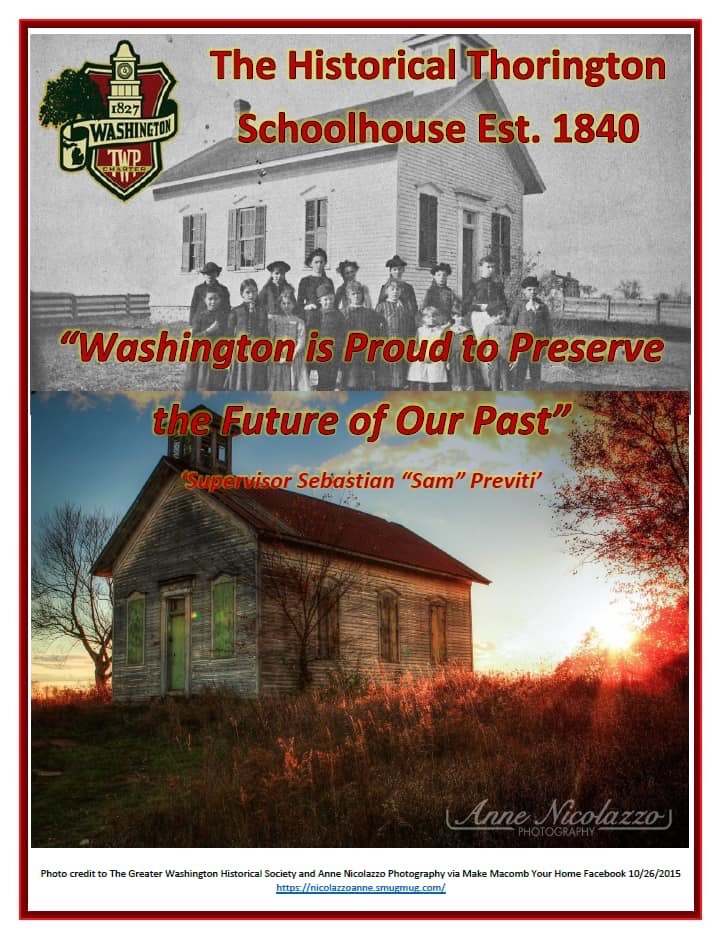
Finding those cover images!

Linda’s Monthly Monday Morning Moaning’s for Monday November 4, 2024.

After deciding on what your subject for the book will be, coming up with a name is one of the first items you have to decide on. Sometimes it’s easy, sometimes not so easy. And in spite of how brilliant a name you have come up with you also have an editor, who also has to think it’s brilliant. With my Great Lakes book, ‘Lighthouse and Lifesaving on the Great Lakes’, turned out to be a bit too much of a mouth full when they added the ‘lifesaving’ word to the title. Although to be fair, there was a chapter on the lifesaving stations. Ok my editor could have been right.

Next finding images for the front and back cover is the next really important task. You want the images to ‘sell’ the content inside the book to the public, as that front image is really one of the first things you see. And for the author, you are going to be looking at that cover for a long time to come. With Arcadia’s Images of America Series, you have to use images that will be the entire cover and their are requirements as to how big the main image is and is there room for the title where it’s not covering an important part of the image. I have been fortunate as they usually ask for 5 or 6 choices for them to choose, when any one who knows me, can pretty much figure, this is going to be my choice, and they have never turned me down with my choice. As in the farming book below, nothing could have been better to do a book on farming families than use the image of Mr Schoenherr and his son on their tractors!

Images of America Series

When I moved on to work on their Postcard History Series for my lighthouse series, these covers had different requirements. One image for the front and one image for the back cover, and they have to be styled as horizontal no vertical at all.

Postcard History Series

These covers have the look of the postcards that are to be used as the images to tell your stories. I have found with each of these previous lighthouse books finding the correct images to use was hardly an issue, as Arcadia prefers RPPC (Real Photo Postcards), oppose to linen types, that have a texture. They want them as sharp as can be, and they want an image that fills the area correctly from a photographic point of view. No problem with these three previous books, plenty to choose from that pretty much meet all the requirements need.

Now working on the ‘Lighthouses of the Southern Atlantic and Gulf States’, my problems started! After finishing the North Atlantic book, I would have gone on to the Southern Atlantic next, but finding the postcards I needed over a period of two years was more difficult than any of the other areas I would search in. Never figured out why, as the lighthouses in the southern and gulf states are as magnificent as any where else in the country, and when I did find them they didn’t always meet the correct requirements for the cover images. Until I settled on these two.

Front Cover Image
Back Cover Image

These two images have been submitted to my editor, and I should see the new cover along with my written material for the back cover in the next few weeks. Fingers crossed. Your covers front and back will sell your book, will it make people want to look beyond that cover to see what is inside? The hope is, it will.

On that ‘wee note’ till next month, Monday December 2, 2024.

Thank you for visiting and reading today. Please if you haven’t already, enter your email address in the subscription form below to receive my blog by email on the first Monday of each month. Thank you.

‘Lighthouses of the Pacific Coast’

Linda’s Monthly Monday Morning Moaning’s for Monday October 7, 2024

Well fall is here, the weather is cooling, the leaves are turning warm colors and the sun is lowering in the sky. As mentioned last month, my third lighthouse book was published by Arcadia on September 16th. The lights on the Pacific coast have a rather different look to the lights on the Atlantic or even the Great Lakes lights. The type of lighthouses used always took the terrain of the area into thought. Most of these lights would be built on high cliffs or bluffs opposed to our sand beaches. Sometimes that would be an advantage, but many times not, with taking the usual erosion into consideration.

Lighthouses of the Pacific Coast will explore many of the lighthouse and breakwater, piers and reef lights in Alaska, Washington, Oregon, California and Hawaii. Whether it is Eldred Rock Lighthouse in Alaska or Diamond Head in Hawaii, then as now, people have loved to visit the lights while on holiday and to send postcards back home. Many of these lights are still in existence and can be visited, thanks to the historical societies and associations that still maintain them.

I have also found that many times after the book has been sent to the publisher, I find that elusive vintage card, that I have spent so much time trying to acquire, and as in this case that was once again most true.

Destruction Island Lighthouse Circa mid 1900’s

Destruction Island Lighthouse is a decommissioned lighthouse on Destruction Island, a rocky island that is part of the Quillayute Needles National Wildlife Refuge situated about 3 miles off the coast of Jefferson County, Washington, in the northwest area of the United States. After the 94-foot conical tower was complete, it was covered in iron plating to protect it from the elements. The tower’s first order Fresnel lens stood 147 feet above sea level and had a visible of 24 miles. The US Coast Guard assumed responsibility for the lighthouse in 1939, till its automation in November 1968. This young keeper and his family would live a very desolate life on this island as with many other lighthouse positions for most keepers, but having pride in what they accomplished was forefront in all the keepers and their young families.

This week I was contacted by my publisher with the news, I have been granted a contract to complete the fourth of my set of lighthouses postcards books, with ‘Lighthouse of the Southern Atlantic and Gulf State’. This one will encompass the states of Maryland down to Florida and around to coast to the state of Texas. As I have found, that in researching the different areas of these books, there were usual different situations, such as in the Pacific, you would be dealing with earthquakes and the tsunamis that always seemed to accompany the quakes. Now on the southern Atlantic and Gulf area, it seems to be Hurricanes and the Civil War that have left their devilish marks on these lights. The finished book will be due at Arcadia by mid January, with a publication date of mid summer.

All images used are from the author’s collection, and on that ‘wee note’ till next month, Monday November 4th, 2024


Thank you for visiting and reading today. Please if you haven’t already, enter your email address in the subscription form below to receive my blog by email on the first Monday of each month. Thank you.