Linda’s Monthly Monday Morning Moaning’s for Monday December 2, 2024
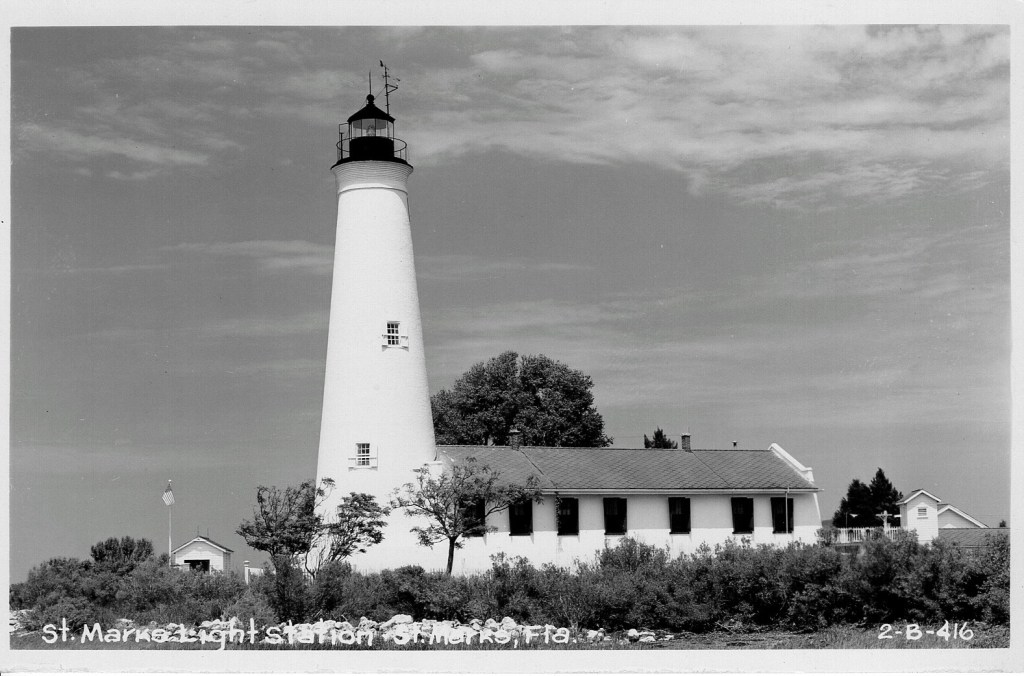
The house is all lit up with Christmas trees, and the effect always brings a sense of peace and long ago memories, to my life. I received my new cover image last week, for this last lighthouse book, ‘Lighthouses of the Southern Atlantic and Gulf States’, and since it won’t see the light of day till summer 2025, it will be a wait before I can see the cover wrapped around the 128 pages of postcards and writing that has been my preoccupation for some time now.

While researching these books, I have come across stories, both happy and regrettable sad tales of life for the dedicated people who chose the profession of lighthouse keeping. This edition about the southern states, for me was even more interesting to write as I was able to bring into the stories and the writing a lot more history, because of what came about with these lighthouses along the southern Atlantic coast. The Civil War and HURRICANES, hurricanes in abundance. Here is one such story:
Telegram: Houston, Texas, 7:37pm, September 9, 1900 To: Willis Moore, Chief US Weather Bureau, Washington DC. “We have been absolutely unable to hear a word from Galveston since 4:00pm yesterday…..” GL Vaughan, Manager, Western Union, Houston.
In the early morning of September 8, 1900, a hurricane of massive force struck the Gulf Coast, a Super Storm, just west of Galveston, Texas, this “Great Galveston Hurricane” was very well named, because it would prove to be the deadliest environmental disaster than any thing man made could ever come up with. With the approximately 8,000 and the roughly 2,000 more that would be lost in the other areas of the Gulf Coast, the death toll was greater than the combined Pearl Harbor attack in 1941, the 9/11 terrorist attacks, and the devastating hurricane Ike that struck the Galveston area in 2008.

At nearby Bolivar Point Lighthouse, the storm flooded the the low-lying peninsula and water broke against the base of the light. 125 people would seek protection from the approaching water and refuge from the storm as the water began to rise. The flood waters brought a halt to the train approaching the Bolivar Point Ferry Terminal. Of the more than 100 passengers and crew aboard the train, only nine waded into the waist high water to try and get to the safety of the light tower, soon the flood water surrounded the train, trapping the other souls and saw to their death. The many weary men, women and children rode out the stormy night sitting on the spiral steps that lead to the lantern room at Bolivar Point Lighthouse, and the next morning the survivors left the tower to walk upon a scene that resembled a massacre.
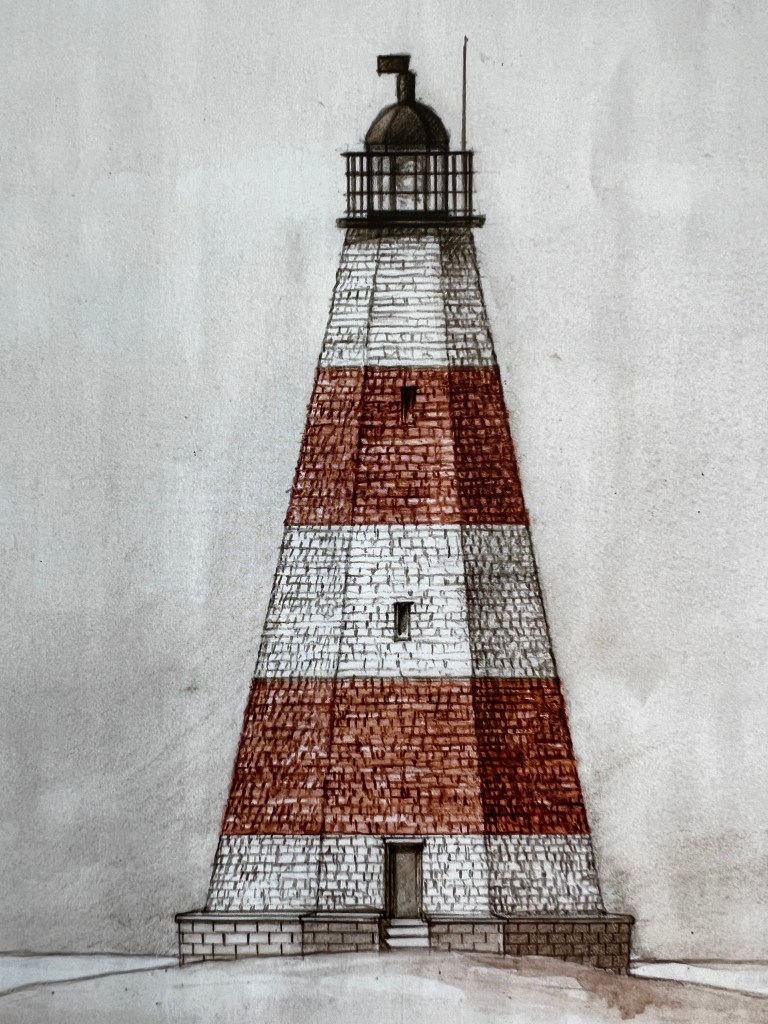
At Fort Point Lighthouse, a screw pile style light, located at the entrance to Galveston Bay, a row boat was sent 200 yards from the nearby Fort San Jacinto, to evacuate the light keeper Captain Anderson, his wife, Lucy and his assistant, but because of the high winds and water conditions, they would have to turn back before reaching the lighthouse. The occupants of the light were in for the fight of their lives. Many of the Fort San Jacinto personnel would ultimately drown, while many survived by hanging onto wooden doors as they floated out across Galveston Bay. Captain Anderson, kept his light burning throughout the storm, but late that evening the floodwaters carried away their storage tanks with fresh water and their lifeboat. With wind speeds at 200 miles per hour, the slate, roof shingles began to give way. The flying roof shingles would soon break the lantern glass and extinguish the light. With the first floor flooded, the light keepers made their way to the second floor, and with their hope gone they waited for the flood waters to over take them. By Sunday morning the Andersons, would see first hand the toll this hurricane brought to Galveston. They would always say the description was beyond all belief, with bodies floating everywhere as only a small part of the devastation. Unlike what Anderson had seen in the Civil War, it was not only men dying it was women and children also. An image of Fort Point Lighthouse below.

The US Light-Saving Service which at the time, was in charge of lighthouse, before the US Coast Guard took over responsibility in 1940’s, stated their motto was “You have to go out, but you do not have to come back”. Meaning that many Life-Saving Service personnel served in the worst sea and weather conditions to save the lives of many in need people. Many of their personnel would loose their lives trying to save as many lives as possible.
This is the last blog for 2024, and my hope for you is a good and healthy Christmas season and that there is great hope that new adventures will be awaiting all of us in 2025.
Many thanks to William H. Thiesen PhD, Coast Guard Atlantic Area Historian, US Lighthouse Society’s the Keepers Log, The Maritime Executive, for the informative information.
For exceptional reading to further your hopefully awaken interest, ‘Isaac’s Storm’ by Erik Larson, about a meteorologist who watched helplessly, not being able to get a warning out for help. Very well written.
Thank you for visiting and reading today. Please if you haven’t already, enter your email address in the subscription form below to receive my blog by email on the first Monday of each month. Thank you.




 Linda Osborne Cynowa