
A lighthouse is loosely defined as a tower or structure used to display a light for the guidance of ships to either avoid a dangerous area, such as shoals, reefs or to just identify a safe harbor. The purpose of the lighthouse’s light is to provide the ships at sea with a fixed point of reference to aid their ability to navigate in the dark when the shore or off shore hazards cannot be seen directly. The distance to which a light can be seen depends on the height and intensity of the light. The brighter the light and the greater its height above the sea, the farther it can be seen.
These lights provided early warnings of reefs, sandbars, submerged rocks, unseen cliffs, and as day marks and landmarks at night when fog, snow, haze and wind wipe up the sea itself. These hazards were encountered off the shores of the northern Atlantic states where the lighthouses were so important. With its thick fog that settles over waterways in this area, noticing hazards that are impossible to see, ultimately having this area known as the ‘Graveyard of the Atlantic’. Maine, New Hampshire, Massachusetts, Rhode Island, Connecticut, New York, New Jersey and Delaware are the focus of this book, where vintage postcards show how many of these lighthouses looked like in the important time in the navigational life of these lighthouses. Many of the buildings around the light stations have been torn down and removed, and in some places, only the light tower now exists.
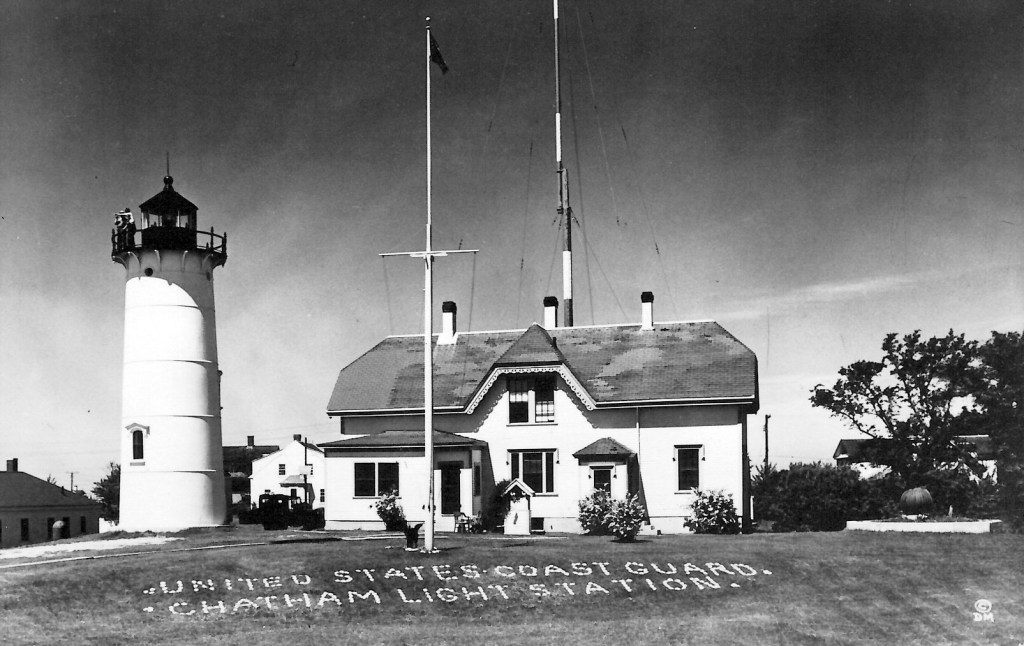
Before the Lighthouse Board was established 1852, local collectors of customs were responsible for any lighthouses under Stephen Pleasonton, who was known for his work in document preservation and for his bureaucratic work in overseeing the Treasury Department’s Lighthouse Establishment. In 1852, the United States Lighthouse Board was established and was in effect until 1910, when the United States Lighthouse Service was created to take over the lighthouse responsibilities.
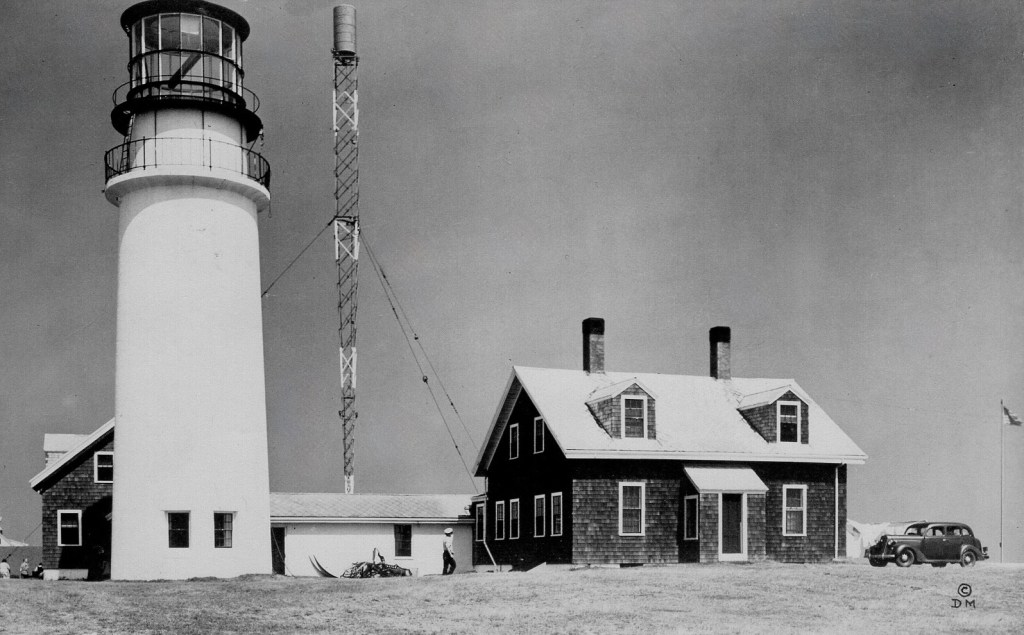
In 1939, President Franklin Delano Roosevelt decided to incorporate the Lighthouse Service and transfer it to the United States Coast Guard to maintain the lights. As their importance to navigation has diminished and since the public interest in them had increased, the Coast Guard has been turning over ownership and responsibilities for their running to individual societies, towns and among others the National Park Service, because of the expense of maintaining these structures. With the sentimental and historical attachment to these lights, a solution was needed.

The National Historic Lighthouse Preservation Act of 2000 is a legislation creating the process for the transfer of federally owned lighthouses into private hands. With the automation of the lighthouses early in the twentieth century and a further push in the 1960’s its goal was to relieve most of the keepers from the lighthouses. These high maintenance structures are constantly subjected to the lake air and invasive effects of water and ice and quit frequently erosion of the surrounding land. With the unmanned structures being left to the devices of vandals and theft, the automation most surely led to their demolition and destruction. Many of the lighthouses are now under the protection of the National Register of Historic Places.
 Linda Osborne Cynowa