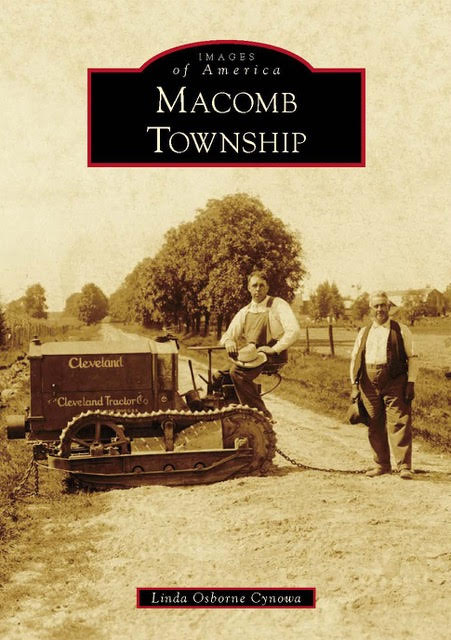
 Macomb Township is centrally located on the middle and north branches of the Clinton River, a location which has provided a fertile environment for the agriculture that has been formative in its development. Soon much of the land would be worked and settled by farmers. By the 1980s many farmers sold off their land to developers, and subdivisions bearing the names of those previous farms soon took the space that crops had once filled. Over the years, Macomb Township has become one of the fastest growing communities in the county. Good schools and beautiful parks have been added along with a new township complex, a recreational center, and a public library. Created by settlers wanting greater connection to neighbors and friends, Macomb Township continues to offer that same type of close-knit community.
History of Macomb Township
In the beginning there was only a vast wilderness… The Chippewas, the Delawares, the Objiwa, Iroquois and the Potawatomi, would become the first Michiganders, and call this area home. Michigan would become a separate territory in 1805, and by 1818 Governor Lewis Cass would make the area of Macomb, its third County in the State.
The first entry of land in the town, was made by G.B. and D.G. Ginochio, of from Detroit, of the east half of the northeast quarter of section 35, on the 12th day of August 1820. On the 26th of June 1821, Alfred Ashley of Mt. Clemens, would purchase from the government, the east half of the southwest quarter of the same section. It was long known that the Haskins mill was part of that section, and evidence of shrewd foresight for Mr Ashley. Over the years the southeast corner of the town, seems to attracted the land purchaser, or settler, most probably because of its proximity to the then thriving Mt Clemens, only nine miles away.
In 1830 John and David Crawford of Yates County, New York, would purchase the northeast quarter of section 1, and where the history of the Crawford Settle would begin. In the same year, on the 13th day of November Lester Giddings would purchase the west half of the southwest quarter of section 5. Daniel Miller would make a purchase of the east half of the northwest quarter of section 8, on the 10th of May 1831.
On the 17th of March 1834, the Township of Macomb was organized by an act of the territorial legislature. As it was first organized, it was composed of what is now the townships of Chesterfield and Macomb. In 1842 Macomb would become territorially independent. The township was named for Alexander Macomb, who was a highly decorated veteran of the War of 1812.
Although many of the governmental land plots where purchased before the organization of the township, the land sales would become very rapid immediately after it became independent. From 1820 to 1834, in only fourteen years, about 5,000 of the over 23,000 acres would be passed into private ownership. The remaining 18,000 acres would be sold in the next three years after the organization.
At a fairly early date, a large settlement of German immigrants would settle in Macomb Township because of the rich soil and land. Macomb would in large, be part of the lumber and logging industry of southeastern Michigan in the late 19th century and early 20th century. Logs would be transported south from Wolcott Mill in Ray Township, down the middle branch of the Clinton River to sawmills. The route taken became known as Romeo Plank, and is the same name of the modern day road used today to travel the very same route.
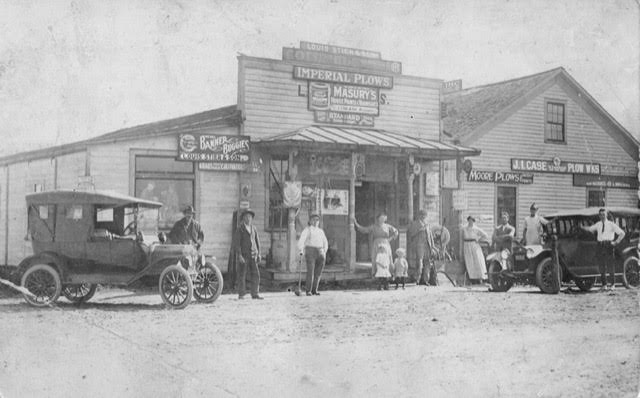
Macomb would have three unincorporated communities within the township Waldenburg is the name given to a settlement at the corners of sections 28, 29, 32 and 33, in what today would be 21 Mile Road and Romeo Plank Roads. A general store, church and school, wagon shop, and other businesses would be found there. As time went on 22 Mile Road and Romeo Plank Road would become more officially thought of as Waldenburg. The Macomb post office was moved to Waldenburg on March 29 1860 and would last until 1906. The building that the Stier’s Hardware was in, was located originally across the street from where it ended up, and would serve as a dance hall for the community. It would be moved in 1903. Next to the Hardware store is the Waldenburg Tavern, still located in the same spot as the Waldenburg Bar today.
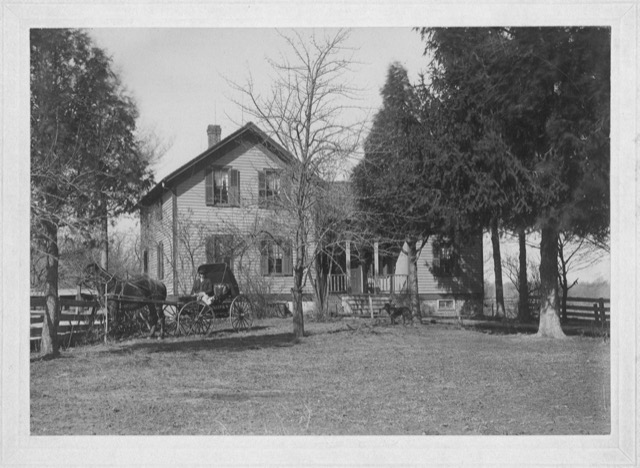
Macomb Corners is located in the northwest corner of the township, they would have a post office by 1830. A general store and a Methodist Church and grade school were also located on this planked toll road, where the road and stagecoach lessened in importance with the coming of the railroad.
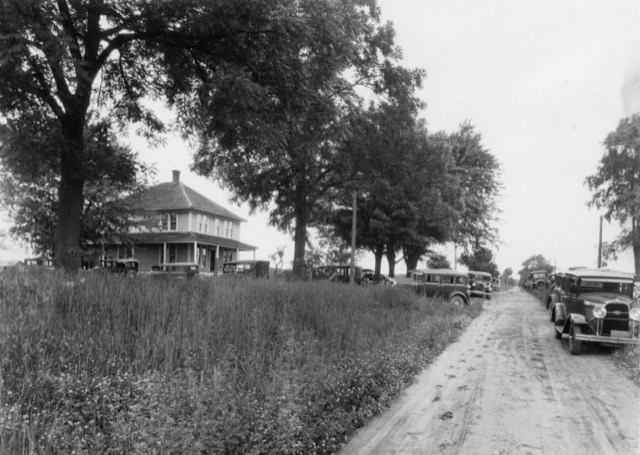
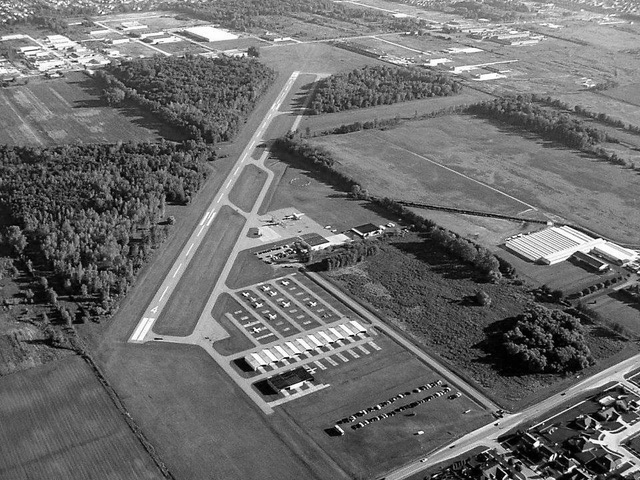
Meade was located in the northeast portion of the township on the boundary with Ray Township at 26 Mile, also called Marine City Highway and North Avenue. Its first name was Crawford or Crawford Settlement, then Vienna was chosen as the post office name in 1838, Stewart Taylor would be the first postmaster. The Crawford name came from a Revolutionary War veteran, but after the Civil War battle at Gettysburg , the village was renamed in honor of General George Gordon Meade. They would built the second school in Macomb Township. This school was the first in the county to offer algebra during the 1846-1847 school year. There would also be a small airport near Meade. Now the Meade Cemetery and a few street signs are all that is left of the Village of Meade, which operated as a town until 1906.
By the time of the 1920’s-1930’s the forests would provide the lumber needed for building the barns, homes and the plank roads, such as Romeo Plank Road. This were two saw mills, one located on 21 Mile Road northwest of Romeo Plank, and another was located northwest of 24 Mile and Romeo Plank Road, before relocating to the east corner of 25 Mile Road and Romeo Plank. The large oak trees were cut with axes and two man saws, but the stumps would require a trip to Stier’s Hardware at 22 Mile and Romeo Plank for the dynamite needed to finally clear the land. Some stands of trees were left untouched and can still be found on certain farms today.
Each year the local farmers would gather together and help one another with the harvesting of their field crops of hay and straw. After the conclusion of this work, families would gather and celebrate the good harvest with a community dinner that made the consumption of beer and whiskey an integral part of those days.
By the early 1970’s a good portion of the farming land would be sold for the development of the much needed housing, because many families from other areas would come and find their future here, and that the life they wanted in raising their children would be best done by living here in Macomb Township.
 Linda Osborne Cynowa