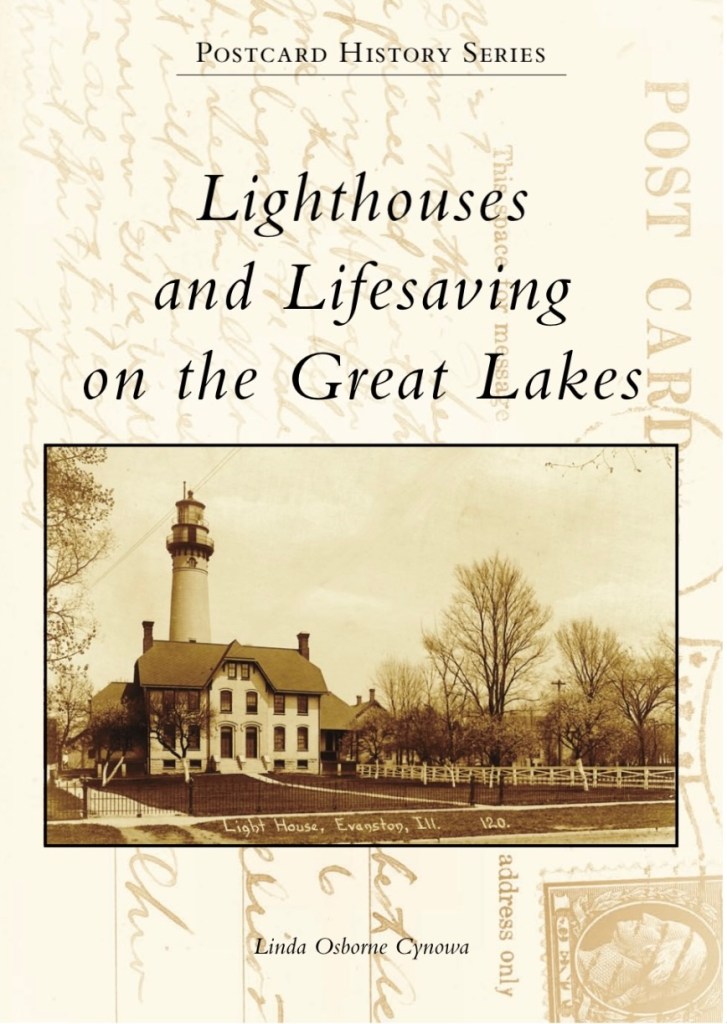
What is a lighthouse? A lighthouse is loosely defined as a tower or structure used to display a light for the guidance of ships to either avoid a dangerous area, such as shoals, reefs, etc. or to just identify a safe harbor. The purpose of the lighthouse’s light is to provide the ships at sea with a fixed point of reference to aid their ability to navigate in the dark when the shore or off shore hazards cannot be seen directly. The distance to which a light can be seen depends on the height and intensity of the light. The brighter the light and the greater its height above the sea, the farther it can be seen.
The French physicist Augustin Jean Fresnel was born in Normandy in 1788. After an education at various institutes, his research in optics began in 1814 when he prepared a paper on the aberration of light. Fresnel’s work on interference did a great deal to establish the wave theory of light. He applied mathematical analysis to his work that removed a number of objections to the wave theory. He was a pioneer in the use of compound lenses instead of mirrors for lighthouses. Fresnel perfected a lens designs which refracted the light firm single source into a strong directional beam essential in all modern lighthouses. Augustin Fresnel died near Paris in 1827. But his life work would do much to help shipping and navigation. There are many special stories, in lighthouse and lifesaving history, like the large rock out front of the Seul Choix Point Lighthouse, has special meaning.
Unbeknownst to their parents, a few local children built a boat like raft to sail to Beaver Island. A storm came up, and broken pieces of the boat were discovered on the mainland. Funeral services were held for the children, who were presumed drowned, and their names were carved into the huge stone rock in front of the lighthouse. A few weeks later, Indians who had rescued the children from Gull Island returned them to their homes. The remains of Ottawa and Chippewa villages along the beaches, old foundations and rock painting show the early claims to the area. An early need for lights created a need of imagination.
Harriett Colfax served as the keeper of the Michigan City Lighthouse for 43 years from her appointment in 1861 until her retirement at age 80 in 1904. A native of Ogdensburg, New York, she would come to the area with her brother and help with his newspaper as a typesetter. When her brother sold the paper, her cousin, Schuyler Colfax, a United States Representative and former Vice-President, suggested the lighthouse of the little port in which she lived, as a way of earning her living. She assumed control of the lighthouse and the old harbor beacon in the spring of 1861. At eventide each day during the navigational season for forty-three years she had replaced the warning lamp with a fresh one; at dawn for forty-three years she had quenched the beacon and realized that the unfailing light brought safety to many ships and small boats in the trough waters of Lake Michigan. The oldest, stanchest and most reliable lighthouse keeper in the United States is a women. A little, fragile, pretty maid of more than 80 years broke the records of all the lighthouse keepers in the country in length of service, in age, and above all in the fact that her light never filed, never went out between the hours of sunset and sunrise during the forty-three years that she tended it. Harriett Colfax passed away within a year of leaving her position in 1905.
Peter L Shook was appointed the first keeper at the Point aux Barques light, in Port Hope, Michigan on Lake Huron in 1848, but while sailing to Port Huron in March 1849, Keeper Shook’s boat capsized and he and his three companions drowned. Peter was forty yeas old at the time and left s wife and eight children. Catherine Shook was appointed keeper in her husband’s place, becoming Michigan’s first female light keeper. Shortly after her husband death a fire broke out in the keepers dwelling.The report stated “The circumstances of this fire is the more to be regrettable and with double severity upon the widow who was lately appointed in his place. By this catastrophe, the widow not only lost a considerable amount of her furniture, but was badly burned in her attempt to keep the fire from the main building. They have erected temporarily a small shanty for her family, so there is hope that in no time will be lost in having the dwelling rebuilt.” Catherine would preform her duties very well, though the strain of keeping the light and caring for her children may have been too much, as she resigned her position in March 1851. Catherine would pass away nine years later and was buried next to her husband in Oakwood Cemetery in New Baltimore, Michigan.
The Great Lakes Storm of 1913 was the deadliest, most destructive natural disaster in recorded history to hit the lakes. This storm killed more than 250 people, destroyed 19 ships and stranded 19 others. As much as one million dollars of cargo, including coal, iron ore and grain weighing as much as 68,300 tons would be lost. Winds reached 90 mph and stirred up waves as high as thirty-five feet and with whiteout conditions. Calling this storm the ‘White Hurricane’ it was a blizzard with hurricane force winds that devastated the Great Lakes Basin in the Mid-western United States and Southwestern Ontario, Canada from November 7th to 10th of 1913.

The keepers learned to lived with danger every day. Tragedy would strike the Spectacle Reef Lighthouse in April 1883 when head keeper William A. Marshall departed in a boat for the lighthouse to open it for the season. Along with him was his son James Marshall who was the 2nd acting assistant keeper, William Marshall’s brother Walter Marshall, the newly appointed 3rd assistant keeper and Edward Chambers the 1st assistant keeper. Along for the ride where friends of James Marshall 16 year old Joseph Cardran and his brother 13 year old Alfred Cardran. It is not know as fact if there were two boats or just one at the time. At some point the boat capsized when a gust of wind struck the boat when the men were adjusting the sails and threw all of them into the icy water. The Cardran brothers being young and excellent swimmers, assisted with difficulty, William and Walter who couldn’t swim, to safety. Joseph Cardran dove into the water once again and rescued Edward Chambers. James Marshall was not able to be found and believed to have drown. Unfortunately they would have to petition Congress for reimbursement for their personal effects that had been lost. When Joseph Cardran turned 18 years old he joined the Lighthouse Service as a 3rd assistant keepers, but resigned after just seven months. Five years later, in 1889 Alfred Cardran also joined the Service as a 3rd assistant keepers at Spectacle Reef, but also eventually resigned. The total isolation of many of the reef lights was more than many could handle.

The United States Coast Guard (USCG) was created by Congress on 4 August 1790 at the request of Alexander Hamilton as the Revenue Marine, it is the oldest continuous seagoing service of the United States. The United States Life-Saving Service was a United States government agency that grew out of private and local humanitarian efforts to save the lives of shipwrecked mariners and passengers. It began in 1848 and ultimately merged with the Revenue Cutter Service to form the United States Coast Guard in 1915. The United States Lifesaving Service – USLSS – was formed to address the safety issues on the Great Lakes. With the growing shipping business so came the increase in accidents and peril to navigation.
Lighthouses and Life Saving on the Great Lakes – available now!
Arcadia Publishing, Amazon, Barnes & Noble, or purchase an autographed copy from the author.
 Linda Osborne Cynowa