George Washington Brabb

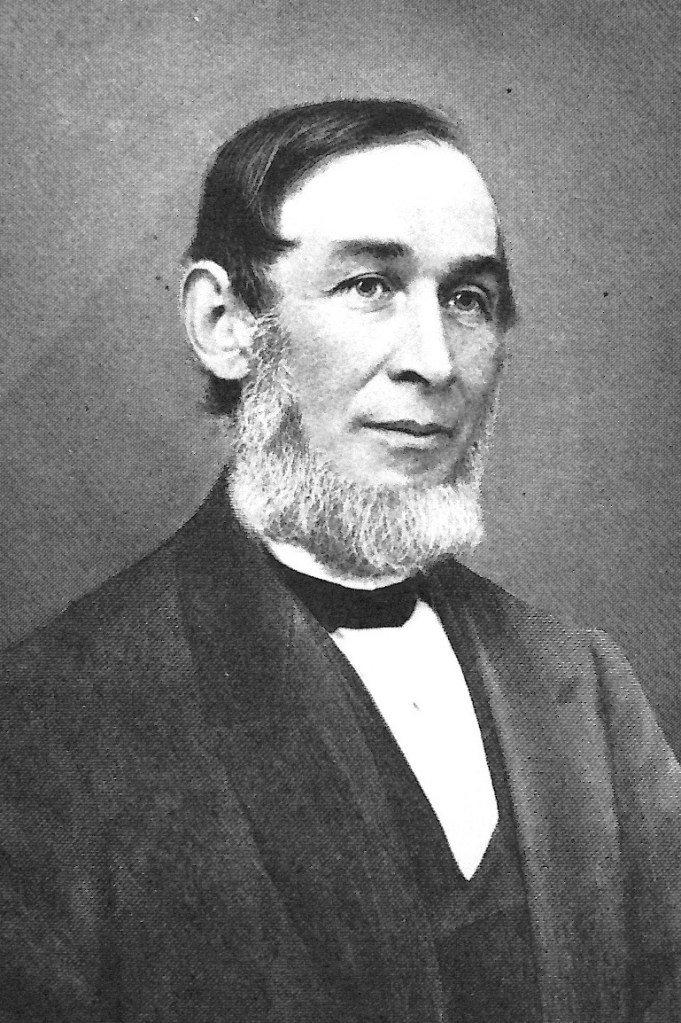
George Washington Brabb of 185 South Main Street, Romeo is this Monday’s blog subject. Most of what will be written about Mr Brabb will be taken from the very extensive obituary written upon his death in 1912.

From the Romeo Observer September 10, 1912: The announcement of the death of Mr. George W. Brabb in the early morning of September 10, carries no surprise as his illness had been of a serious nature for several weeks. But the passing of the last member of a large and influential pioneering family means much to the village and community.

Issac and Hannah Brabb, with seven children, came from Yorkshire, England to this locality in 1830 and two children were afterwards added to their number; the subject of this sketch named for the father of their adopted country, George Washington was born February 10 1843, the youngest and last to pass over the river. His birthplace was the farm home, three mile southwest of Romeo, that was purchased from the government by his father.

When a young man he came with his parents, to the village where they purchased a home on south Main Street and following the death of his parents, this son built the large, beautiful home in which he had since resided and where his death occurred. Following the time when he attained his majority he gave his attention to the supervision of his father’s interests and later engaged in the hardware trade, purchasing a hardware store in Romeo. He organized a stock company for the manufacture of road carts and his factory employed a large force of workman. The business grew to extensive proportions and the output was as high as from forty to seventy five carts a day. He would go on to hold stock in the Romeo Savings Bank and at the time continued as the owner of the old family homestead on two hundred and seventy acres, constituting a very valuable tract of land. In 1873 he was married to Lois Garlick, who died April 6, 1892 and on July 13,1896 Mr. Brabb entered in marriage with Miss Martha Starkweather of Romeo who survives him.

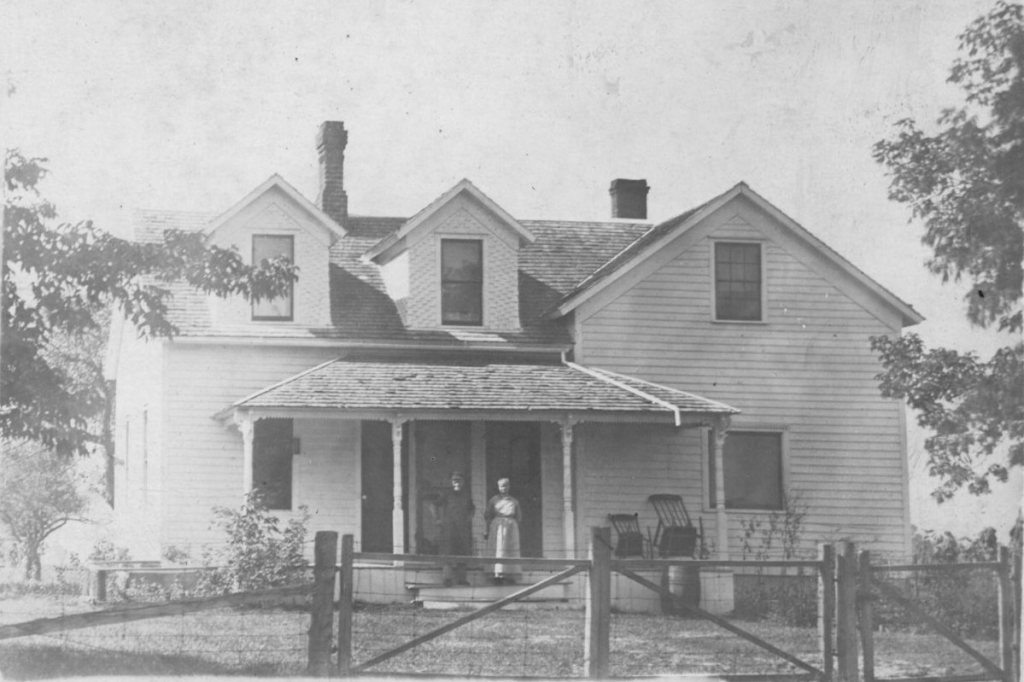
185 South Main St circa 1970’s

He had not only been an affectionate husband but gave tender care to the two aged sisters, in their declining years, and the home, that was his special pride was kept perfect in all its appointments. He was interested in every good word and work for the betterment of the the village and elsewhere and was a familiar figure on the streets and in public places. But it could truthfully be said of him that “his home was his castle” and there he was best content. He was an unusual lover of flowers, which he cultivated extensively and, during his illness when scarcely conscious of friends about him, he would rally at the sight of a fresh boutique and even note the shading of the different blossoms.

Besides his many home interests he always found time to render valuable assistance to others, so his passing deprives many of a true friend and adviser. He was converted in early life and united with the Methodist church of which he remained an active member.

185 Main Street today

The large Italianate residence erected in 1877, was one of the most sophisticated homes in Romeo with its smooth stucco-like siding (now covered in clapboards), dignified entrance portico, that was expanded in 1900, and elaborate decorative motifs rendered in wood and cast iron. “Wash” Brabb and his wife occupied the north side of the residence and his two sister’s Caroline and Anne lived on the south side. Mrs Brabb would hold onto the house and lease it to other enterprises through the coming years, such as it became the first Osteopathic Hospital in Michigan, it also became home to the Palace Restaurant after which in 1937 it was sold to Howard Anderson of Detroit. In the ensuing years many ventures have used the home with the hope of keeping it viable. Today it still sits proudly as Mr Brabb would have liked it.

On that ‘wee note’, till next week.


Thank you for the use of, Past and Present of Macomb County, Macomb County History of 1905, p 321, Romeo Observer, May 16, 1877, Romeo Observer, September 10, 1912, the Community Archives at the Kezar Library.


Thank you for visiting and reading today. Be sure to share with your friends using the share button below. If you haven’t already please enter your email address in the form below to receive my stories by email.
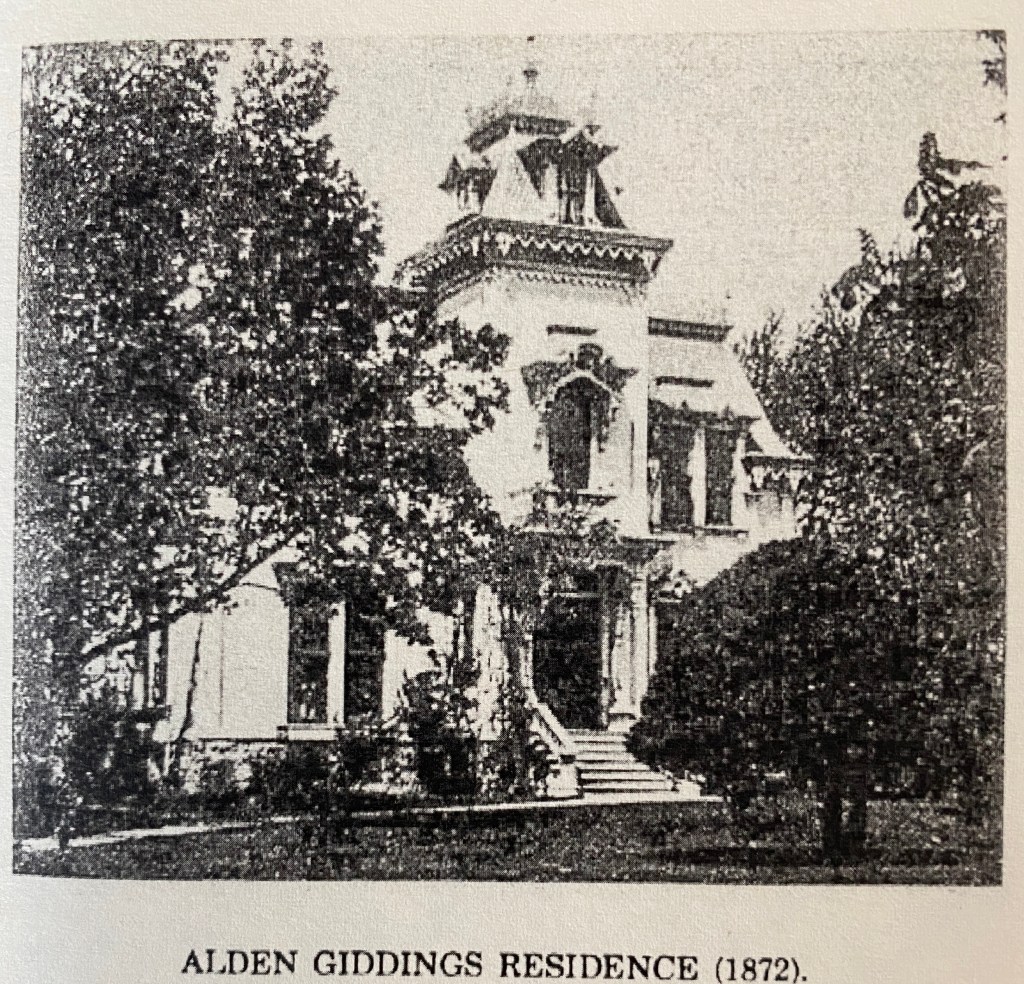
Alden Giddings of 439 Morton Street

Alden Giddings was born 24 April 1820 in Stafford Connecticut, a native son of New England. He continued his education and in early life began work in a sash and blind factory in Hartford. Later he would continue in the same line of business for him self. In 1849 while still living in the east he married Eliza Seymour in Hartford in 1849.

In 1857 Alden and Eliza Giddings moved to Michigan where his two brothers had previously located, becoming prominent business men in Romeo. Alden opened a dry goods store and went on to secure a good trade with the people of Romeo, and he found a good annual income from his investment. His store was well stocked with a modern line of goods and his reasonable prices and fair dealing secured him a good trade. For the next twenty years he continued in this mercantile life in the Romeo community, then retired to a quite life.

He served as a member of the building committee for the Congregational church in Romeo. He was a director and stockholder in the Citizens Bank and had become recognized as a financier and capitalist of ability. Alden passed away on 24 October 1886, with burial in the Romeo Cemetery.

There were four children born to Alden and Eliza, and their son George Wight Giddings, was a financier and enterprising business man, and he would succeed his father in the management of his affairs and conduct the business with success until his death in 1904.

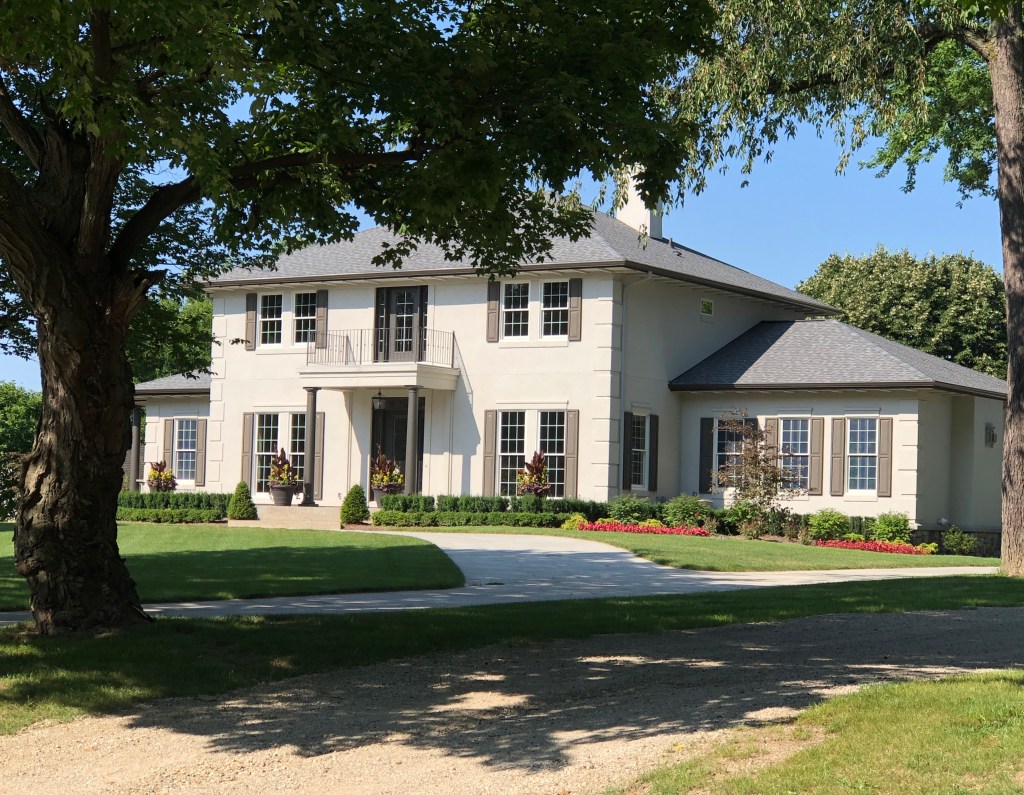
In 1872, Alden and Eliza’s “French Cottage with a full mansard roof” was completed by Romeo builder, R. F. Odion. The Romeo Observer proclaimed it “a house of the finest architectural beauty”. A large variety of woods were used in the interior; “alternate strips of maple and black walnut” in the hall floor, “pine and black walnut” woodwork in the dining room, “butternut, ash, and black walnut” doors, with “pine, ash, black walnut and maple” in the first floor bathroom. In the 1940’s the home was completely rebuilt in the Colonial style.

Eliza and her daughter-in-law Sarah and her family would reside at the old home built by the husband and father for some years after their 1886 and 1904 deaths.


439 Morton Street, Romeo today (authors collection)

On that ‘wee note’, till next week.

Articles and information courtesy of ‘Past and Present of Macomb County’, ‘A Tour of Historic Romeo’ by Richard M Daugherty, and the Community Archives at the Kezar Library.

Thank you for visiting and reading today. Be sure to share with your friends using the share button below if you haven’t already please enter your email address in the form below to receive my stories by email.

The Omar D Thompson Jr. Residence

The largest brach of the University of Michigan, known then as the Romeo Academy, was located on this site from 1843-1851. It was a flourishing institution of 150 students and 4 instructors with a “Female Department connected with the institute in a separate room”. Until recently the University elm stood where the sidewalk jogs. In 1901 the University buildings were demolished and the present Colonial Revival residence at 200 Church Street, was constructed by Romeo builder Benjamin Lloyd for Mr. and Mrs. Omar Thompson Jr.

Mrs. Thompson was related to the wealthy Detroit and Chicago Newberry families and inherited from her great-uncle, Walter Newberry, of Chicago “wealth enough to make her comfortable for life”, $23,080 (700,000. in todays money). Mr Thompson’s occupation was selling cash registers for the National Cash Register Company. The finest of materials were poured into this spacious and well built house including golden oak for the enormous staircase, solid cherry woodwork for the master bedroom, leaded glass windows and solid brass lighting fixtures for the formal rooms of the house. In 1904 an “automobile house” was constructed behind the residence to shelter Mrs. Thompson’s “Cadillac automobile” which “she handles like an expert.” The Thompson’s only lived in the home for seven years before their move to Detroit. They are buried in the Romeo Village Cemetery. (Romeo Observer, Centennial Supplement, November 17, 1966).

200 Church Street, Romeo (authors collection)

This past Christmas the Thompson house was chosen to be the 25th ornament issued by the Romeo Historical Society, as their 2020 Romeo Christmas Ornament.


The Record Newspaper November4-10 2020

As this author anxiously awaits the Romeo Historical Society’s unveiling of the 2021 ornament in late fall, on that ‘wee note’, till next week.

It is with great thanks to the Community Archives at the Kezar Library for the opportunity in volunteering and allowing research on these majestic homes all over Romeo. What a fabulous learning experience.

Thank you for visiting and reading today. Be sure to share with your friends using the share button below if you haven’t already, please enter your email address in the form below to receive my stories by email.
The Washington Elevator

Perhaps there isn’t too much general interest connected with an elevator or feed mill but they are very much depended on. While doing research for one of the books, I came across a very interesting photograph, that made me want to know more about what was going on in that image that was capturing a moment from a long ago time.

The original Washington Elevator

The Washington Elevator site and the town of Washington was a big place in those days, for many a year’s income depended on the produce the average farmer sold at what was termed the ‘Washington Market’. It was long remembered when teams of horses with loaded wagons in line, from where the school once stood on Van Dyke Rd up West Rd to where the elevator now to this day still stands.

Looking West on West Road at Van Dyke

Over the years the elevator would see many changes, where by 1950, a wooden addition, would be added to the original long standing structure. A write up in the Romeo Observer Press on March 12, 1953, states, “The new fire resistant Washington Elevator that had been risen literally from the ashes of the old wooden building that was destroyed in a hundred thousand dollar fire last September, should be completed by the middle of April. It would become one of the most modern elevators in the area”. In late September of 1952, fire did consume the building and it took the Romeo Fire Department, 16 hours to keep the flames from furthering into town. Neighbors were seen standing on rooftops watering down the shingles to ward off sparks, while others set up chairs near by to watch the firemen while enjoying the goings on in comfort. The 70 foot granary was destroyed by the flash fire, which incased the five-year-old recently added wooden structure. The fire would be from undetermined origin. This would give rise to the township realizing that Washington would need to move forward with an independent fire department of it’s own.

Young potential farmers

By April 22 of 1954, once again the Washington Elevator would hold their “Old McDonald’s Farm”, where many area youngsters attended a give-away of some 2000 baby chicks to the young potential farmers.

Washington Elevator in 2019 (authors image)

The Washington Elevator would occupy an important place in the area for farmers getting their produce to markets, both near and far. Today the elevator still serves the communities surrounding Washington both for farmers and homeowners and is still a valued part of the community.

On that ‘wee note’ till next week.


Articles and images, with thanks to Cheri Allen, at the Washington Area Historical Society and the Community Archives at the Kezar Library in Romeo home for the Romeo Observers of past.


Thank you for visiting and reading today. Be sure to share with your friends using the share button below if you haven’t already please enter your email address in the form below to receive my stories by email.

The Henry Jersey, William LeFever Farm

By 1823 the area soon to be called Washington Township contained thirteen inhabitants. That year the Jersey family came to Michigan from the east, and took over 120 acres of government land, making them the third family to settle here. Henry Jersey built a sturdy cabin for his family and on February 12, 1824 Mary Jane Jersey was born, known as the first white, non Native American, child born in the area. For eighteen years the members of this hardy pioneer family worked their farm and made the log cabin home, but the time soon came for a new and larger house. From the thick beds of clay on the farm Mr Jersey began making bricks. He made bricks until there were stacks of them around this cabin. When he felt he had enough, he built a home for his family from what his land had provided, along with many other homes in the Romeo area.

Mary Jane Jersey (1824-1904)

As the township grew with new settlers, Henry’s daughter Mary Jane Jersey would never move from her father’s brick house. Mary Jane passed away at eighty years old on May 22, 1904, with her burial at Washington Center Cemetery on 29 Mile Road.

11130 29 Mile Road, Washington (since demolished)

William Charles LeFever (1874-1946) married Mary Jane Smith (1879-1939) on September 5,1899, both being from Blissfield Township, Michigan. They bought the farm on 29 Mile Road between 1911 and 1912. The farm was said to be one of the stage coach stops on the route from Port Huron, Michigan to Pontiac, Michigan. The farm had a large cement lined pond used for watering the teams of horses from the stagecoach behind the house and a large oval stone at the east side of the house next to a large tree where the stagecoaches would pull up and let passengers on and off. The house had a large gathering room on the east half of the house, with several sleeping rooms on the second floor. Over the years many Indian arrowheads and artifacts would be found in the farm and surrounding area. The LeFever children when grown, would also build houses on both the north and south side of 29 Mile Road.

LeFever Family

LeFever family, left to right, starting at back row, Homer, Elmer, Ina, Lloyd, Howard, middle row, Clifford, Donald, William, Mary, Vora, Ada, front row, Marian, Milton and Beulah. Although a number of family members would occupy the house as they got older, the farm was eventually sold to developers and now subdivisions of homes have taken its place along 29 Mile Road. From ‘Farming in Northern Macomb County’ by Arcadia Publishing.

On that ‘wee note’ till next week.


Thank you to the Greater Washington Township Area Historical Society and ‘Through These Doors’ and the William and Mary LeFever Farm Memories by Steven LeFever.


Thank you for visiting and reading today. Be sure to share with your friends using the share button below. If you haven’t already please enter your email address in the form below to receive my stories by email.