The story of the ‘Free Public Library’

Linda’a Monday Morning Moaning’s

The ‘Romeo Free Public Library’, was a story, I found most interesting and wanted to share the research I had found about this great library.

Samuel and Nancy Kezar, from Turner, New York lived in a Queen Anne style home on Church Street in Romeo, that they built in 1894. Samuel passed away in Romeo in 1898. The Kezar home at 180 Church Street is where the Romeo Public Library, Romeo Book Club and the Romeo Monday Club would organize in 1900 and run through 1908. Nancy and her daughter Mary eventually moved to San Francisco, where Mrs. Kezar would come into an inheritance and remember their time in Romeo. They came up with a plan through their agent to give a library building to the village of Romeo.
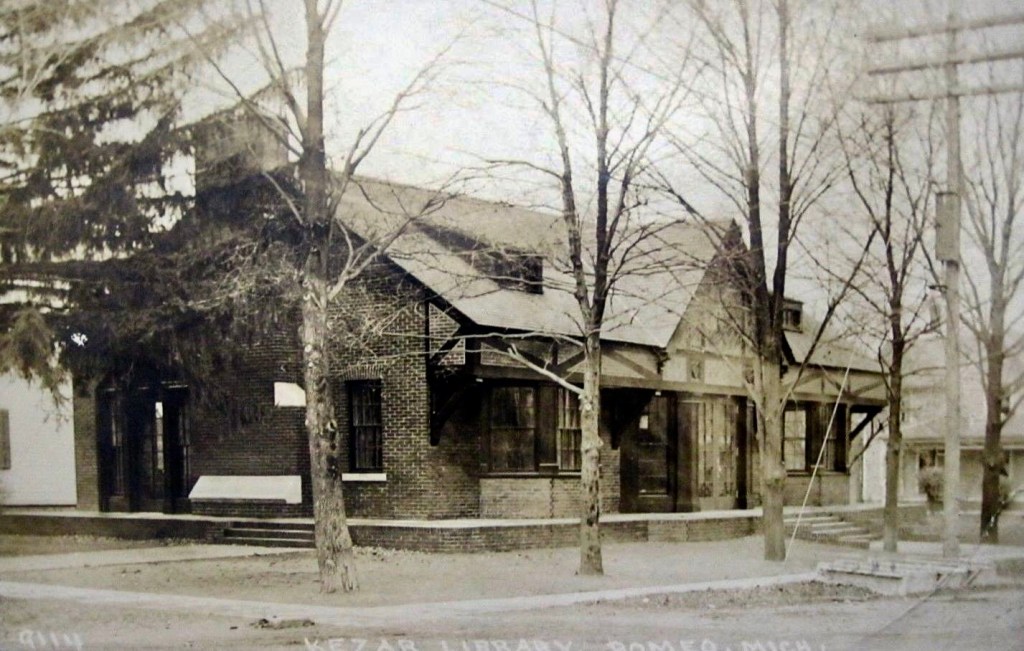
‘The Romeo Free Library’ 1914

A local contractor Archibald H. Robertson, built the library according to a design by the well known architect Henry Whitfield of New York. Mr. Whitfield had been directed that the general appearance be ‘home like’ and imitate and ‘old English Inn’. Six directors were elected to the Board of Trustees for two year staggered terms. A lot was secured on the corner of Church Street and North Main. The deed contained a proviso that this gift would revert to the heirs of the Kezar’s if and when the property was no longer used for library purposes.
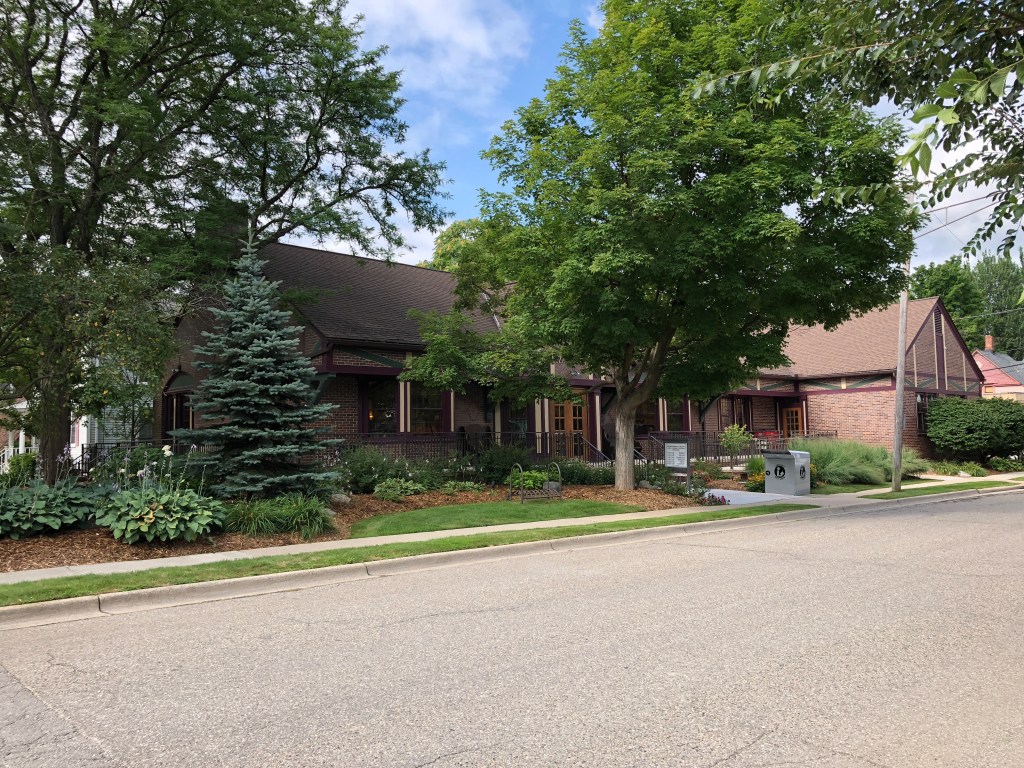
The ‘old English Inn’ today on the corner of Church and North Main

In 1911, the building was dedicated in a public ceremony, and the library received a gift of $1000. worth of books from Henry Glover Stephens, a Detroit collector, past Romeo resident and philanthropist to augment the 871 books already in its collection. The library would later become the ‘Romeo Free Public Library’. The library acquired its third name in 1969 when the Romeo District Library was formed by resolution of the Romeo village council and the Bruce and Washington Township Boards. Two addition Board members were appointed that summer to represent each of the three municipalities.

The need to expand the library collection and facilities was soon recognized and fund raising campaign to pay for an addition was started. The ground breaking ceremony for $154,000. addition which would triple the size of the library when held on March 21, 1970.

Roland Graubner served on the library Board from 1969 till 1999, he would help secure the federal grant for the addition to the Kezar Library and personally raise the money needed for the local share of the project. Later Roland and his wife Kathleen wold donate 6.7 acres of orchard land on Van Dyke Road between Romeo and Washington for construction of a new library building, to be called the Romeo District, Graubner Branch dedicated in 2001. The Community Archives would open to the public in the lower level of the Kezar Brach in 2017.

If you haven’t already paid a visit to the Romeo branch of the library, it is well worth the visit to see what Nancy and her daughter Mary envisioned all those years ago, where the same ‘home like’ feeling is still the major part of what makes this library such a hit for the community.

On that ‘wee note’, till next week.


Courtesy of the Romeo Community Archives, Romeo District Library.

Thank you for visiting and reading today. Be sure to share with your friends using the share button below. If you haven’t already please enter our email address in the form below to receive my stories by email.

A ‘Wee’ Sneak Peak

Linda’s Monday Morning Moaning’s

With in the next week or two the fall issue of ‘Macomb Now’ magazine should be out for public viewing. A few months ago, I was contact by the editor of the magazine to ask if I would be interested in making a submission to the portion of the magazine called ‘Macomb Then’, which is always the last page of the issue. Here they bring back long ago stories from Macomb’s past, as a closing to todays more modern Macomb County. I wrote two different stories and let them pick the one they thought would work best for this edition.

Washington’s First Brick School House

The school in Washington came into being as early as 1824 when a log schoolhouse was built. It would soon be the center of Washington’s community social life, for town meetings and dances where townspeople would gather. By 1839 the little log school was badly sagging, and with the work that was needed they decided to replace other than repair.

Soon there was Washington’s 1st School of Bricks…….

Cover of Arcadia Publishing’s Washington Township

In 1917 a new and larger building would replace Washington’s 1st brick schoolhouse. The new school would serve the community till 1972 and go on to become the home of the Washington Historical Museum.

Now used as the Washington Historical Museum

To learn more about the Washington’s school of bricks, pick up a copy of the fall edition of Macomb Now magazine. Next week the story of the article that didn’t make the cut…..

On that ‘wee note’ til next week.


Thank you to the Great Area Washington Township Historical Society for use of these images, and continual support.

Thank you for visiting and reading today. Be sure the share with your friends using the share buttons below, if you haven’t already please enter your email address in the form below to receive my stories by email.

‘Old Field Point Light’

Linda’s Monday Morning Moaning’s:

FYI, for those individuals who are contemplating researching, really any type of topic, never, never allow your enthusiasm and excitement over a great find, to blind you to the fact, you are on the path to furthering something you CAN NOT USE! As I have mentioned I am researching another book for Arcadia’s ‘Postcards of America Series’ on the Lights of the Great Lakes, I am pretty familiar with our lights in Michigan, but learning about the other states that have a stake in having lights on the Great Lakes, and is still a some what unfamiliar territory for me.

I now refer you to the ‘Old Field Point Lighthouse’ on what I thought was Lake Ontario. It’s not! I had purchased two separate postcards of this lighthouse, and well on my way for more, because I let my excitement get the better of me and didn’t double check my sources. I was so taken by the vintage fieldstone look, I failed to realize, that yes, this is in New York, a state that borders Lake Ontario, but this lighthouse is on the north shore of Long Island, and no amount of finagling could it be near Lake Ontario.

Old Field Point Lighthouse

Because I liked it so much I decided to tell you about this today, anyway. The Old Field Point Light is located on the northern tip of Old Field, and dates back to 1823. It was built by the United States government for $2,500., The light would be totally finished in 1824 for an additional $1,500. A three-acre parcel was purchased from Samuel Ludlow Thompson and Ruth Thompson for $600. with property boundaries being defined by the high water mark, a fence and a cherry tree. The final constructions cost came to $3,999.25, with the remaining severity-five cents being put into the surplus fund.

It’s first light came from nine whale oil lamps and was magnified by a large glass reflector. The plaster octagonal stone tower stood thirty feet tall, and there was a separate one-and-a-half story, five room keepers dwelling located inland from the tower. Although the first tower is gone, the original keeper’s house is still standing on the east side of the currant lighthouse. A fourth-order Fresnel lens was installed in the tower’s lantern room in 1855, replacing the array of nine lamps previously used, that consumed around 350 gallons of oil each year.

The currant Old Field Lighthouse was finished in 1869, after congress provided additional funds for its construction. The two story granite structure stands roughly fifty feet tall with walls two feet thick. The twenty-eight-foot cast-iron tower is square with beveled edges and a circular lantern room, that houses the original Fresnel lens. It’s stone church like architecture, is in the Victorian-Gothic Revival style.

The Old Field Light was deactivated in 1933, having been replaced with a beacon on top of a nearby steel tower. The property was given to the town of Old Field for a public park. A modern beacon, now maintained by the Coast Guide, was placed back in the lantern room in 1991, and the keeper’s house from the 1824 lighthouse has served as the village hall since 1963.

For me these lovely old structures have such a great meaning. The romance they bring to mind of a long ago past. Not to speak of the keepers and their families, the loneness, as most of these lights were far from anything to give help to these families. They were there to help others out at sea at all costs.

On that ‘wee note’ till next week.


Thank you to the http://www.lighthousefriends.com for all the great work they do in preserving these lights so that the rest of us can learn about them. ‘American Lighthouses’ by Bruce and Cheryl Shelton-Roberts

Thank you for visiting and reading today. Be sure to share with your friends using the share button below, if you haven’t already please enter your email address in the form below to receive my stories by email.

My ‘Covid Lockdown’ Book – Part 2

Linda’s Monday Morning Moanings

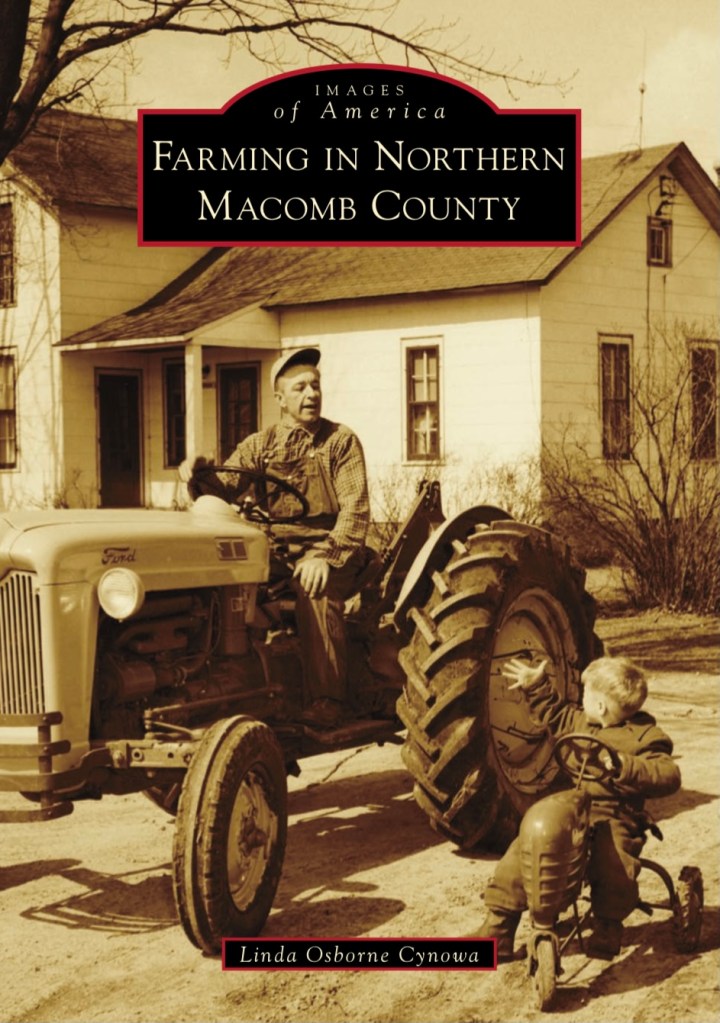
The roll out of ‘Farming in Northern Macomb County’, was more than we could have asked for, and I am sending a great thank you to all the people who made it out to the Washington Historical Museum on Sunday the 8th. The museum is such a special place and the historical society puts such loving care into keeping it updated and refreshed with revolving displays with many historical artifacts. The museum will be the location of a book presentation on the ‘Washington Township’ book on Thursday 23rd of September at 7:00 pm. Hope if you are interested in hearing about Washington Township you will join us. More about dates and times of book presentations coming up in the coming weeks blogs.

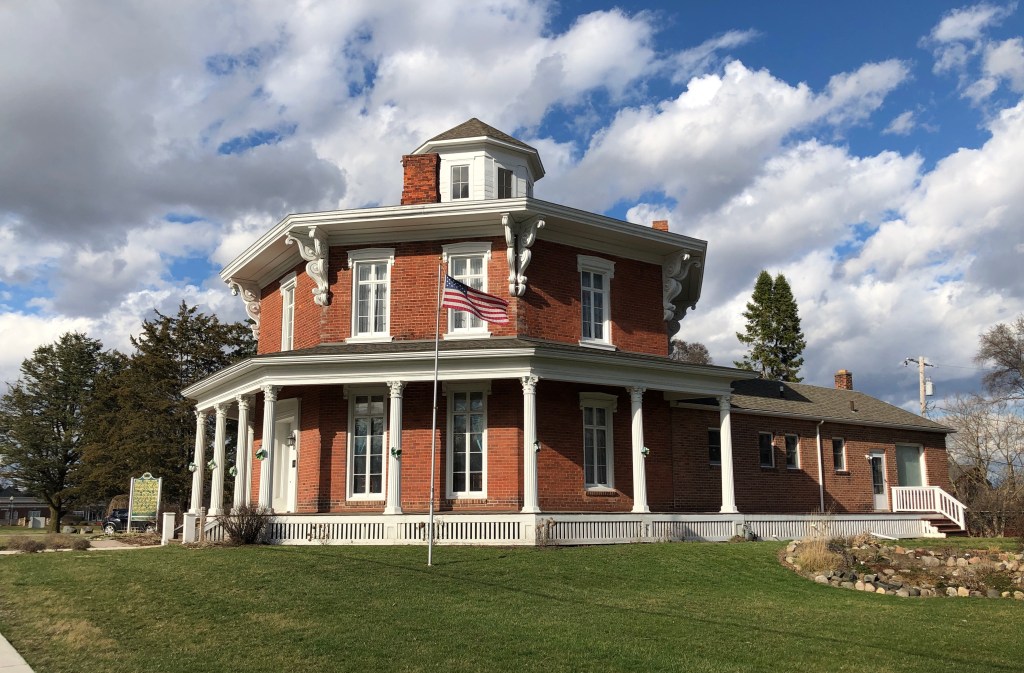
The Octagon House was this Sunday’s book signing, both these places were kind enough to give me a forum to let people have a chance to purchase this newest Arcadia Publishing book.

Couldn’t have been more please with the turn out, so many people came to see this lovely old home and what the ‘Friends of the Octagon House’ have done to keep it in top shape and in creating a great space for learning about the past times in Washington Township and the Loren Andrus family.

As I have called this my ‘covid book’, it took on special meaning as last year with the mandate about mask wearing, I was not recognizing many of the people I had contact with, but was nice to see a more normal part of life again. I was able to have some great conversations and talk about the stories listed in the book and some that weren’t able to make the cut. For some it was a good opportunity to purchase the other previous books that have been written in this series in the last couple of years.

Octagon House (author image)

(author image)

It was a very rewarding and fulfilling day and very nice to see the interest and excitement that these books bring to peoples lives. I am hoping they will spread the word and bring the farming life out to the public of Macomb County, I believe they will be pleased.

On that ‘wee note’, till next week.


Thank you for visiting and reading today. Be sure to share with your friends using the share button below, if you haven’t already please enter your email address in the form below to receive my stories by email.

My ‘Covid Lockdown’ Book

Linda’s Monday Morning Moaning’s

Today August 9th, 2021 Arcadia Publishing will add ‘Farming in Northern Macomb County to its long list of publications. This book was put together, as with all these books with the help of many people, this time the people I was working with and meeting many for the first time, would be masked up and we would all be smelling of hand sanitizer. Creating this book was my company and interest while we were going through a lockdown with Covid last year.

With the library closed to patrons, we still managed to get the scanning done, as Julie Oparka has done on all of my past books. It took some work, but when the library did opened too ‘pickup books only’ we found a way. I would contact the people wanting to make contributions of their family stories to the book, we would arrange to meet at the library, but they would stay in their cars. I would call into the library to Julie, and with our masks on. I would get the peoples images and information from them, and run it up to the door, where Julie would meet me, and I would go back to my car and wait for her to scan and bring back their items, and thank them for their help.Their kindness in waiting as they did was very appreciated. This would happen. many many times. As my Mum used to say ‘where there’s a will there’s a way. Thanks Mum!

‘Pete Schoenherr telling his Dad Louie that he knows the way’

In the two previous books, they are about the community as a whole of both Macomb and Washington, and I included churches, shops, schools, etc. but the stories I would hear about the farming families and the lives they lived was so fascinating and interesting, I really had no idea about the life these hard working and necessary people lived.

In moving on I realized I could hopefully tell the stories of these families and make people more aware, through the nine townships north of Hall Road. Many of the farms are no longer here, because of progress and development. But many are still working the land as hard as ever. I found that for the communities it is much more profitable for developers to come in and build subdivisions than having the revenue from the farm land, really forgetting just how important the farming and what these families are doing for the communities themselves. I would learn about the first Rhubarb Festival, and where Macomb County was known for being the ‘Rhubarb Capital of the World’ next to Washington State. I loved the stories of the Donley’s, originally from Ballyporeen, Ireland, then of Lenox Township and their cabin now safely in the hands of the Richmond Area Historical Society’s, ‘Bailey Park’. Or the little girl whose family teased her about getting a farm for her birthday she didn’t really want at 10 years old.

As I was asked many times, if I had grown up on a farm, my answer was always no, I was raised in the city. So for me, doing this book was a learning experience as have all my books been. I hope if you get a chance, either to purchase or to borrow from your local library, you will take this trip, I hope you will find well worth making.

On that ‘wee note’, till next week.


Thank you to my editor Angel Prohaska and everyone at Arcadia Publishing for the opportunities they have given me in getting these books out to the public.

Thank you for visiting and reading today. Besure to share with your friends using the share button below, if you haven’t already please enter your email address in the form below to receive my stories by email.