‘Lighthouse of the North Atlantic Coast’

Linda’s Monthly Monday Morning Moaning’s March 6, 2023

Part Two:

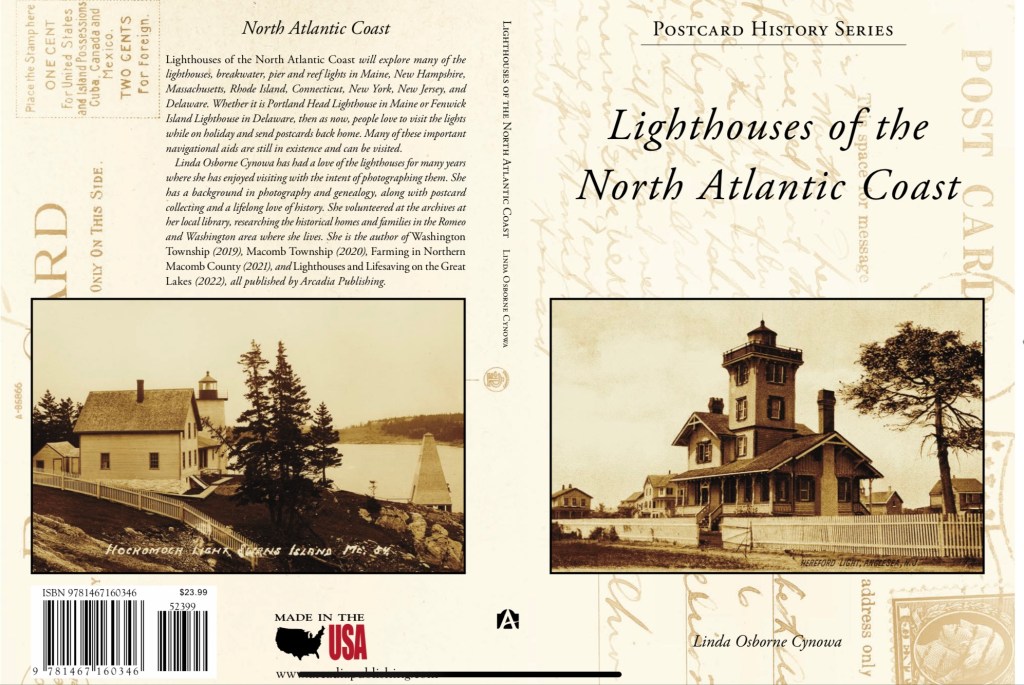
I am very humbled to write, that my fifth book with Arcadia Publishing will be released on July 26, 2023, and once again the excitement begins in the editing process that happens twice along the way and then receiving the finished form of a book. When you are ‘presented’ with your new cover, this images below is how you receive it, both back and front images.

Chapter Five- Sheffield Island Lighthouse, Norwalk Harbor, Connecticut

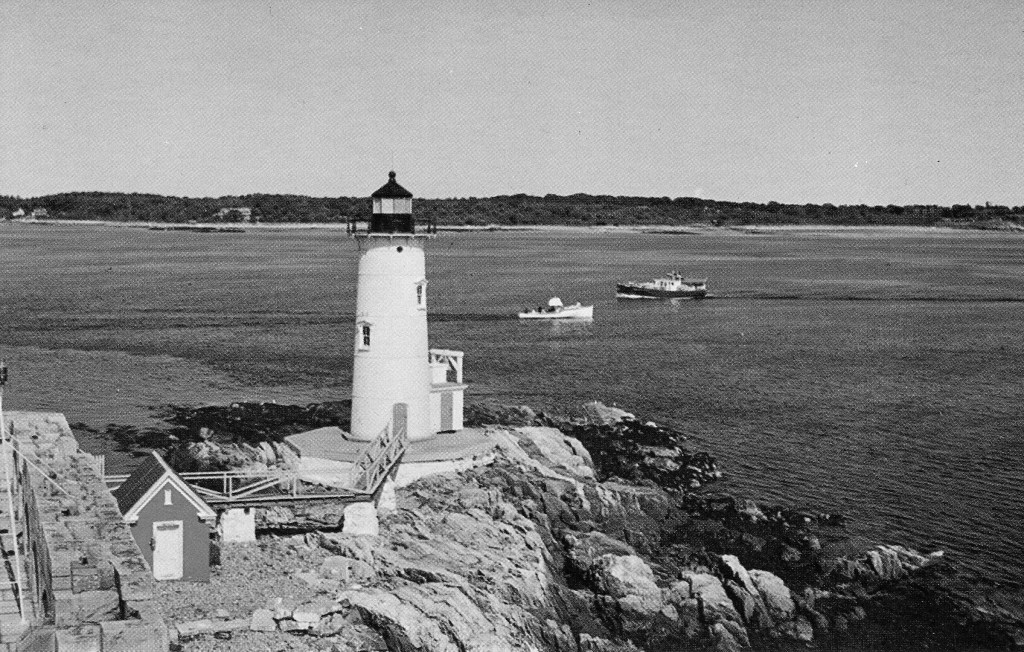
While previously called the Smith Island Light, it is one of many names the light was called through the years. There are sixteen islands in the Norwalk Island chain and Sheffield is known to be the largest. In 1869 a new school house style, keepers dwelling, with two-and-a-half-stories, made out of granite stone was built. The tower with lantern room were forty-six-feet tall. The tower, was fitted with a fourth-order Fresnel lens. The old light tower was torn down and the previous keepers house was used as a storage building. The light was deactivated in 1902 and  went into private hands after being put up for auction in 1914.

EPSON MFP image

Chapter Six- Hudson-Athens Lighthouse, Hudson, New York

Located between the towns of Hudson and Athens, on a sandy ridge called Middle Ground Flats a lighthouse was constructed in 1874. A Second Empire style brick dwelling with a mansard roof, situated on a granite foundation. A sixth-order Fresnel lens in the light tower is centered on the western face of the redbrick, eight-room dwelling.The light was automated n 1949.

EPSON MFP image

Chapter Seven – Point Comfort Lighthouse, Keansburg, New Jersey

Keansburg had two lighthouses that worked in conjunction with one another. In a range line, the lower one, the Point Comfort Beacon on Raritan Bay and the higher one Waackaack Light (yes that is what it’s called) on Creek Road. The Point Comfort Beacon was built in 1856, a wooden, one-and-a-half-story, school house type structure that served as the keepers dwelling, with a square wooden tower attached to the middle of the roof line. By 1867, repairs to the kitchen, and roof reshingling were needed, along with a coat of paint. In 1883, jetties were built because of the erosion of the bank, riprap was added to aid protection to the lighthouse foundation. 1904 was to see 400 tons of riprap deposited again to help the jetties hold back the erosion. The lighthouse was destroyed by fire in the 1950’s.

Chapter Eight – Cape Helopen, Lighthouse, Lewes, Delaware

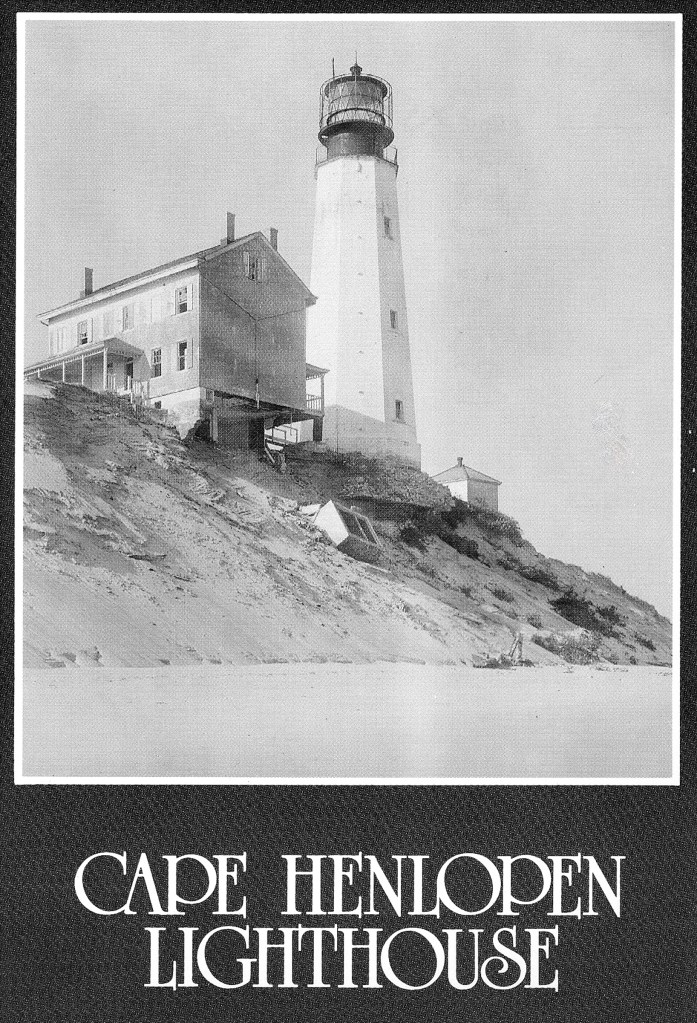
In 1926, the Cape Helopen Lighthouse collapsed into the Atlantic Ocean. The light was built on a foundation on top of a sand dune. Although at a great distance from the sea, with erosion encroaching on the shoreline the stability of the light tower was endangered. In 1914, the Lighthouse Service found that the costly erosion could not be halted except at great cost. The stone built, sixty-nine-foot tower was first built in 1767, and survived the British in 1777. The keepers had a two-story wood-framed dwelling with a wrap-around-porch. The lantern room was fitted with a first-order lens. By 1897, the sand surrounding the tower was thought to be blowing away at a rate of 3 to 5 feet each year. The light was deactivated in 1924 shortly before its collapse.

EPSON MFP image

I hope that this small taste of ‘The Lighthouse of the North Atlantic Coast’ may have peaked your interest in how much more will be between the pages of this up coming book.

On that ‘wee note’ till next month. Monday April 3, 2023.


Thank you for visiting and reading today. Be sure to share with your friends, using the share button and if you haven’t already, please enter your email address in the subscription form below to receive my stories by email. 

‘Lighthouses of the North Atlantic Coast’

Linda’s Monthly Monday Morning Moaning’s February 6, 2023

Part One:

I am now getting to the point of wrapping up this latest book with vintage postcard images that I have been working on these past few months, and getting it to the publisher with in a few weeks. Here is a sample of the different chapters and the different type of lighthouses, that will be covered in the book.

Chapter One: Burnt Coat Harbor (Hockamock Head), Swans Island, Maine

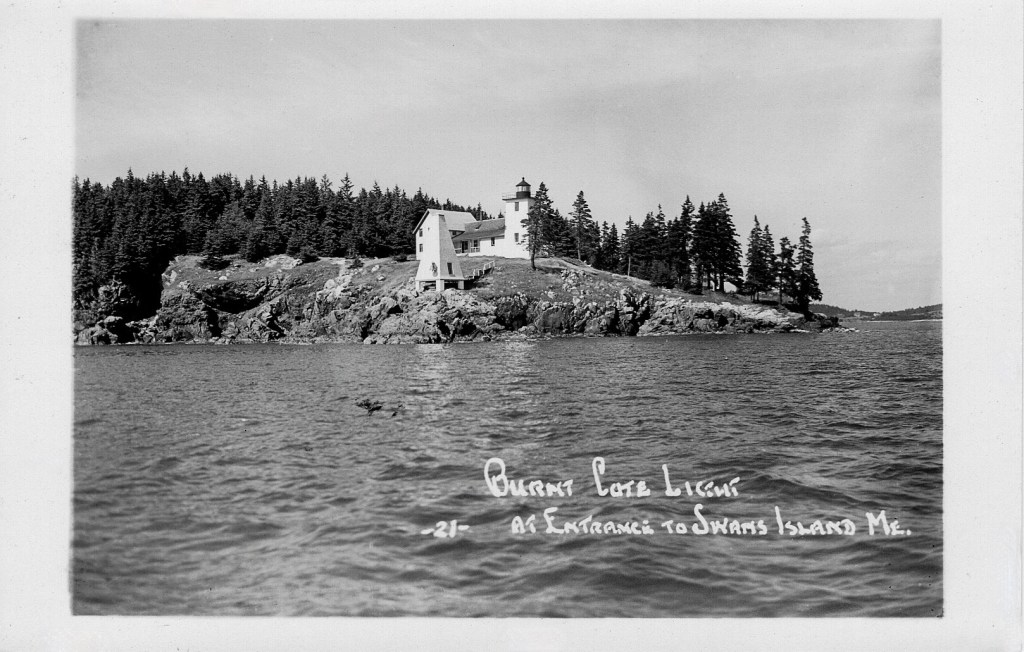
At the entrance to Burnt Coat Harbor, a light station was built on the southern most point called Hockamock Head on Swans Island in 1872. Originally built with twin towers, to be used as range lights, the second light was removed in 1884. A story-and-a-half  white clapboard keepers house that connected to the thirty-two-foot tower, was erected for a lantern room to house the fourth-order Fresnel lens. In 1975, the original Fresnel lens was removed and replaced with an automatic light nearby, soon found to be not as bright, in 1978 the tower was relit with a 250-mm optic lens. Now maintained by the Town of Swans Island, it is now listed on the National Register of Historic Places.

Chapter Two: Portsmouth Harbor Lighthouse, New Castle, New Hampshire

The fort of William and Mary, so named by the British, was rebuilt after the War of Independence and renamed Fort Constitution in 1800. A new light was built in 1804 a short distance from the original and a bridge built of wood was used to access the light. The light tower was eighty-feet tall, with the keeper residing in the village, not at the light. By 1851 the tower was shortened to fifty-five feet, and a fourth-order Fresnel lens was added. The lighthouse was replaced in 1877 with a cast iron tower lined with brick. A brown color was used as it’s day mark. In 1902 the color was changed to white. The light became automated in 1960. It came under the care of the Friends of Portsmouth Harbor Lighthouses in 2001.

Chapter Three: Edgartown Harbor Lighthouse, Edgartown, Massachusetts

In 1828, the first lighthouse was a two-story dwelling with a side-gabled roof where a lantern room was centered on the roof, with a 1,500 foot walk way built to connect the dwelling to the mainland. A stone pier was soon replacing the original wood used to support the light. In 1938 a hurricane caused enough damage to the light to give thought to demolishing the building. From 1939 through 1980 the light was maintained by the Coast Guard and they would refurbish the dwelling in 1985. By 2014 the Town of Edgartown took ownership of the lighthouse.

Chapter Four: Block Island North Lighthouse, New Shoreham, Rhode Island

There were at least four lighthouses built over the years on the north end of the six-mile long Block Island. In 1837 saw a rectangular, granite keepers dwelling, with a light tower at each end of the roof, on the top of the buildings roof. These two lights were lined up on a north-south axis, where they would look like one light until the ships were within two or three miles of the lighthouse. In 1867, the currant lighthouse was built in the Victorian and Gothic Revival style as a two-story dwelling with Connecticut granite, with a pitched, slate covered roof, where the iron lantern room and tower were situated on the northern end of the roof line. Block Island Lighthouse was automated in 1956 and by 1973 it had been deactivated.

Next month, Connecticut, New York, New Jersey and Delaware, and by that time a cover image. I hope I might have peaked your interest, if you are a lighthouse lover, as I am. On that ‘wee note’ till next month. Monday March 6, 2023.


Thank you for visiting and reading today. Be sure to share with your friends, using the share button and if you haven’t already, please enter your email address in the subscription form below to receive my stories by email.

Mission Point Lighthouse

Linda’s Monthly Monday Morning Moaning’s for January 2, 2023 – Happy New Year!

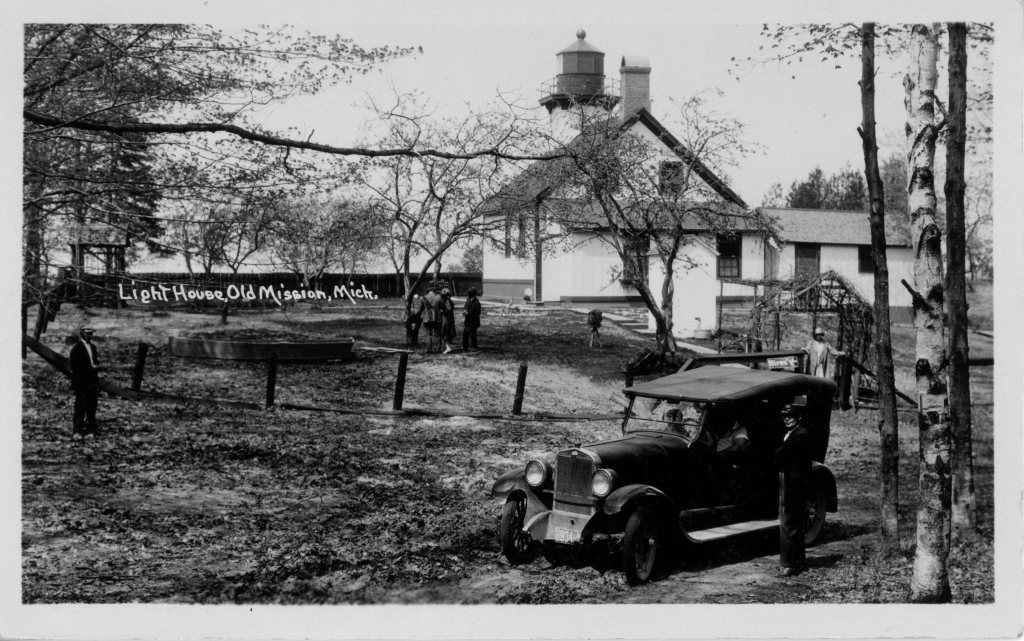
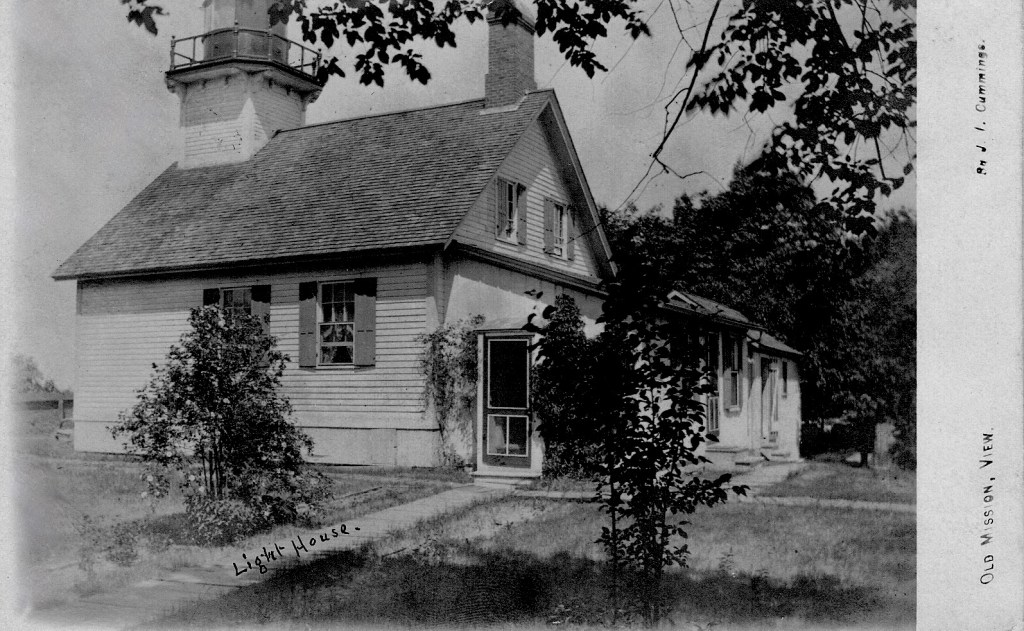
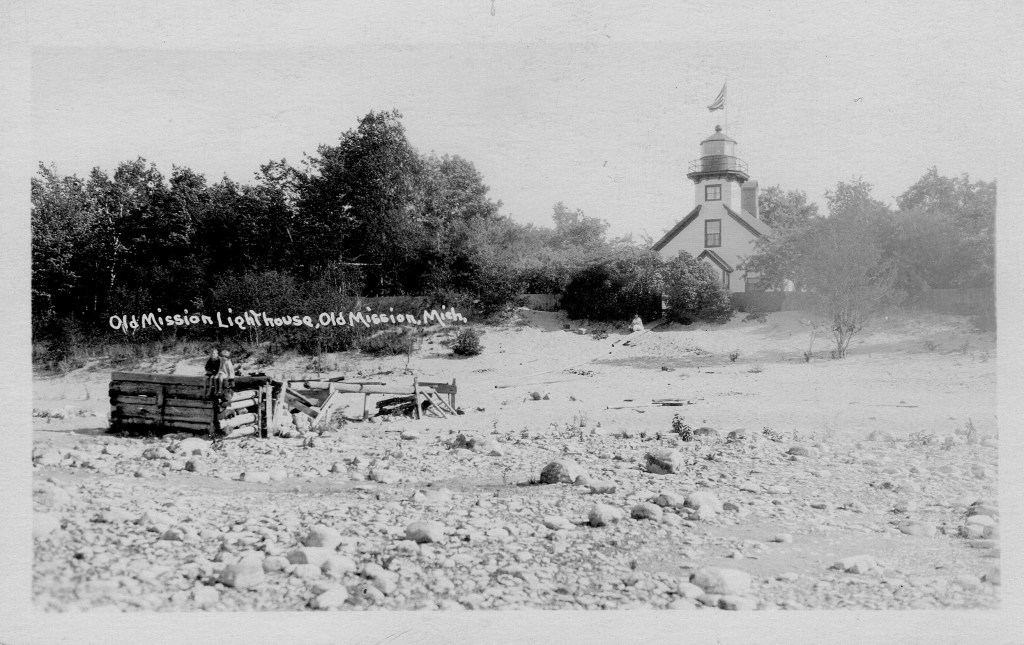
Sitting near the 45th Parallel between the water and forest on three sides, at the end of the Old Mission Peninsula, you will find the Mission Point Lighthouse. On the water side you can look out over the rocky beach at the north end of Grand Traverse Bay. Just one of Lake Michigan’s finest.

Back of the light where the road is situated.

When lighthouse when built in 1870, not having been done earlier due to the Civil War, the school house design was decided upon. It had six rooms on the ground floor and a bedroom and supply area on the second floor. The tower above the second floor had a small area made for the lightning mechanism. Whale oil and later kerosene was used to light the 5th Order Fresnel Lens, and with its intense light, it had a visibly of 13 miles.

Here was the start of the fence, shown above, that was soon needed in order to protect the lighthouse, because of visitors to the area. The light would only be lit for navigational purposes from 1870 to 1933 when it was decommissioned by using an automatic buoy light off shore.

Vandals made it necessary to find a solution to protect this light after it was automated in 1933, by 1948, 43 residents of the Old Mission Peninsula made a collection of $1,900. in order that the township could purchase the lighthouse and grounds surrounding it. The Old Mission Peninsula Historical Society have devoted their time and funds, from visitors, to seeing that this light is today still protected and cared for.

Water side view with beach.

Only seven keepers lived in the lighthouse during its important years for navigation. Sarah Noyes Lane was the only female keeper at Mission Point. Sarah was born in October of 1839, she married John Lane in 1857, a prominent Great Lakes ship captain, who went on to be a keeper at the light. For the last eight years of her husbands life, Sarah upheld her husbands duties, due to his ill health. When her husband passed away, Sarah was appointed the keeper in December 1906, and would hold the position until December of 1907. Sarah passed away in 1919 in Detroit, and laid to rest next to her husband in the Woodlawn Cemetery in Monroe, Michigan.

Thank you to the Lighthouse Digest, the Mission Point Lighthouse Historical Society. The booklet ‘Mission Point Lighthouse’ by Laura Johnson and Stefanie Staley. Postcard images property of the author.

On that ‘wee note’ till Monday, February 6, 2023


Thank you for visiting and reading today. Be sure to share with your friends, using the share button and if you haven’t already, please enter your email address in the subscription form below to receive my stories by email.

Lessons Learned While Researching

Linda’s Monthly Monday Morning Moaning’s for December 5, 2022

You would ‘assume’ if you are coming into contact with a hundred year old postcard that is showing the most beautiful image or real photograph of a lighthouse, especially one you are looking for, and the name is listed on the card, that you are home free, right? WRONG!

Or you are looking at an image a lighthouse, with no name listed and now you have to hope that, one, the lighthouse still looks the same, which is doubtful, or two, when you do find the light information there is, not only a new image of the lighthouse in todays light, or hopefully have an image of what it used to look like that might match the image you now have!

An example, this image is from 1913 as listed: the Bug Light Breakwater in Portland Harbor. New name Portland Harbor Breakwater Light.

EPSON MFP image

Having had the opportunity to be in Portland, Maine but a few months ago, I was very interested in how I managed to miss this great building and an opportunity to capture some images of it myself!

Apparently I hadn’t missed it, just the realization that this light had changed quit drastically since 1913, and having a tour guide that happened not to know the name of this light, didn’t help. Somewhere along the course of time, those in charge of this light at the time, realized the outer buildings were no longer needed, in the course of running this light. And the man from the 1913 image above, might still be the same man who keep many waiting for him to remove himself from the view (by walking behind the light) in order to get a photograph of this light without him in it.

Another example:

EPSON MFP image

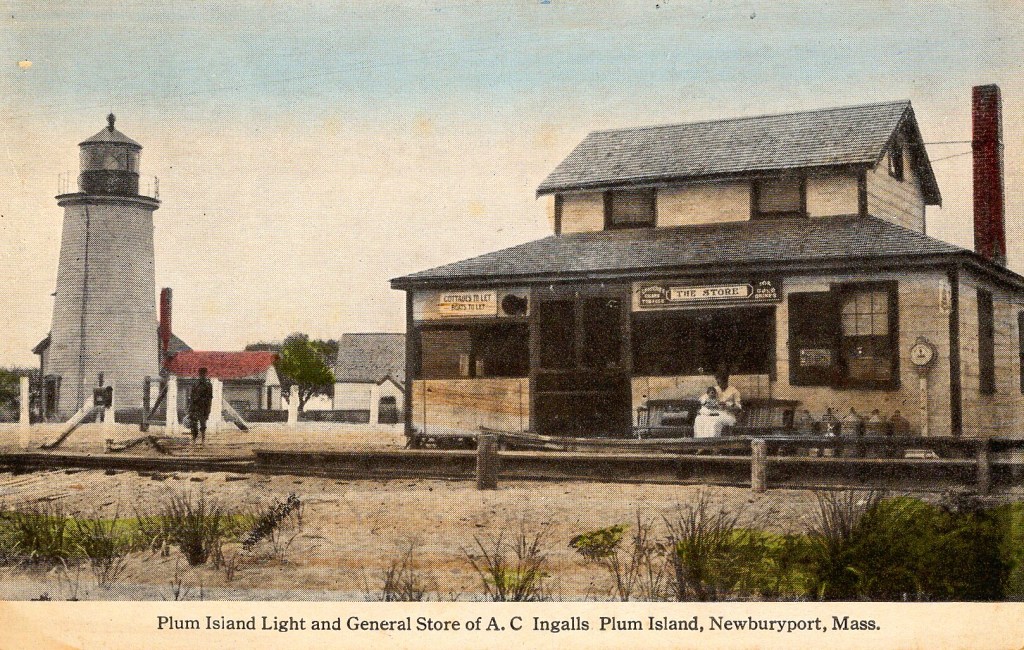
You would think that because the card is listed as the ‘Plum Island Lighthouse’, you might be correct. But you would be wrong. This is the ‘Newburyport Lighthouse’, at some point over the years the caretakers decided to change the lights name, and many images were printed using the original name. It is still on Plum Island, but it is now not apart of the name.

EPSON MFP image

The Burnt Coat Harbor Light is really the Hockamock Head Light, one of many with name changes over the years. I have learned not to take any of what is written at face value, always double check your research.

With its getting darker now, much earlier and the Christmas lights are glowing to make the darkness a little more joyful, I wish everyone a very Safe and Happy Holiday’s and the best the New Year has coming.

On that ‘wee note’ till Monday January 2, 2023.


Thank you for visiting and reading today. Be sure to share with your friends using the share buttons and if you haven’t already, please enter your email address in the subscription form below to receive my stories by email.

The Start of New Research

Linda’s Monthly Monday Morning Moaning’s for November 7, 2022

This week into my mail inbox came a lovely surprise and attached was a contract for a fifth book for Arcadia Publishing. I had submitted a proposal for a book to my editor a couple of weeks ago and their answer was the go ahead I needed. This book will be also a part of their ‘Historical Postcard Series’, as my ‘Lighthouse and Lifesaving on the Great Lakes’ was in vintage postcards.

While researching the first lighthouse book, collecting vintage postcards to use was an important part of the research, after finding the images, the learning came, and what could I find out about these long loved lights. Now the learning starts again in obtaining the vintage postcards that will be needed for ‘Lighthouses of the Northern Atlantic Coast’, lighthouses along the coast of Maine, New Hampshire, Massachusetts, Rhode Island, Connecticut, New York, New Jersey and Delaware.

So the ‘mock book’ (this was explained in an earlier blog, but basically I put together a book/binder with 128 pages, the same as the completed book, and print images and make placements to see what fits and what is still needed to give me a well round look at the lights in each of these states, then the writing comes later) has been started and images have been catalogued. Below are a sample of some of the images I have acquired.

Bringing attention to these lights here and on the Great Lakes is the best way to bring to the public the desperate need historical societies and commissions need in protecting these navigational marvels that were so valued during an important part of our history.

On that ‘wee note’ till next month, Monday December 5, 2022.


Thank you for visiting and reading today. Be sure to share with your friends using the share buttons above and if you haven’t already please enter your email address in the firm below to receive my stories by email.