A Reef Light and a Shoal Light on Lake Michigan

Linda’s Monday Morning Monthly Moaning’s on August 1, 2022

This past week I was given the opportunity to go up to Mackinaw City to the home of the Great Lakes Lighthouse Association group, where they were having their annual fund raiser at the Headlands Dark Sky Park. There would also be a daytime lighthouse tour on Lake Michigan for the Straits area lights, two of which I am going to talk about today. Gray’s Reef and the Lansing Shoal lights. Included in the trip was a dinner and a presentation by a very interesting gentleman named Ron Mixter, a lighthouse and ship wreck researcher and diver. At the Associations invitation, I was able to also display my Great Lakes Lighthouse book. A beautiful day to be out on a Michigan Great Lake.

Gray’s Reef Lighthouse, was built in 1936 after replacing a lightship once used to mark the dredged channel through this reef, 20 mies west of the Mackinac Bridge, on the northeast side of the lake. A wooden crib was sunk 26 feet into the lake on to the reef then filed with stone and concrete. Soon a two story base was built on the pier. The upper level provided the crew with a galley, berths and a head. The station’s radio beacon operated 24 hours a day and each of the three keepers on duty rotated through a six-hour watch. The 65 foot tower was much narrower and would look like a rocket on a launch pad. the structure was always known for it’s art deco style and very white coloring. The base and tower were constructed of steel enforced concrete. it’s 115 stairs led up to the lantern, which when operative housed a 3 1/2-order Fresnel lens. The light had four keepers working with one on leave and three on duty at the light. Besides minding the light, their goal was to not go ‘stir-crazy’. In 1965, their routine was interrupted one night by a large noise while having foggy weather. The lighthouse had been struck by a passing ship, and the light never moved. While the ship was quit damaged, the lighthouse suffered little damage. In 1976 the Fresnel lens was removed and the light automated, making keepers no longer needed. but a wonderful place for lake birds to stop.

Gray’s Reef Lighthouse (Author’s image)

Lansing Shoal Lighthouse, is located in northern Lake Michigan about 5 miles north of Squaw Island and 40 miles west of the Mackinac Bridge in the Straits and 17 mile out of the Suel Choix Point Lighthouse in the upper portion of Michigan. This hazardous shoal out in the lake was also home to a lightship for a time until the ships became larger and the Davis and Sabin locks were completed in 1919 to accommodate larger vessels that could break through the thicker ice. In 1926 Congress approved a permanent lighthouse on the shoal. Four large concrete caissons were placed on a stone foundation. The caissons were filled with stone and capped with a 7 foot thick slabs of steel reinforced concrete. The basement crib was built on top of the foundation. In turn the twenty-seven, 24-in porthole windows, became the deck of the concrete pier. The crib would contain the living quarters and well as engine space. A 37-foot square base of reenforced concrete was paid in the center of the pier. The 59 foot tower was toped with a circular lantern with a third order Fresnel lens. In 1976 the light was automated and the windows, portholes and doors were cemented in, leaving only one access door. The Fresnel lens was removed in 1985 and replaced with a 190mm solar-powered plastic optic. Today the U.S. Coast Guard and local lake birds are the only on site visitors to this light.

Lansing Shoal Lighthouse (Authors Image)

What is the difference in a reef and a shoal? A reef is a structure of rock that rises up from the bottom of the lake and has no connection to land. A shoal is a shallow out cropping of rock or sand that extends underwater which has its origin on dry land.

On that ‘wee note’ till next month, Monday September 5, 2022


Great Lakes Lighthouse Encyclopedia, by Larry and Patricia Wright, research material.

Thank your visiting and reading today. Be sure to share with your friends using the share button below. If you haven’t already please enter your email address in the form below to receive my stories by email.

St Helena Lighthouse

July 4th, 2022

Linda’s Monthly Monday Morning Moaning’s

In the Straits of Mackinac, St Helena Island Lighthouse, St Ignace, Michigan:

St Helena is an uninhabited 240 acre island 7 mile west of the Mackinac Bridge and 2 miles from the Upper Peninsula. Because of the dangerous shoals in this part of the lake in 1872 approval was given to construct the St Helen Light Station. Built with a 71-foot conical tower and a 3 1/2-order Fresnel lens, the 1 1/2-story brick keepers house, and a cover passageway connecting the two. The light marked the hazardous entrance into the Mackinac Straits and the dangerous shoals on the southeast side of the island. This light along with others in the Straits would be very necessary for maritime navigation.

EPSON MFP image

In 1888 Charles Marshall accepted the position of keeper at the St Helen Lighthouse. He and his wife would have 5 children, 4 girls and 1 son during their time at the light station. In 1900, in what would turn out to be his last year as keeper after a 12 year tenure, would go on to be described as – All alone on the island Charles began the annual whitewashing of the tower in August of that year. Perched in a boatswains chair suspended by ropes from the top of the light, Charles was working at a height of forty-five feet when he realized that the control rope for lowering or raising the chair was beyond reach. Realizing the seriousness of his situation he waved vigorously at passing fisherman, but they returned his ‘greeting’ and continued on.

As the day drew to a close, badly sunburned and nearly delirious, he lashed himself into the chair. A passing tug boat would noticed the light was not lit and went to investigate. Finding Charles, he was lowered and taken to a hospital in Mackinaw City, but the effects of his ordeal would stay with him for the rest of his life.

Charles would go on to be the assistant keeper at the Old Mackinac Point Light for a few years were his responsibilities would be lessened. But the effects never left him and he died in 1926 after confinement for 24 years in the Northern Michigan Asylum in Traverse City. In 1922 the St Helena light was automated. In 1986 the Great Lakes Lighthouse Keepers Association obtained a lease to restore the light, and ownership going to the group in 1997 where restoration has continued.

The lonely and isolating life of these keepers would have devastating effects on many of these proud workers that kept the lights burning. Many of the outlying islands in the Great Lakes and the isolation, boredom and loneliness that came with the light keepers duties would make the necessity of moving these light keepers around to different stations.

On that ‘wee note’ till next month, Monday Aught 1, 2022.


Thank you for visiting and reading today. Be sure to share with your friends using the share button below. If you haven’t already please enter your email address in the form below to receive my stories by email.

‘Lighthouses and Lifesaving on the Great Lakes’

Linda’s Monthly Monday Morning Moaning’s

This mornings moaning’s is written with great excitement as it’s finally here! This book that has a years worth of work and research is ready for the public. Because of my love of photographing the many lights in our area, I decided to try my hand at a vintage look of these lights. I really had no idea just how fascinating it would be. Many of the lights we see today are restored, but in a smaller versions. The money, basically from donations would be cost prohibited in restoring these lights to their ‘original’ foot print, that was used when the lights had real function for maritime navigation.

Researching for the vintage postcards became the most important part of the project, always looking for ‘one that might be even more perfect’ was always part of the project. Many trips to post card conventions, yes there is such a thing, bidding in actions for cards, that you can’t image anyone else but you could possibly want, but does, became front and center, and needing at least 220 different images in the form of postcards was the main portion of time and cost spent. With great frustration, I was too find that although the popularity of our Great Lakes and the lights that protect them, I would have some very difficult times in acquiring the cards needed to fully capture, especially some of the really big lights.

I found at one convention where I spoke to a gentleman selling cards, about my frustration in coming across some really important lights, and finding nothing available, mind you, I am referring to vintage cards, not the present day colorful images. There happened to be a man sitting and talking with this same gentleman, and he asked me if I could give him an example of the lights I was interested in, and off the top of my head I stated that Sturgeon Point Light Station on Lake Huron was one. He asked if I was willing to use a scanned image, and at this point that had to be an option for me. He showed me his iPad and brought up his scanned images of the Sturgeon Point Light, all 13 of them!! I looked at the gentleman and said, “so you are the one who has them all”! He was extremely kind and sent me all 13 scanned images for me to choose what I could best use. Crediting this gentleman for the use of his images was the least I could do and I am hoping he enjoys the book I have sent him. After the book was turned in, I was able to bid on a number of the same images for my own collection, now.

I continued to plug away looking for the postcards I really wanted to use and finally came to the point where the book needed to be sent off to the publisher, and where we couldn’t find postcards we inserted a few vintage Coast Guard images in order to include the lights where finding the cards had been difficult. I know sooner sent the finished copy off to the publisher, it was like the flood gates opened and I started seeing the postcards come up for auction, I had been looking for all along! Soon I was contacting the publisher with requests to replace images with vintage postcard images, and Arcadia was very king in allowing me to add these long after our edits were in the process. So today, long after I ‘needed’ to find them, I still look and bid on cards when they become available.

On Sunday the 12th of June, I hope you can join us at the ‘Wee The People’ Meeting Hall in Armada, a lovely restored 1888 building for an Open House Book Launch from 1:00-4:00. I have great hopes this book with show my love of lighthouses and the vintage looks that show how the lights looked when they were so important to maritime navigation.

You are cordially invited:

EPSON MFP image
EPSON MFP image

On that ‘wee note’ till next month, Monday July 4th.

Thank you for visiting and reading today. Be sure to share with your friends using the share buttons below, if you haven’t already please enter your email address in the form below to receive my stories by email.
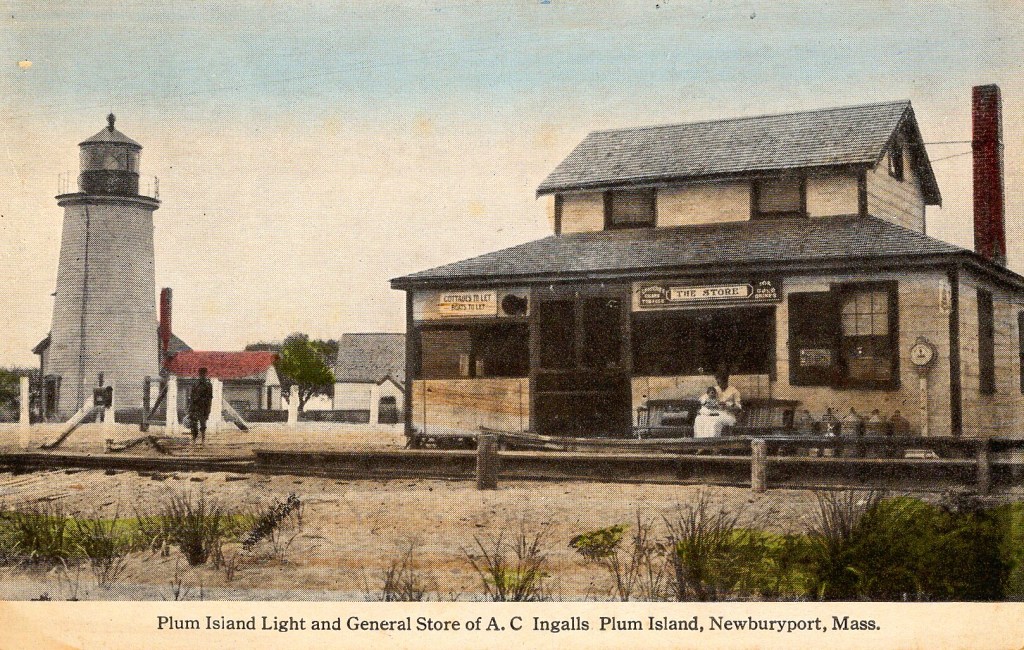

My first five arrive!

Linda’s Monthly Monday Morning Moaning’s:

Monday, 2 May 20022

A week ago I notices a small cardboard box sitting on my porch, now normally this is hardly an unusual occurrence at my house. But instead of the usual markings on the boxes, it said Arcadia! The box was small enough to tell me that my first five books (each author is given 5 books for free) were probably hidden in the wrapping!

With the book not being published until Monday 13th of June, it was surprising to received them so early. But to hold in my hand, the efforts of nearly a year of hard work and research is a wonderful feeling. I have loved lighthouses for a very long time, so this book has special meaning.

This is a 128 page book of vintage postcard pictures and captions describing the Lighthouses of the Great Lakes, encompassing the eight states that touch the lakes, Minnesota, Wisconsin, Illinois, Indiana, Michigan, Ohio, Pennsylvania, and New York. Is every Lighthouse on the Great Lakes part of the book, no. But through a lot of research I managed to finds the vintage postcards needed to represent many of the lights that had such importance to the navigation and maritime needs for the mariners that sailed these waters especially during the especially tough times at the start of the century.

Now the planning goes into an open house book launch on Sunday 12 June, 2022 from 1:00-4:00. We found a lovely little meeting house in a restored 1888 building in Armada to launch my fourth book from Arcadia Publishing, ‘Lighthouse and Lifesaving on the Great Lakes’.

‘We the People Meeting House, 23010 Main Street, Armada.

Front of invitation
Back of Invitation

On that ‘wee note’ till next month Monday 6 June 2022.


Thank you for visiting and reading today. Beside the share with your friends using the share buttons below. If you haven’t already, please enter your email address in the form below to receive my stories by email.
The Spectacle Reef Light Tragedy

Linda’s Monday Morning Monthly Moaning’s:

The many lighthouse keepers would learn to live with danger every day.

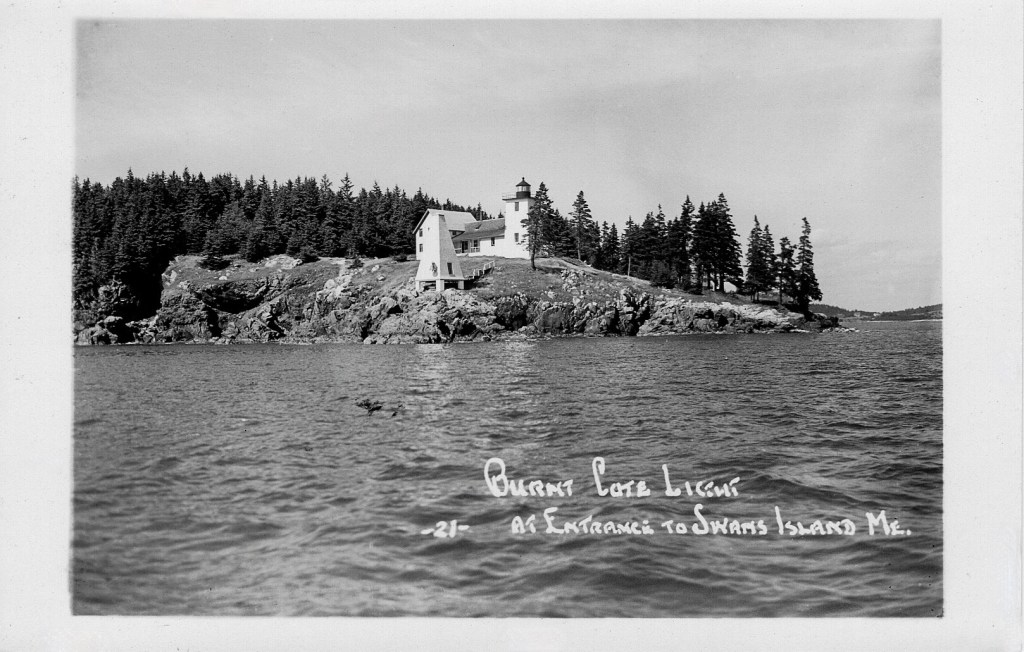
The building of Spectacle Reef light was considered on of the greatest engineering feats of its time in 1874. It would take 200 men, fair years to complete this light. The tower was 80 feet tall and had a visibility of 11 miles out into the lake.

Tragedy struck the Spectacle Reef Lighthouse in April 1883 when the head keeper William A Marshall departed in a boat for the lighthouse to open it for the season. In the Straits of Mackinac the lighthouses would close when the shipping stopped because of the ‘Winds of November’ season. With William, was his son James Marshall, who was the second acting assistant keeper; Williams brother Walter Marshall, the newly appointed third assistant keeper, and Edward Chambers, the first assistant keeper. Along for the ride were friends of James Marshall, 16-year-old Joseph Cardran and his brother, 13-year-old Alfred Cardran.

It was not known if there were two boats or just one for thi group of men. At some point the boat capsized when a gust of wind struck as the men were adjusting the sails, throwing throwing all of them into the icy water.

The Cardran brothers, being young and excellent swimmers assisted William and Walter, who could not swim, to safety with much difficulty. Joseph Cardran dove into the water once again and rescued Edward Chambers, but James Marshall would never be found and believed to be drowned.

Spectacle Reef Lighthouse

Unfortunately, they had to petition Congress for reimbursement for all their person effects that had been lost. When Joseph Cardran turned 18, he joined the US Lighthouse Service as a third assistant keeper but resigned after seven months. Five months later in 1889, Alfred Cardran also joined the Service as a third assistant keeper at Spectacle Reef, but he also eventually resigned. The isolation of some of the reef lights would be more than some could possibly handle. During my research I would find many unhappy stories of the dedicated light keepers and how hard they worked, even during the most trying and isolated times.

A publication date for ‘Lighthouse and Lifesaving on the Great Lakes is Monday June 13, 2022.

On that ‘wee note’ till next month, May 2, 2022


Thank you for visiting and reading today. Be sure to share with your friends using the share button below. If you haven’t already please enter your email address in the form below to receive my stories by email.